Hercules Tattoo Meaning, Designs and Placement Ideas
The strongest of the Greek heroes, who earned his place among the gods through suffering and hard work.
Quick meaning
- Physical and mental strength
- Perseverance through impossible tasks
- Redemption and making up for past mistakes
- Protection of the weak against monsters
- Rising from struggle to something greater
Carries the meaning of: Power, Resilience, Ambition
What a Hercules tattoo symbolizes
Strength that is earned
Heracles was born strong, but the myths focus on what he did with it: twelve brutal labours, each one harder than the last. A Hercules tattoo celebrates strength built through effort, which is why it is so popular with athletes, lifters and anyone who has trained hard for something.
Redemption
The labours were not a reward. Heracles took them on to atone after Hera drove him mad and he killed his own family. Many wearers connect with that side of the story: a person who did something terrible, carried the weight of it and worked to become better.
A protector
Across Greece, Heracles was worshipped as Alexikakos, the one who wards off evil. He killed monsters that terrorized ordinary people, from the Nemean lion to the Stymphalian birds. The tattoo can be a guardian symbol, especially for parents or people in protective jobs.
Becoming more than mortal
Heracles is the rare hero who becomes a god. After his death on a pyre he rose to Olympus and married Hebe, goddess of youth. For many people this makes him a symbol of transformation: struggle that ends in something higher.
The myth of Heracles
Heracles was the son of Zeus and Alcmene, a mortal woman. Zeus’ wife Hera hated him from birth and sent two snakes into his cradle, which the baby strangled with his hands. Her hostility followed him all his life.
As an adult, Heracles married Megara, a princess of Thebes. Hera struck him with madness and he killed his own children (in some versions Megara too). When he recovered, the oracle at Delphi told him to serve his cousin Eurystheus, king of Tiryns, and do whatever tasks he set.
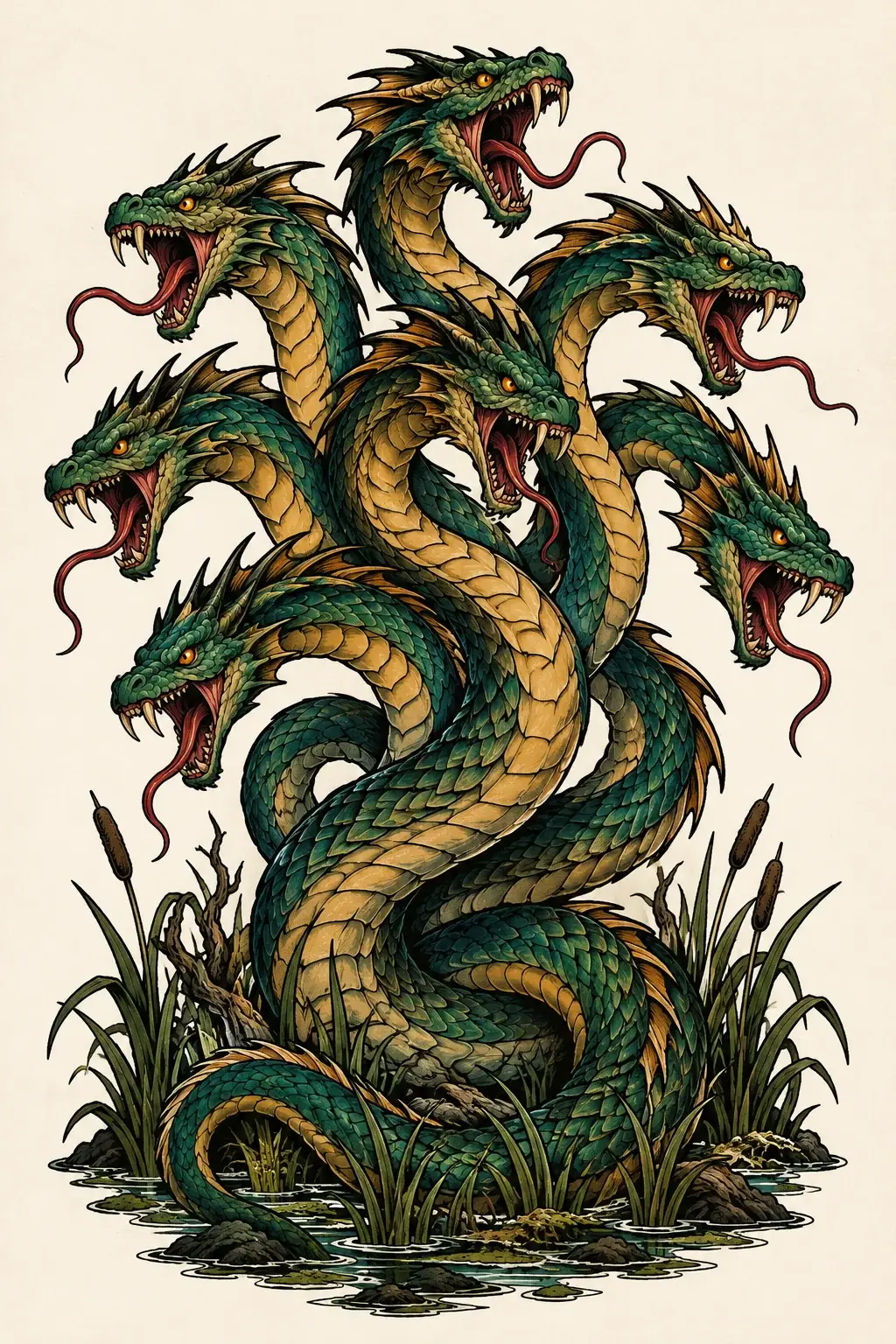
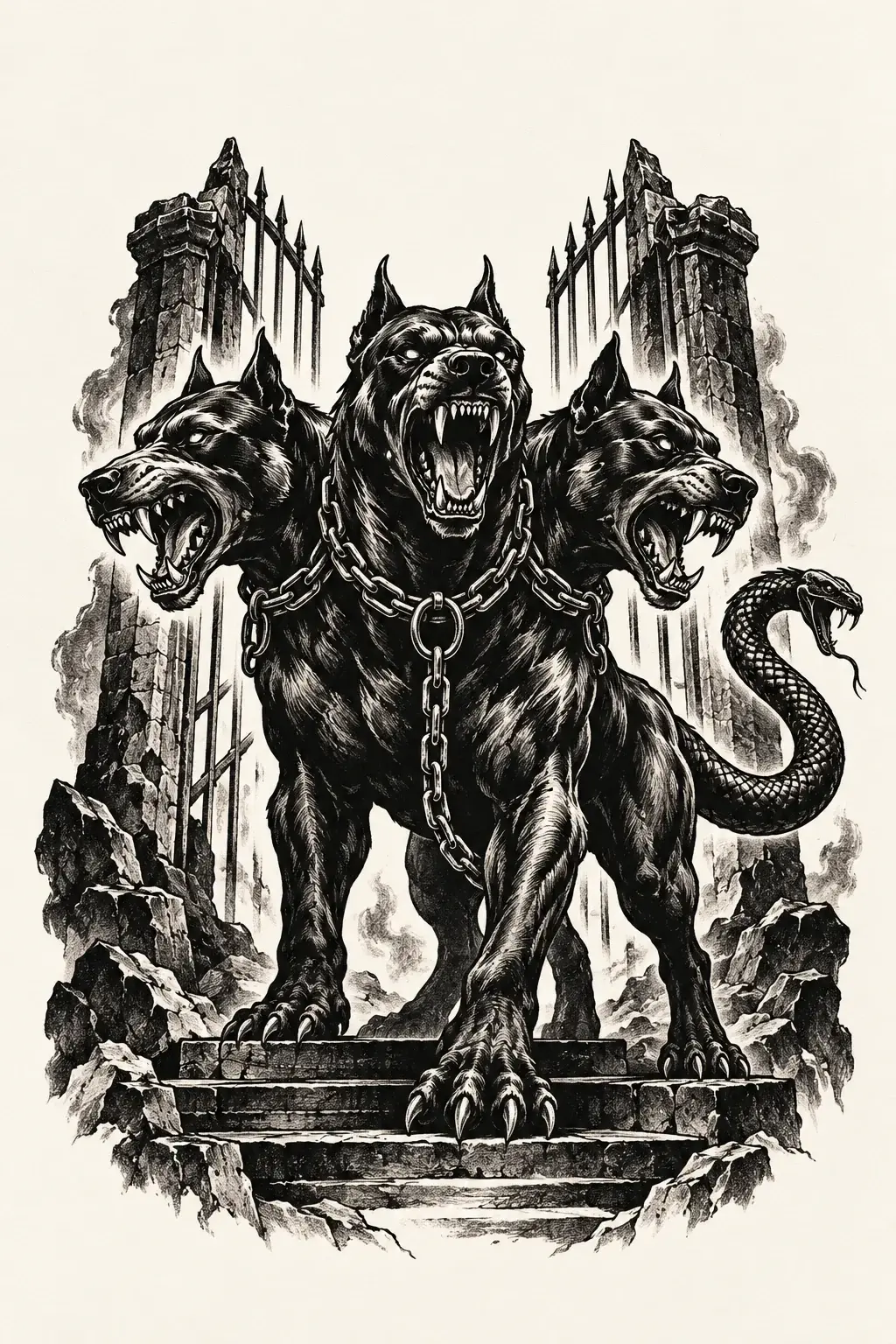
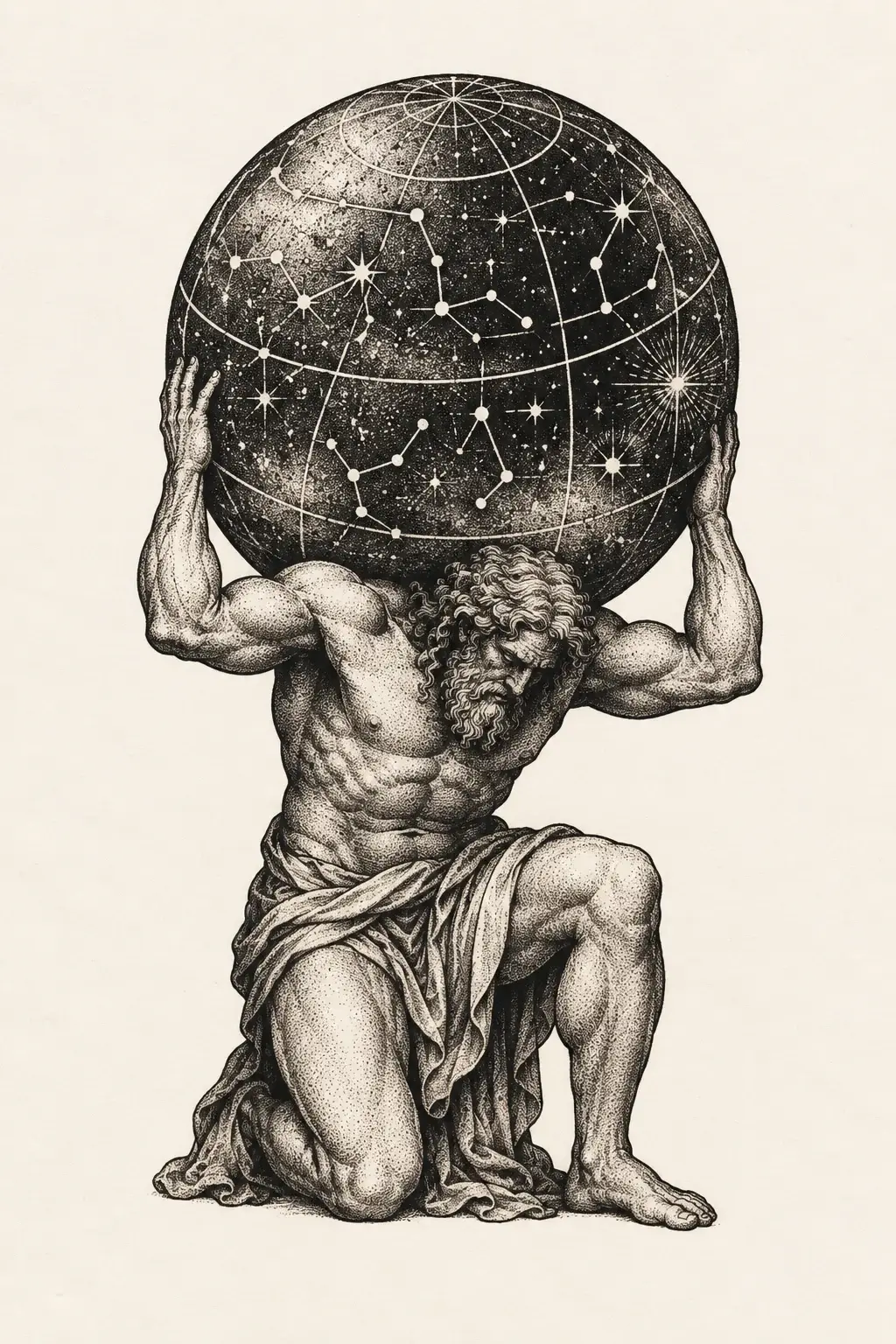
The best organized account of these labours comes from the Library of Apollodorus, a handbook of myths from the Roman period. Eurystheus first set ten labours, then rejected two: the Hydra, because Iolaus had helped, and the Augean stables, because Heracles had been promised payment. So there were twelve. Heracles killed the Nemean lion, whose hide no blade could pierce, and wore its skin ever after. He burned the Hydra’s necks so its heads could not grow back. He rerouted two rivers to wash out the Augean stables, and for the apples of the Hesperides he held up the sky while the Titan Atlas fetched them. Last, he went down to the underworld and carried Cerberus up to the world of the living.
His death came through love and deceit. The centaur Nessus, dying from Heracles’ arrow, told his wife Deianira that his blood would keep her husband faithful. She soaked a robe in it, and it burned his flesh. Heracles built his own pyre on Mount Oeta, and Zeus took him up to Olympus as a god. The Romans adopted him as Hercules.
Choosing the right Hercules tattoo for you
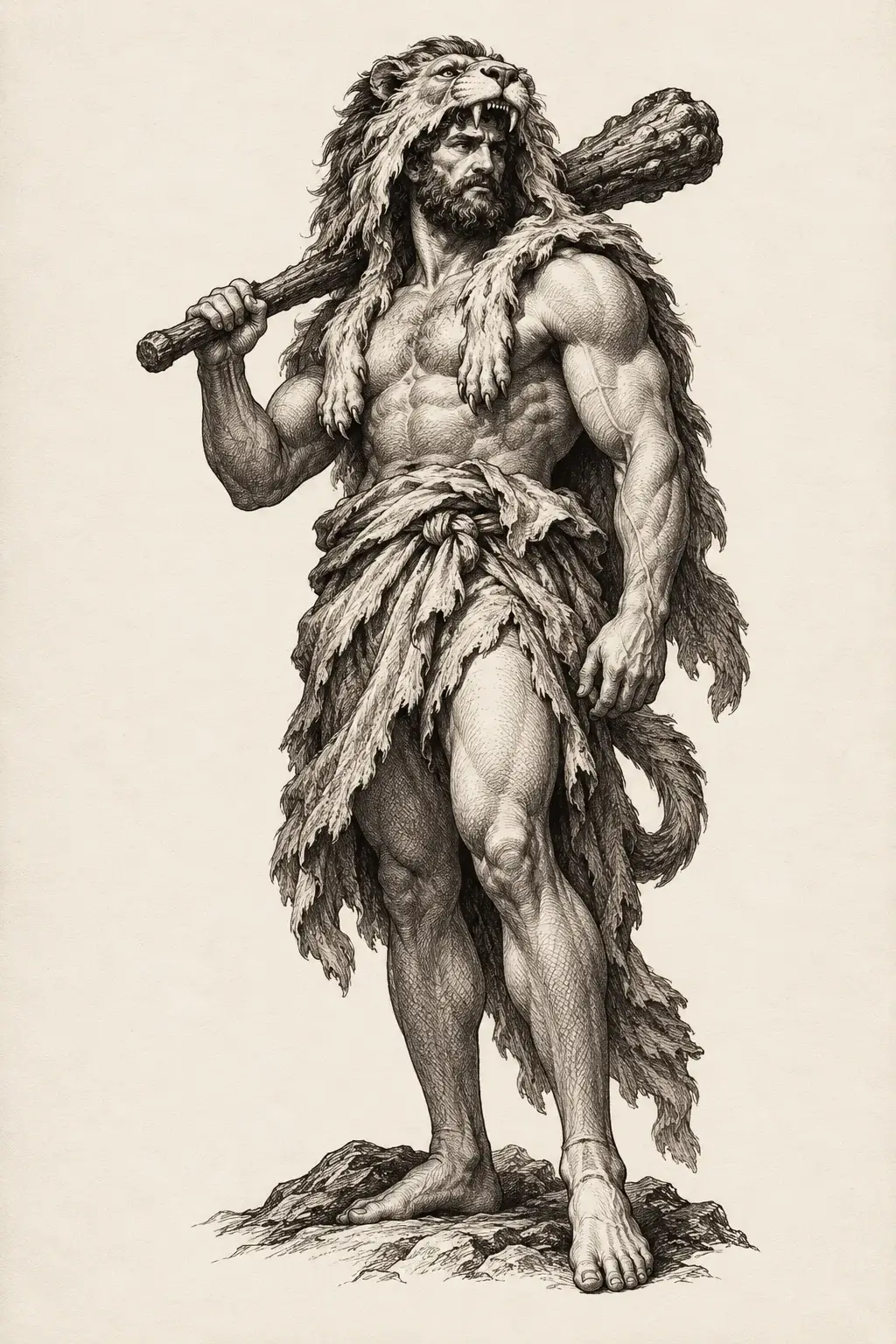
Pick a moment, not just a muscular man. A generic strongman could be anyone, but a lion skin, club, Hydra or golden apples makes the design unmistakably Heracles. If you want a single strong image, the lion-skin hood is the clearest signature.
Think about which Heracles you mean. The labours suit a story of grit and achievement. The Farnese pose, tired and leaning on his club, suits recovery and endurance. Some people avoid the cartoon look of the 1997 Disney film by asking for a vase or statue reference.
If you plan a labours sleeve, map out all twelve with your artist before the first session so the composition flows and leaves room for each scene.
Hercules tattoo design ideas
Lion skin and club
Heracles' trademarks are the skin of the Nemean lion worn as a hooded cloak and a rough wooden club. A bearded face under the lion's head is instantly recognizable, even without any other detail.
Hercules and the Hydra
The hero swinging at a many-headed serpent is one of the most dramatic scenes in Greek art. Its winding shape suits sleeves and backs, and the regrowing heads make a strong metaphor for problems that keep coming back.
Farnese Hercules
Based on the colossal Roman statue in Naples, a copy of a Greek original attributed to Lysippos. Heracles leans on his club, exhausted, holding the golden apples behind his back. It shows strength at rest, which feels more honest than constant action.
The twelve labours
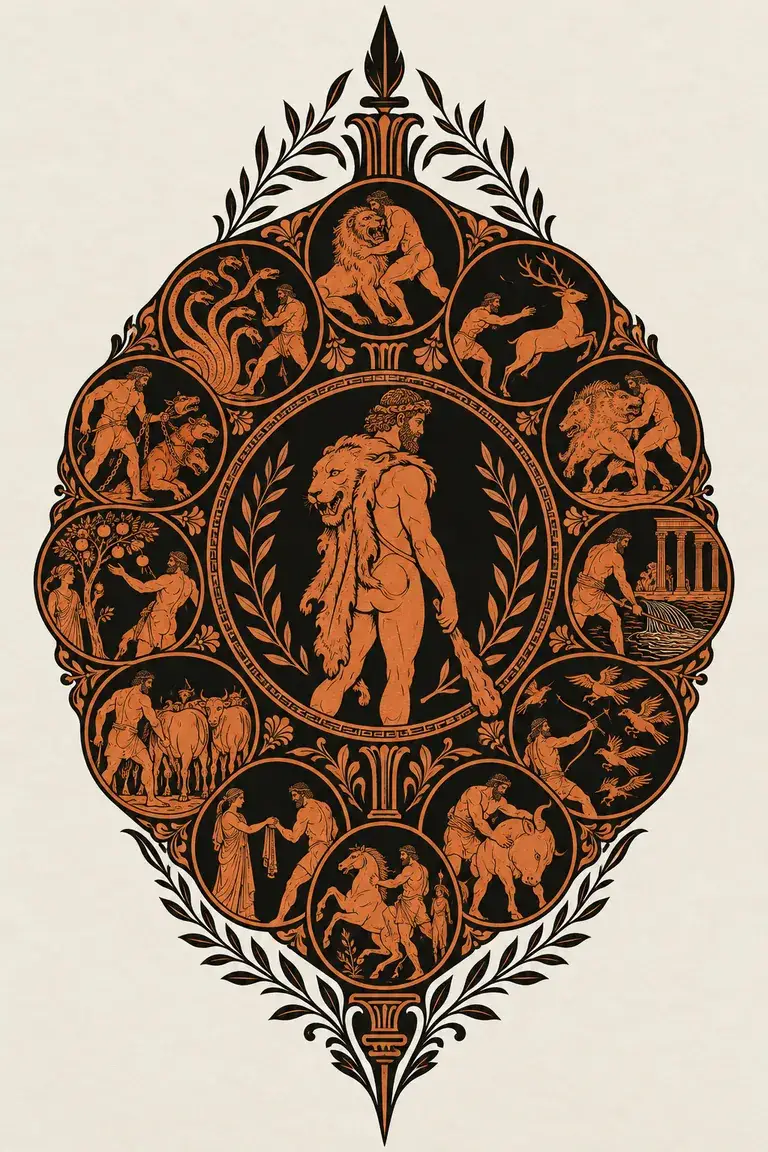
A set of small symbols for each labour (lion, hydra, hind, boar, river, birds, bull, horses, belt, cattle, apples, three-headed dog) arranged in a band, a circle or down the spine. It works well as a project you add to over time.
Wrestling the lion
Heracles strangling the Nemean lion with his bare arms, a favorite subject on Greek vases. Raw, compact and full of muscle, it suits the upper arm or calf.
Best placements for a Hercules tattoo
- Upper arm
- A natural fit for a symbol of strength, and the bicep gives a solid base for a bust with the lion skin or a wrestling scene.
- Sleeve
- The labours lend themselves to a full or half sleeve, with each monster flowing into the next.
- Back
- Big enough for the Hydra fight or the Farnese Hercules at full scale. A long-term project, but the payoff is huge.
- Chest
- A bust or lion head centered on the chest has a strong, armored feel, like a breastplate emblem.
Styles that suit Hercules
- Engraving
- Fine cross-hatching like a classical etching gives Heracles a museum-piece look, and it ages well because the lines are clean and defined.
- Black and grey realism
- Perfect for statue-inspired pieces, especially the Farnese Hercules, where muscle and marble texture are the whole point.
- Red-figure (Greek vase)
- Heracles appears on more surviving Greek vases than almost any other figure. A vase-style lion fight or Hydra scene looks authentically ancient.
- Neo-traditional
- Bold outlines and rich color, with a golden lion skin and green Hydra, for a design that reads clearly from a distance.
25 more Hercules tattoo designs
Different styles and placements to show your tattoo artist.
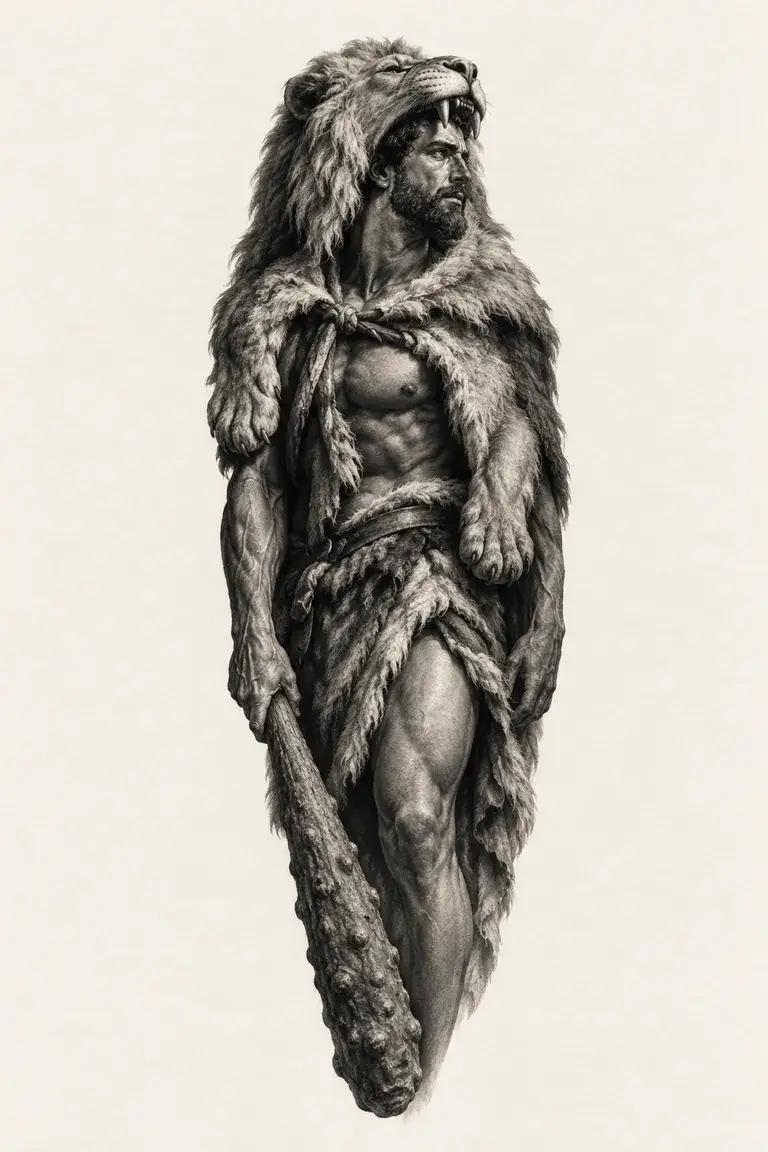
Black and grey realism, Ribs
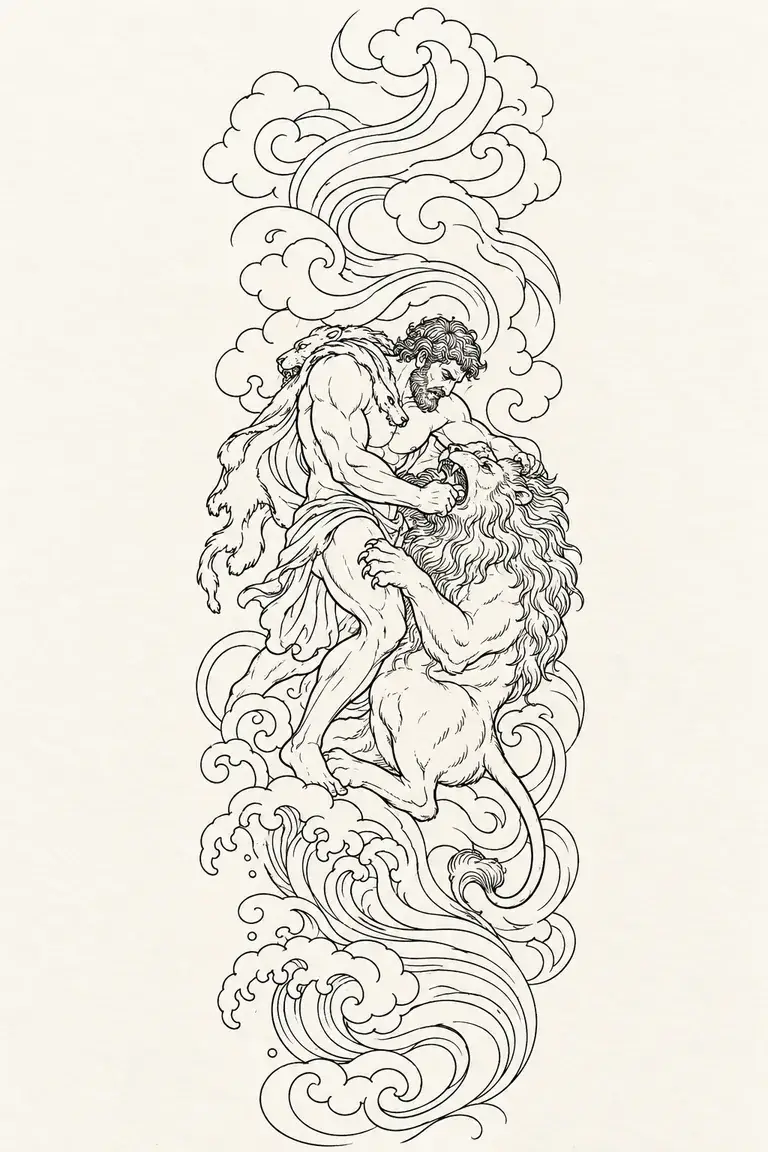
Minimalist, Sleeve
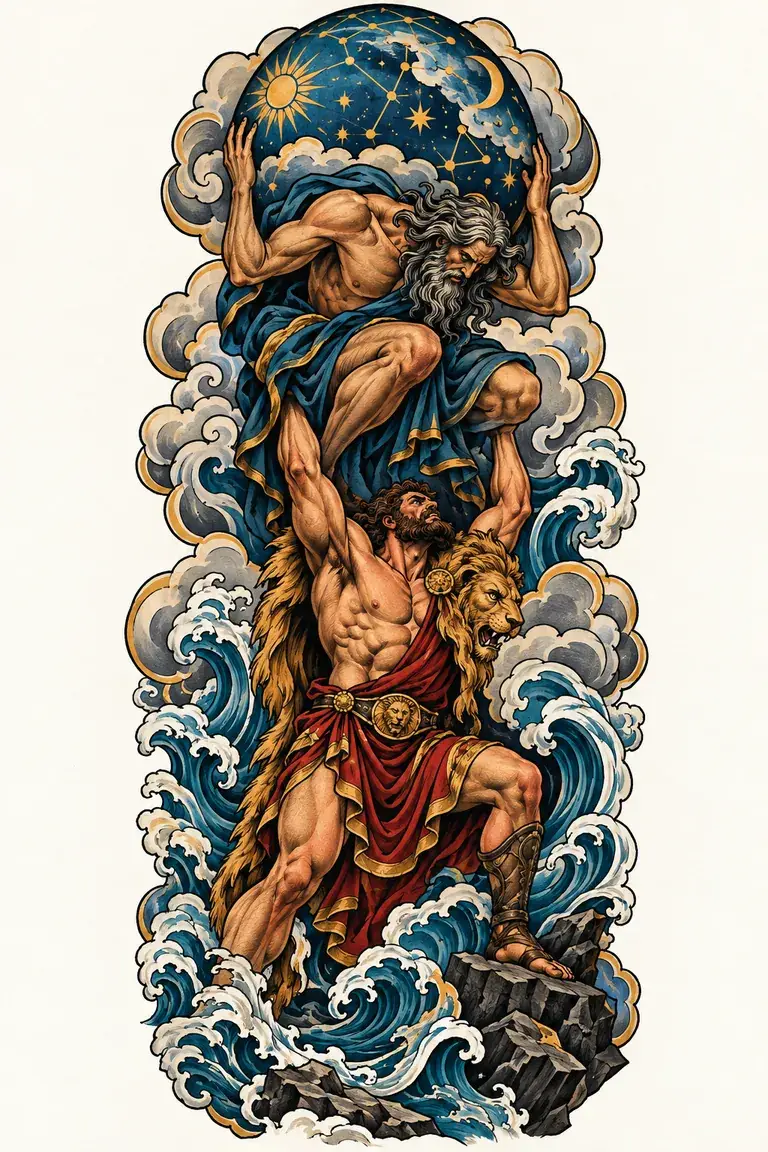
Neo-traditional, Sleeve
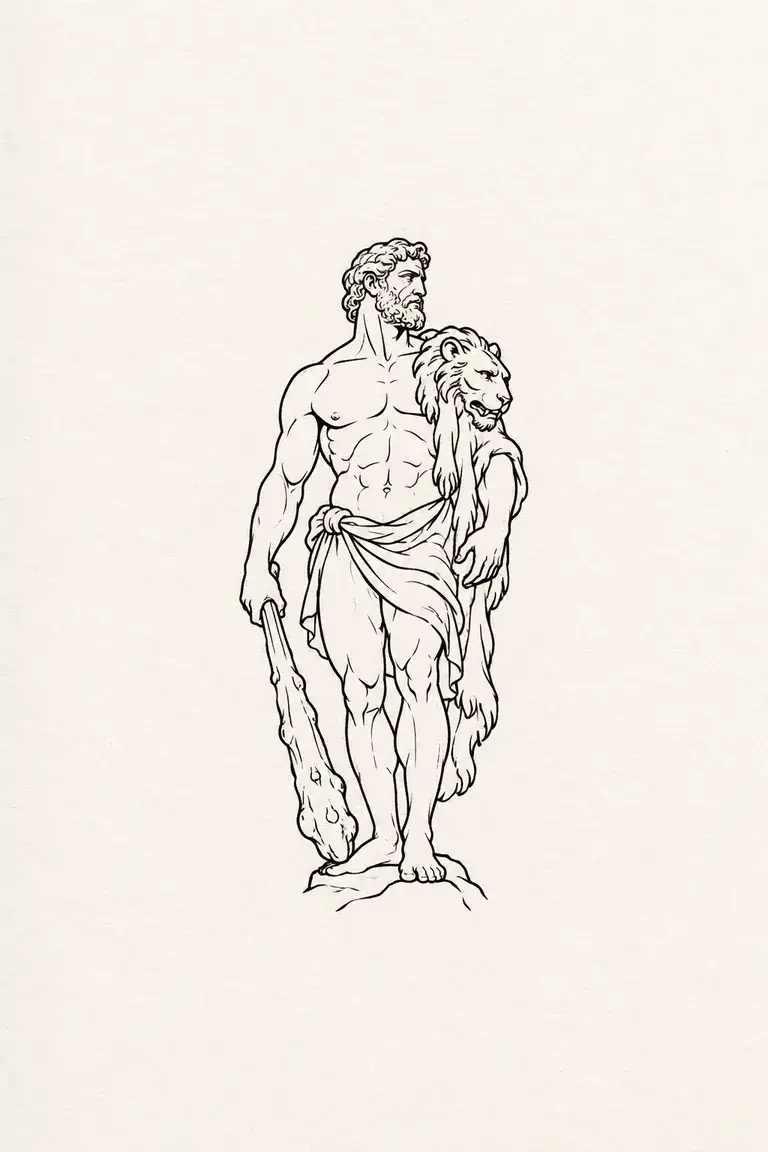
Minimalist, Wrist
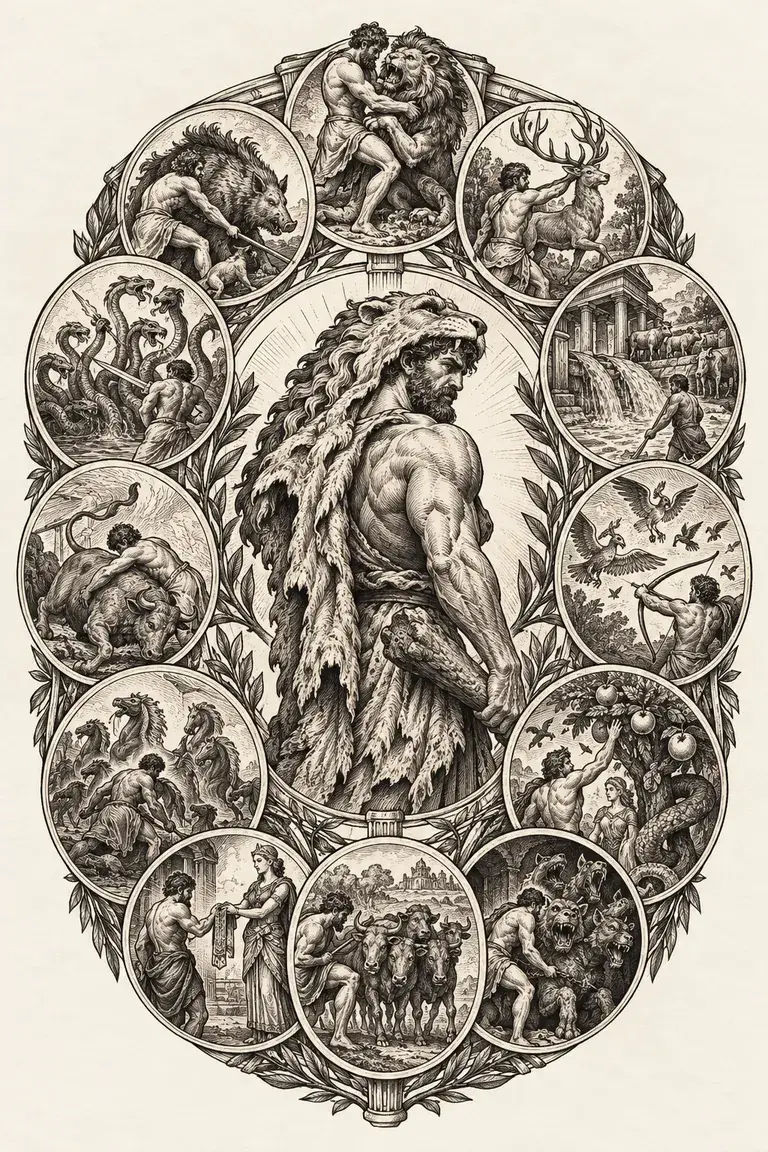
Engraving, Upper arm
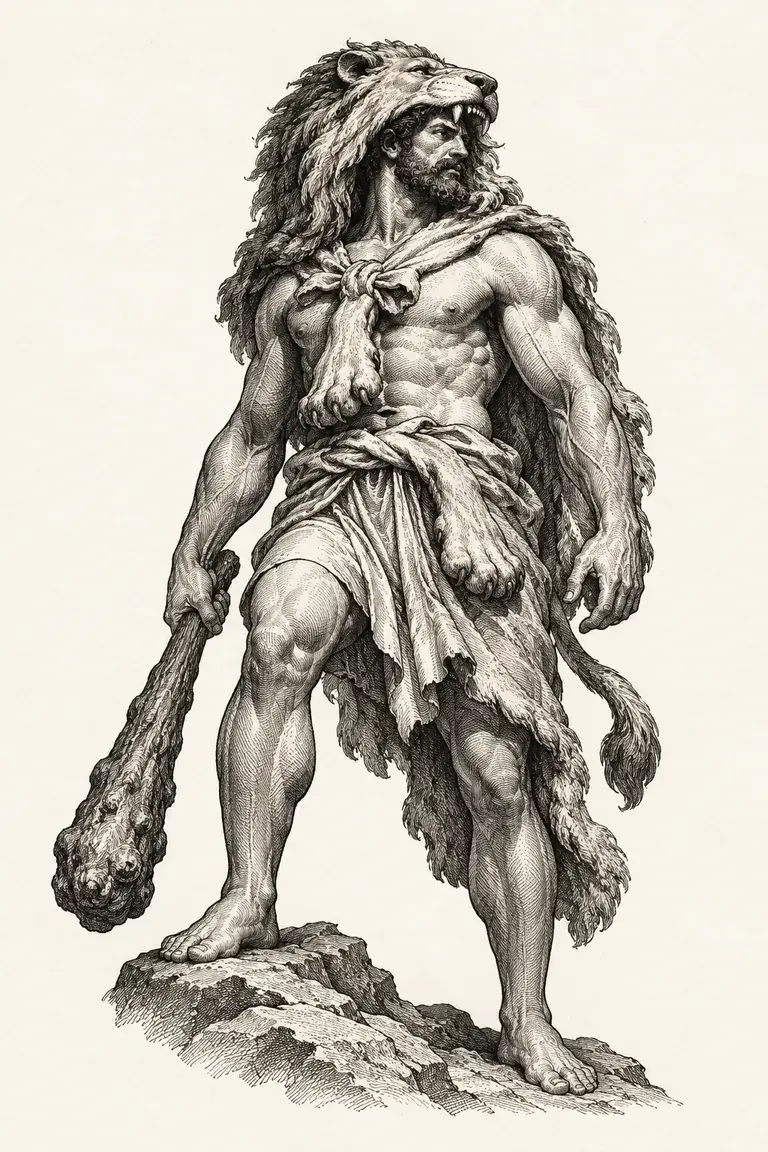
Engraving, Thigh
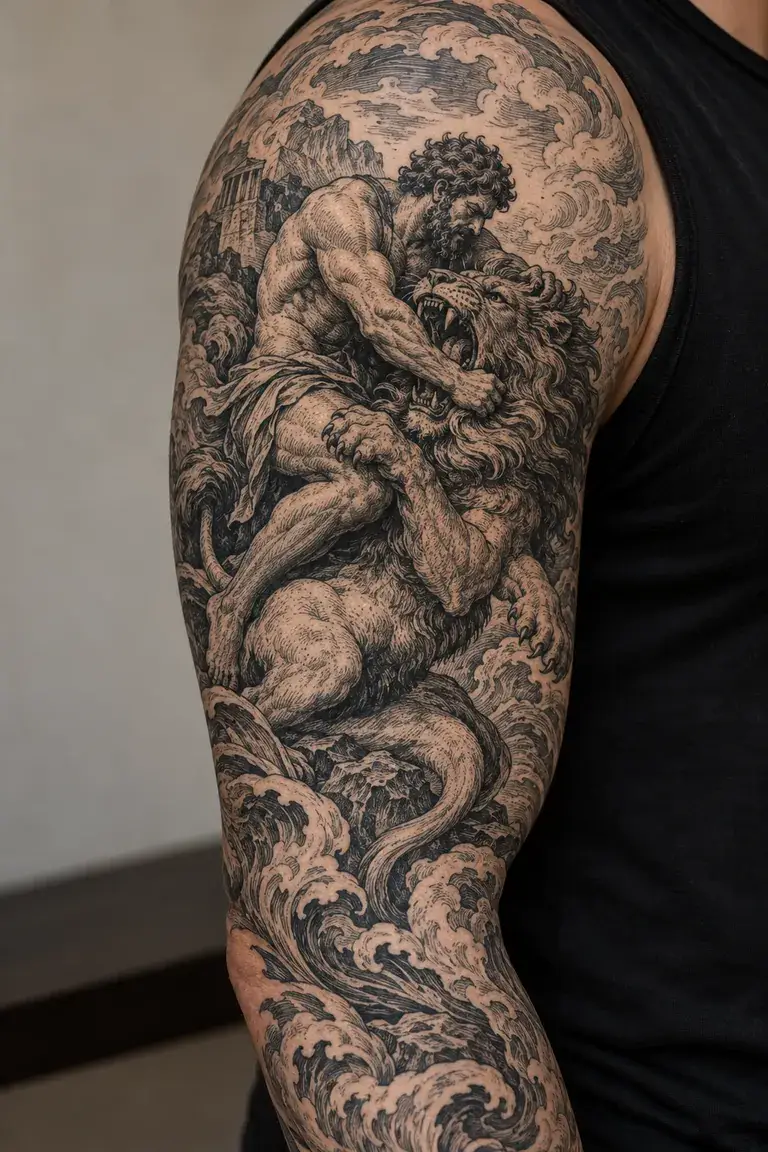
Engraving, Sleeve
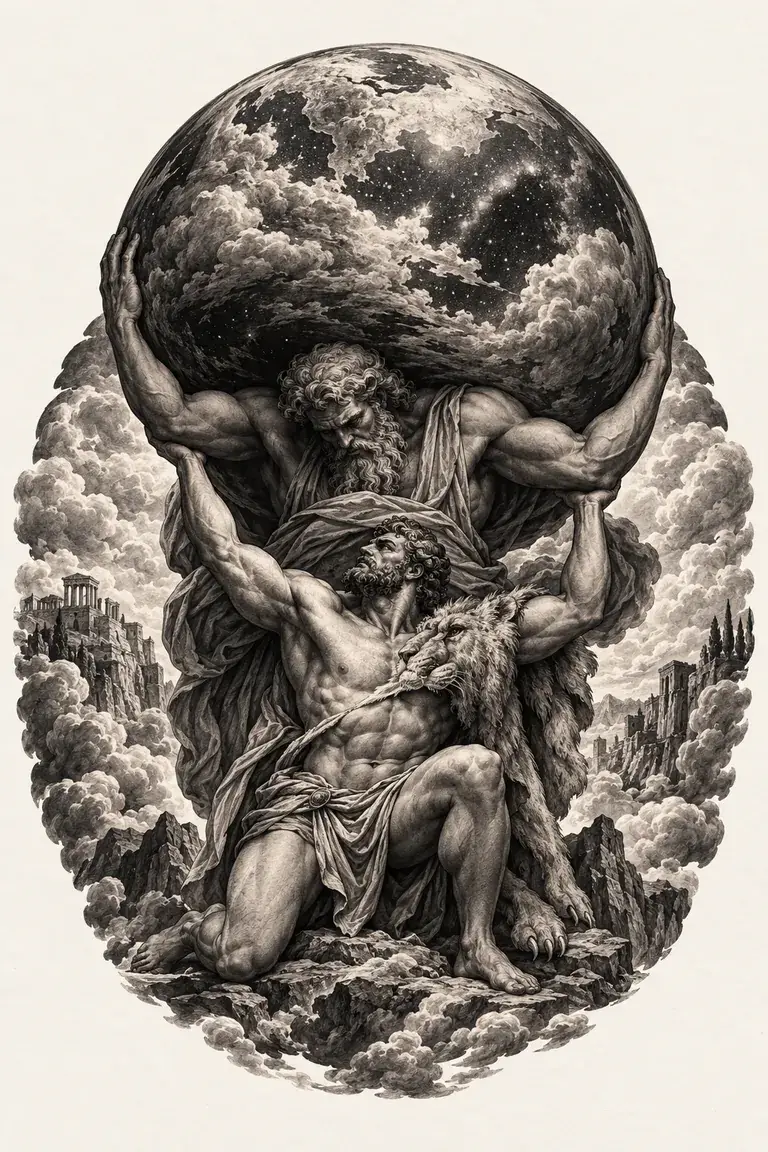
Black and grey realism, Shoulder
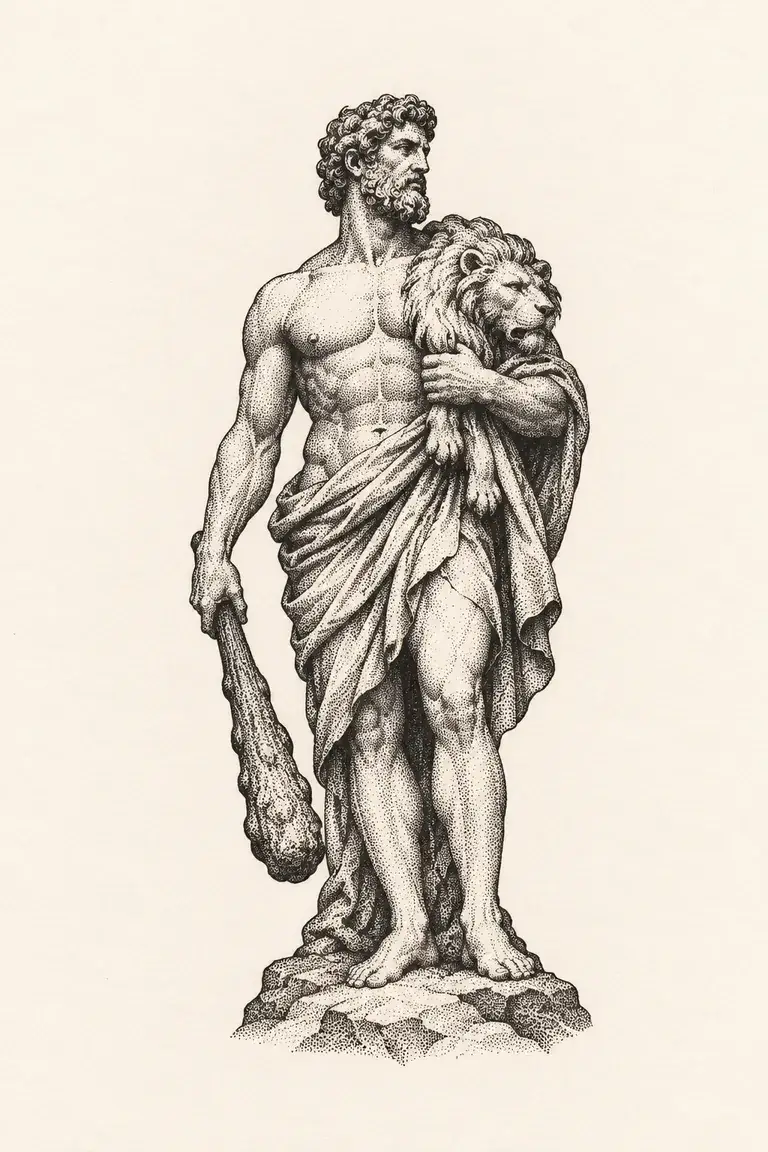
Dotwork, Ankle
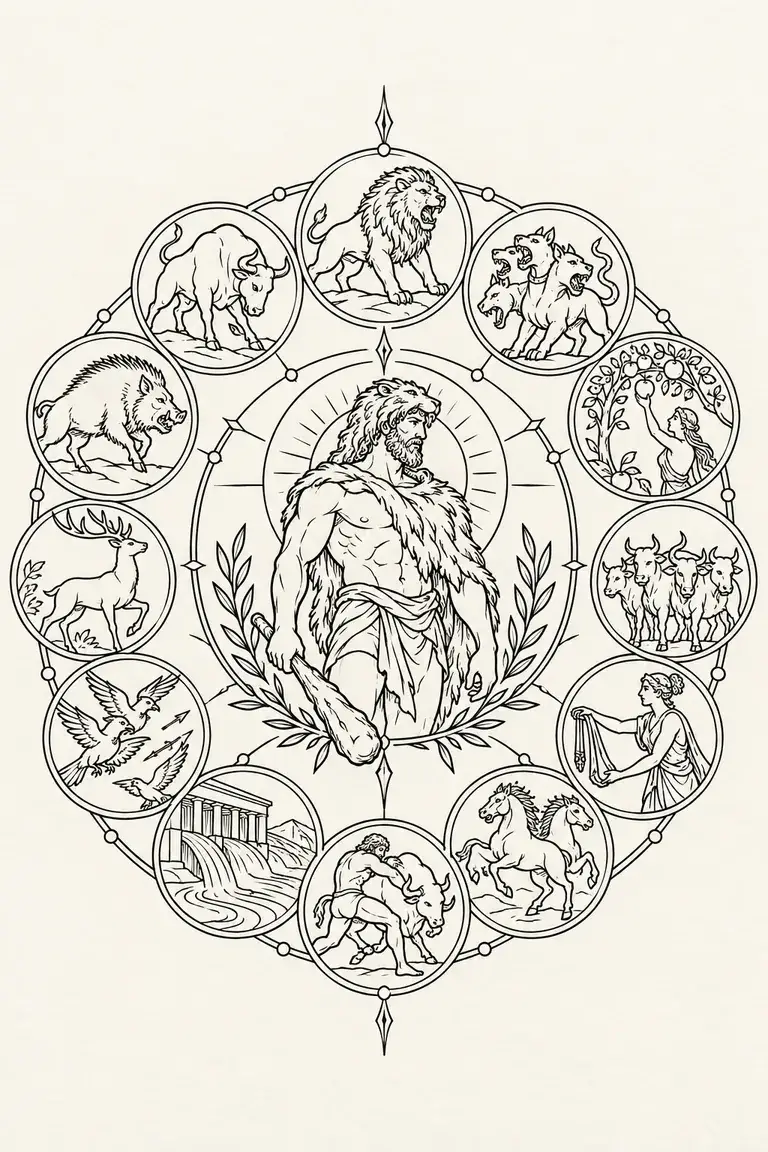
Minimalist, Chest
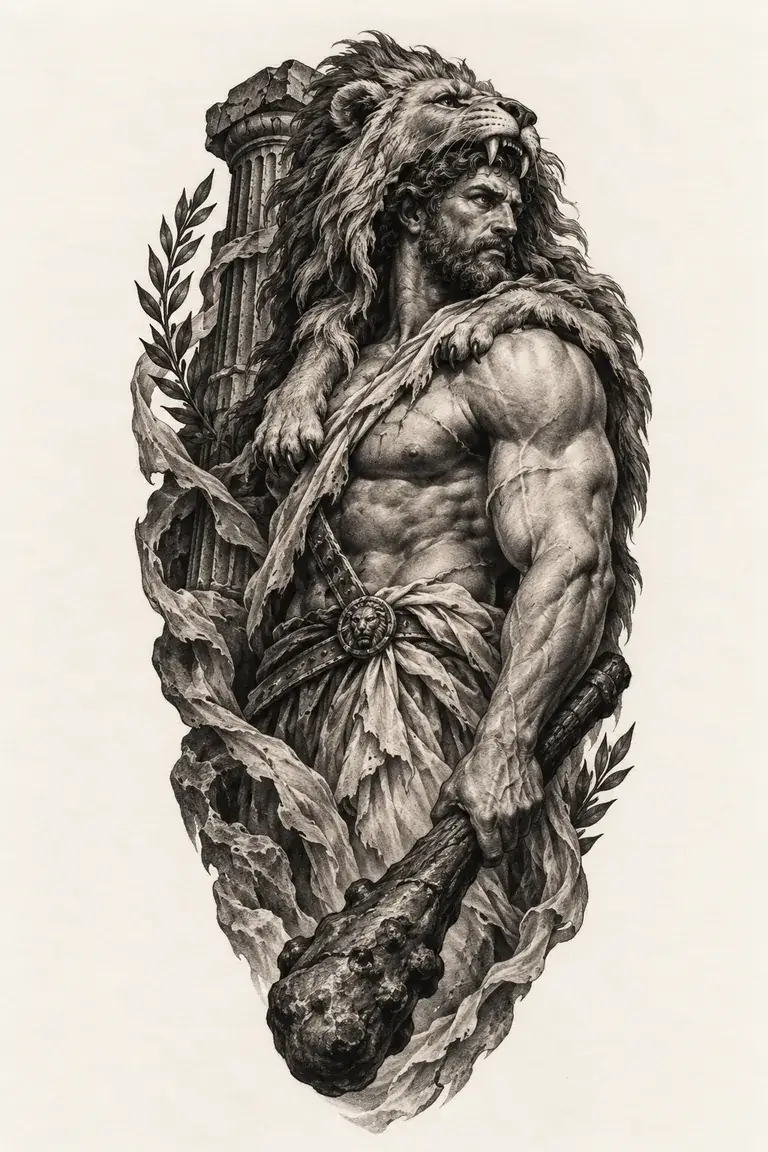
Black and grey realism, Upper arm
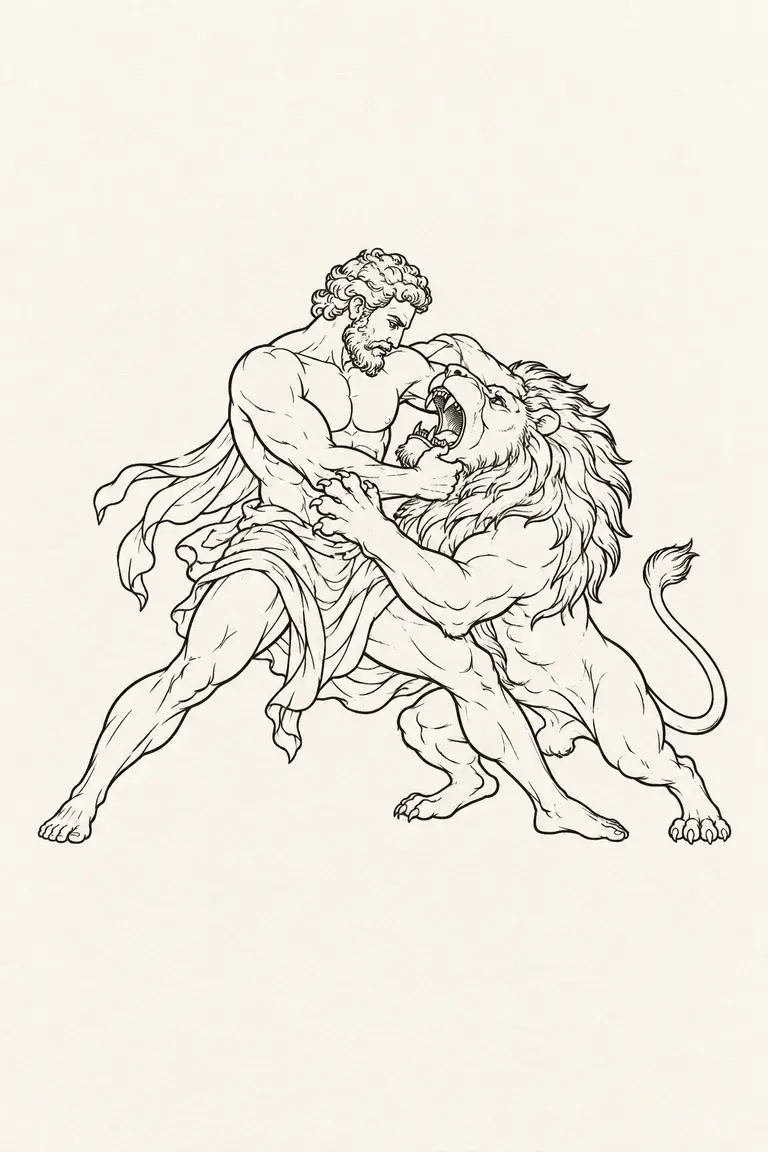
Minimalist, Chest
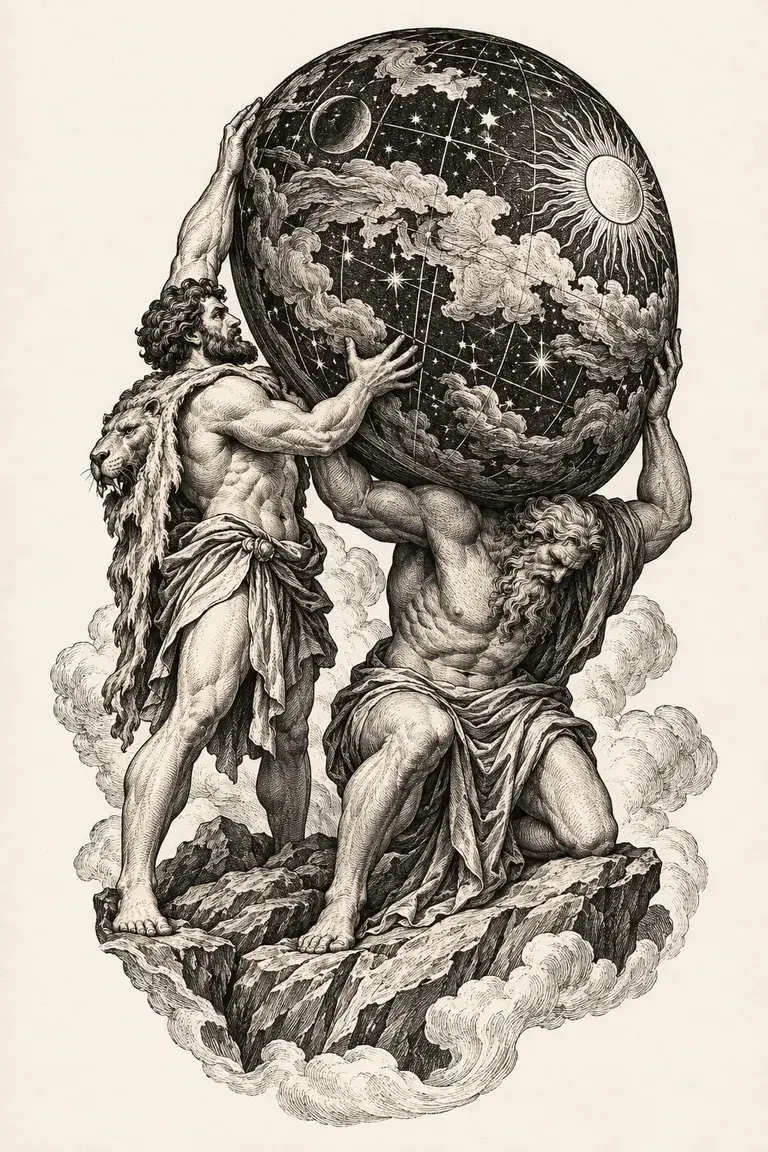
Engraving, Thigh
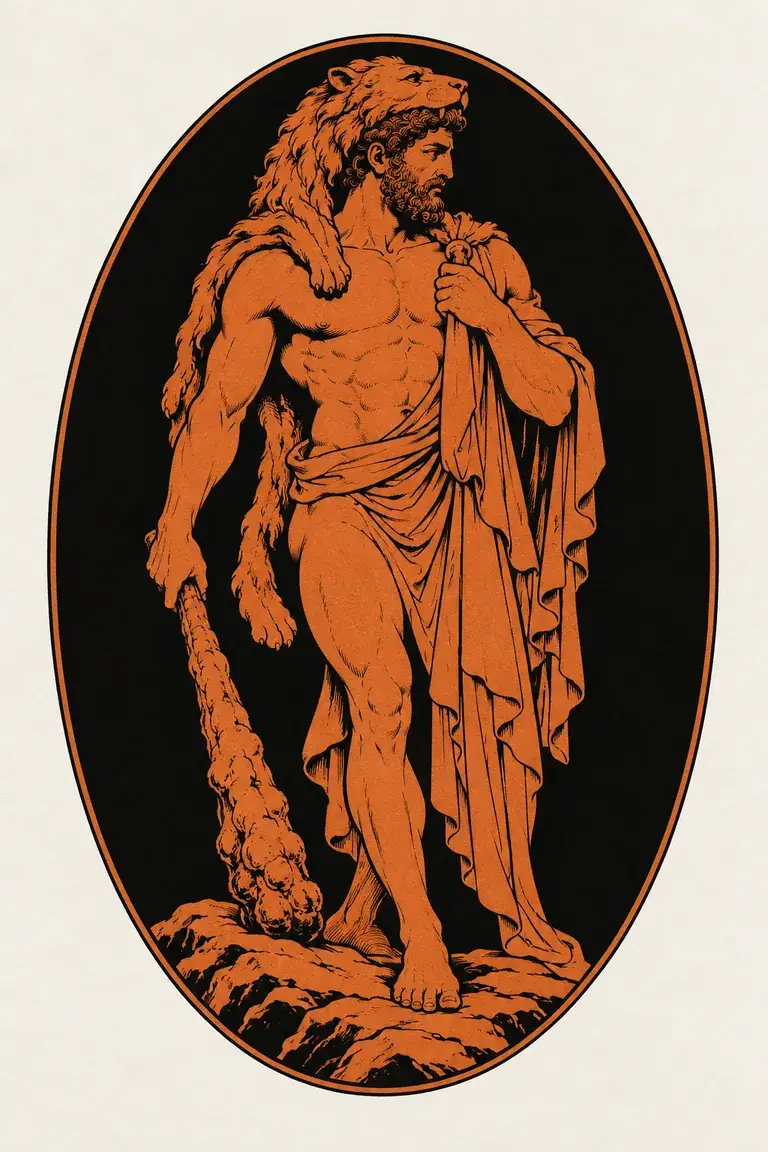
Red-figure (Greek vase), Thigh
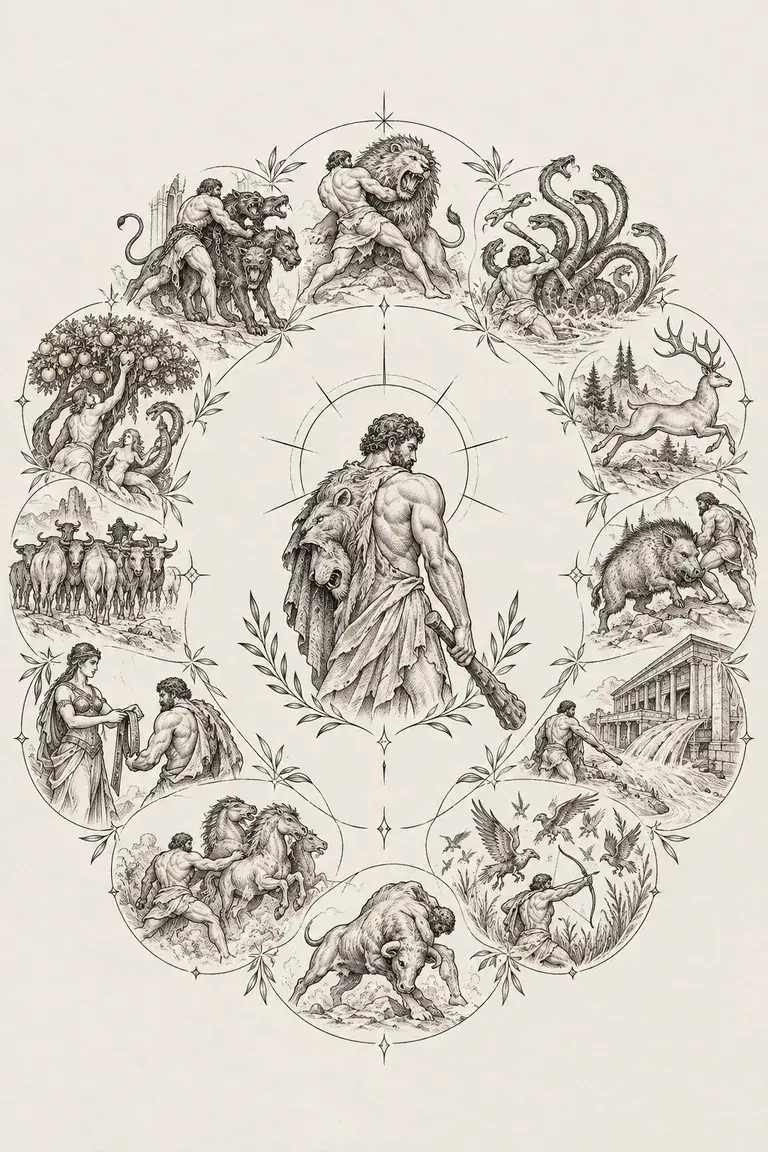
Fine-line, Upper arm
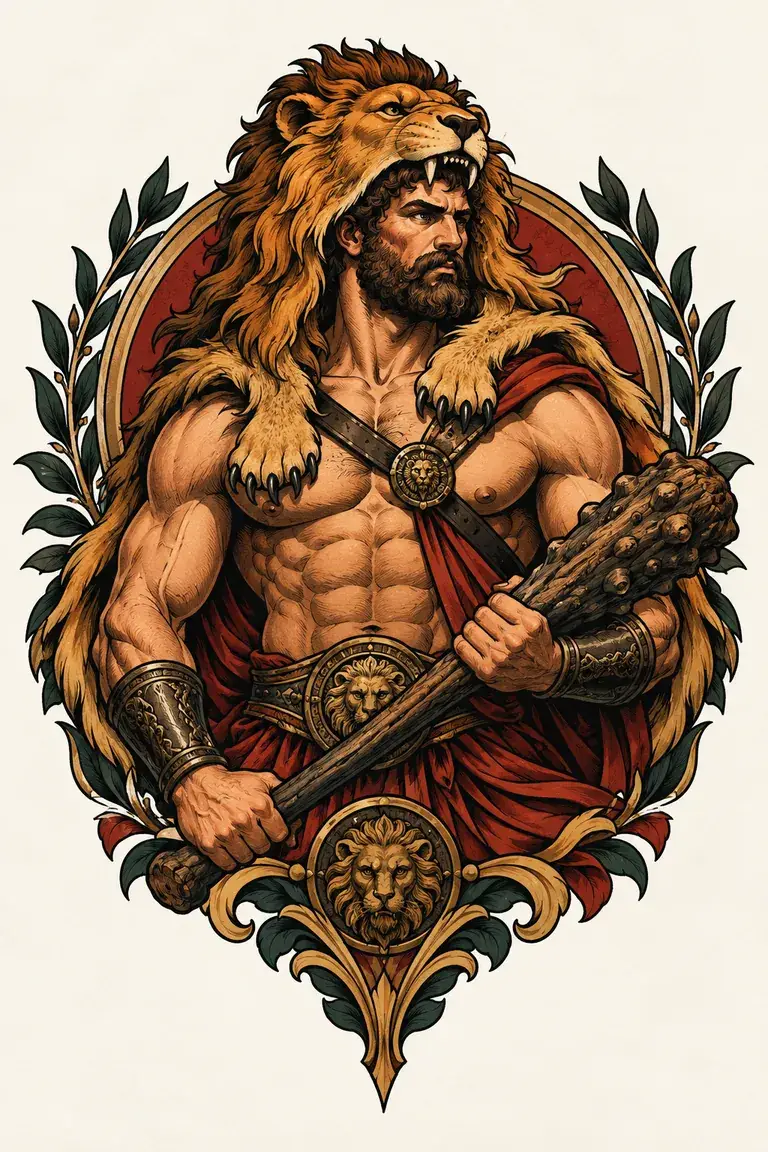
Neo-traditional, Chest
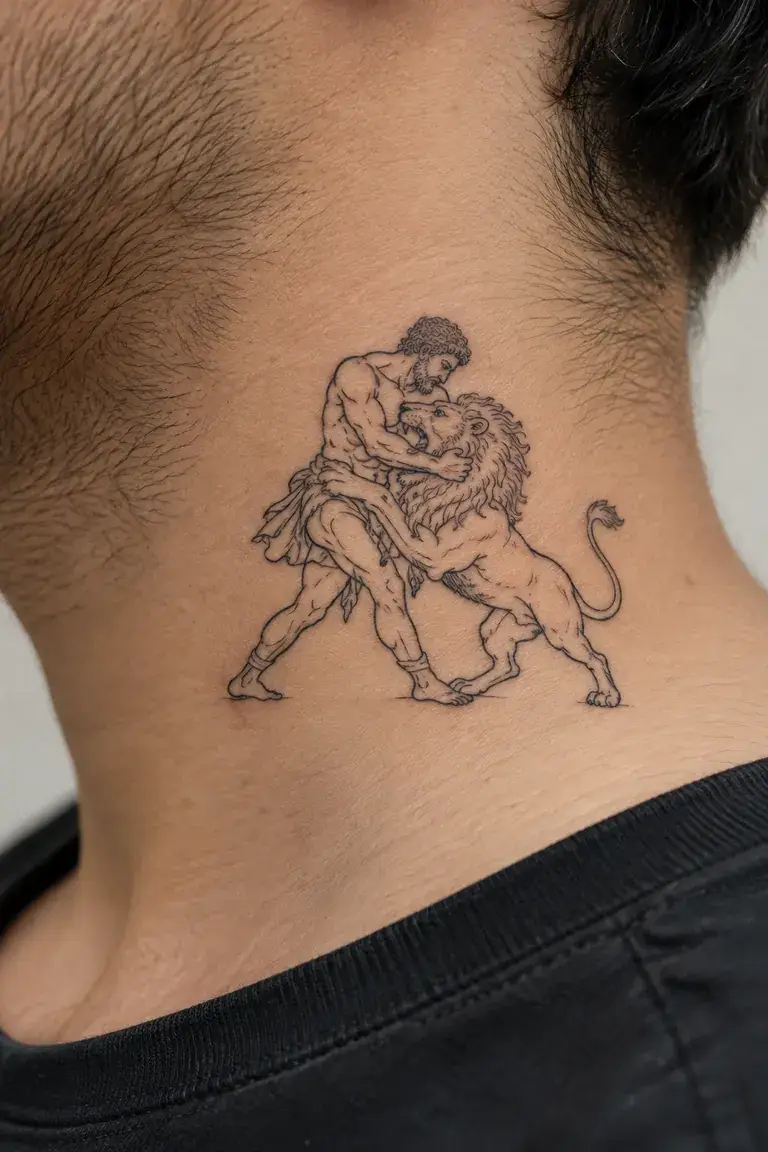
Minimalist, Neck
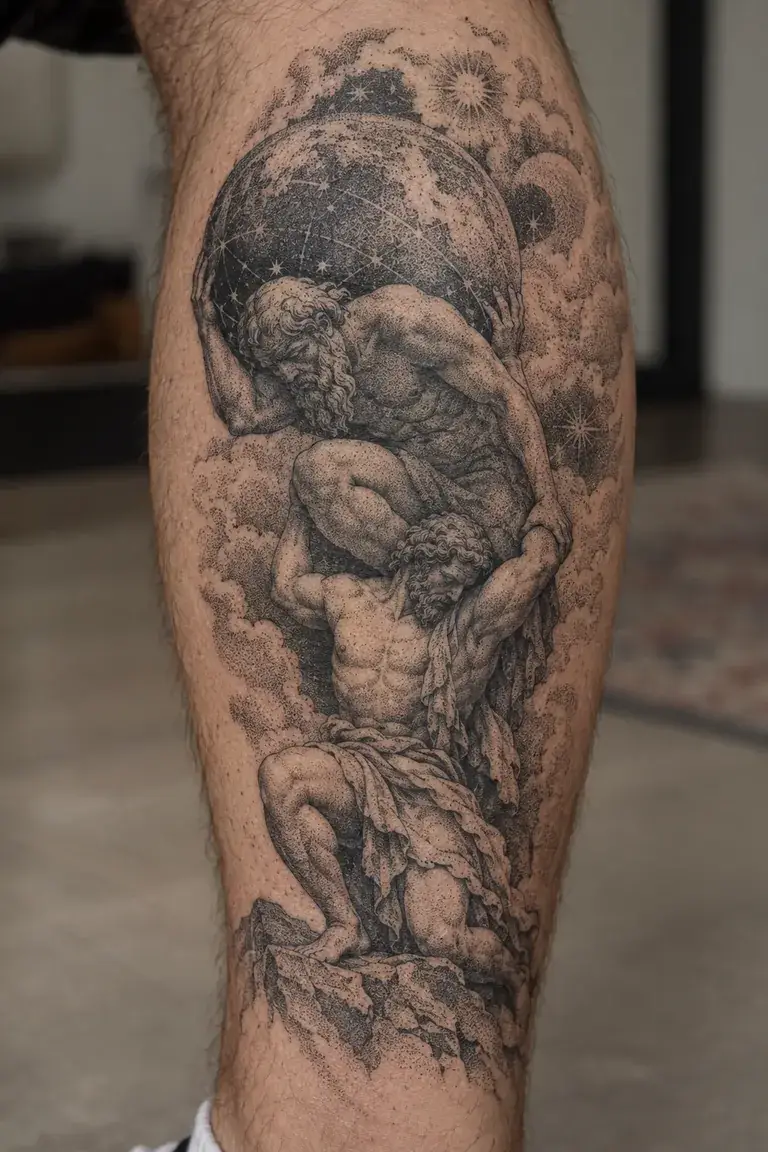
Dotwork, Calf
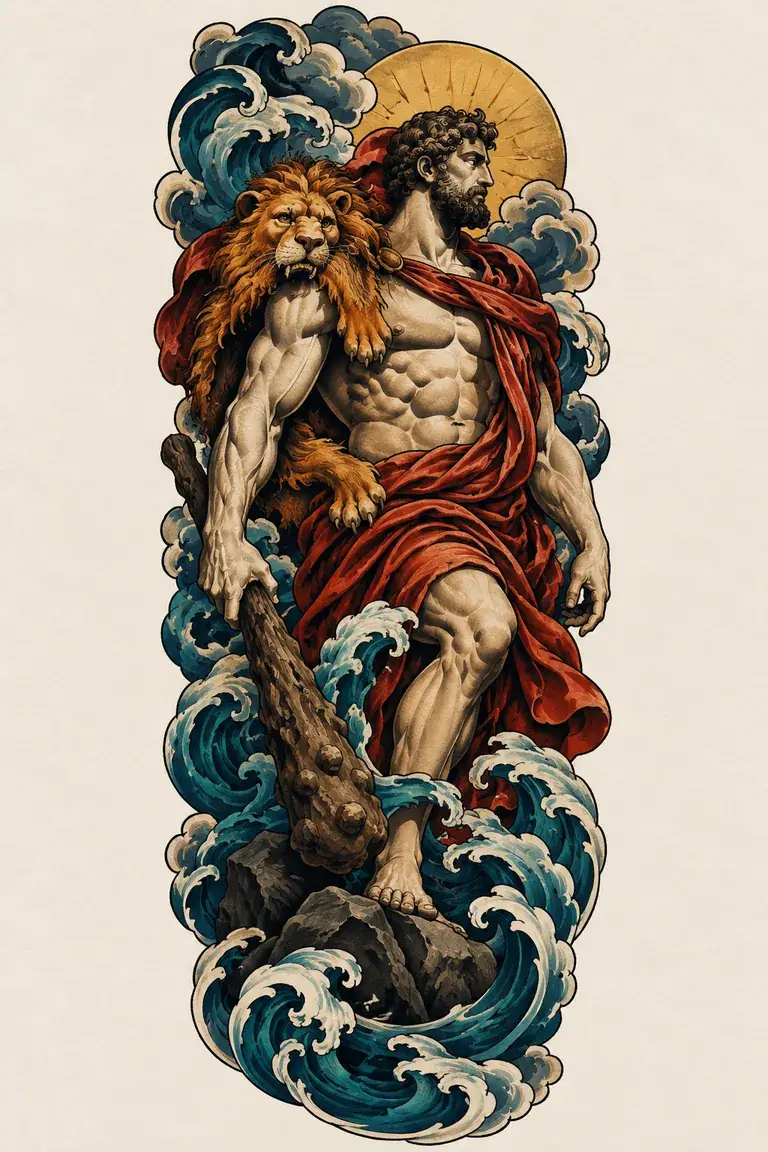
Neo-traditional, Sleeve
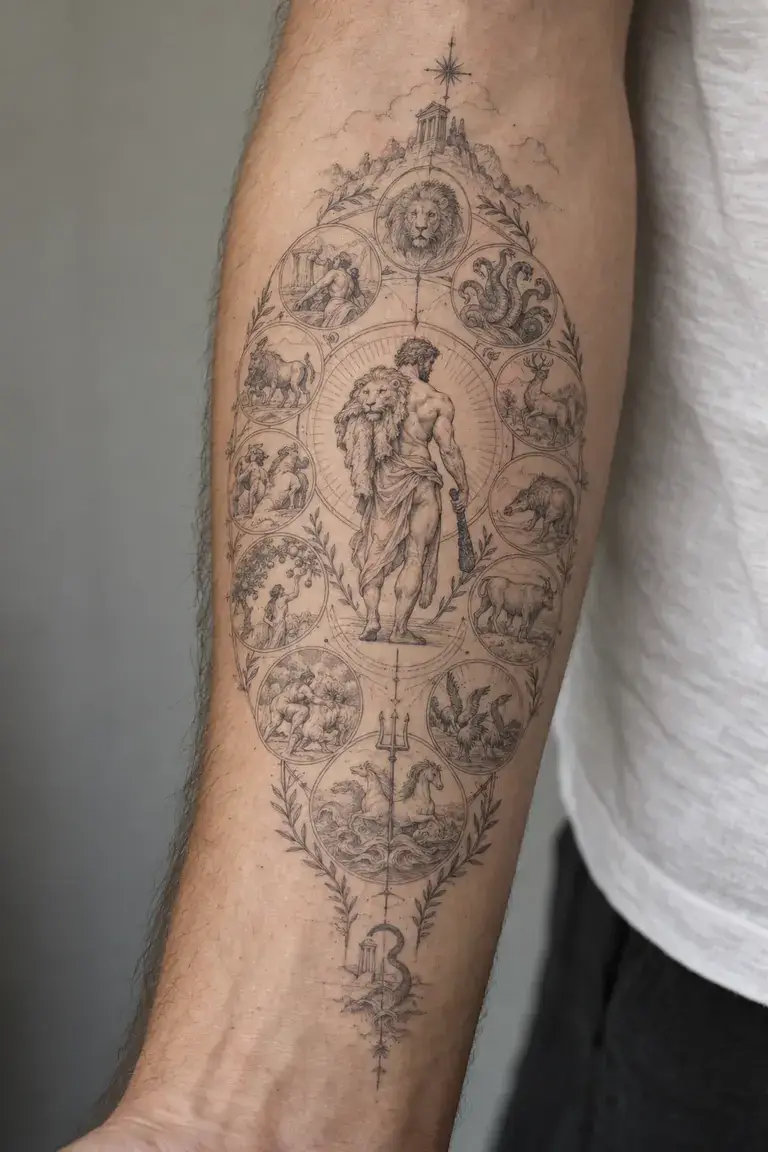
Fine-line, Forearm
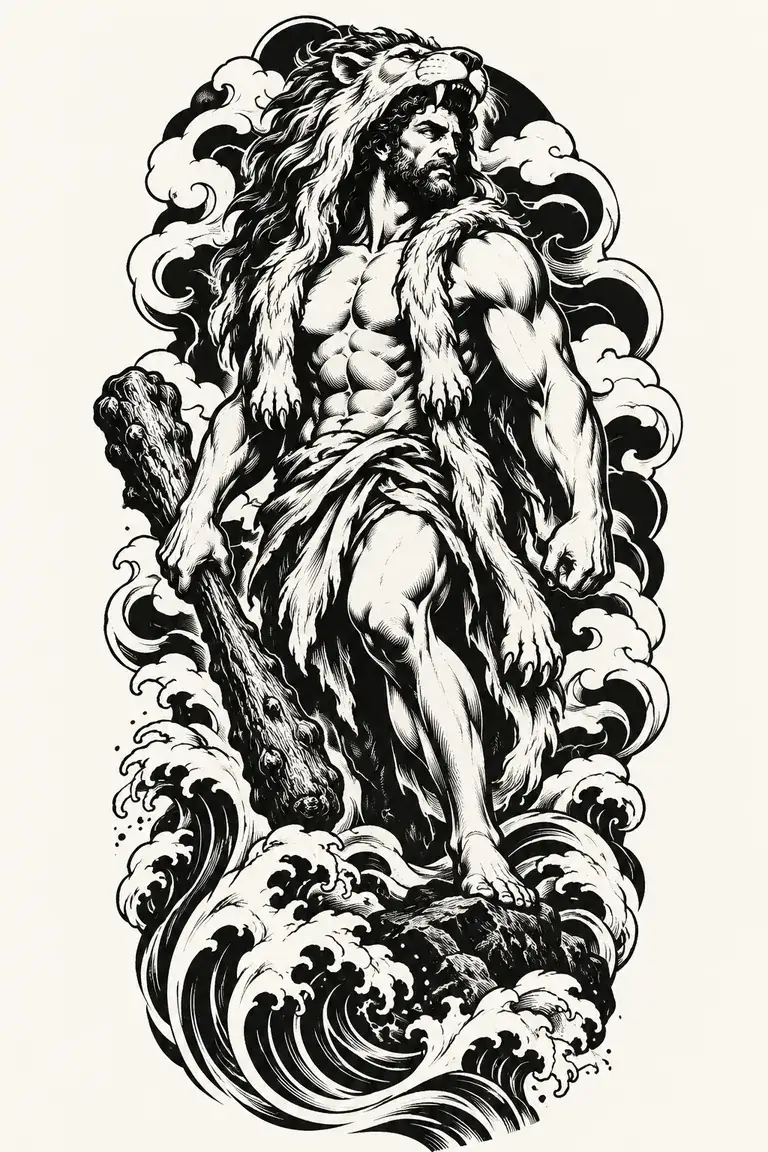
Blackwork, Sleeve
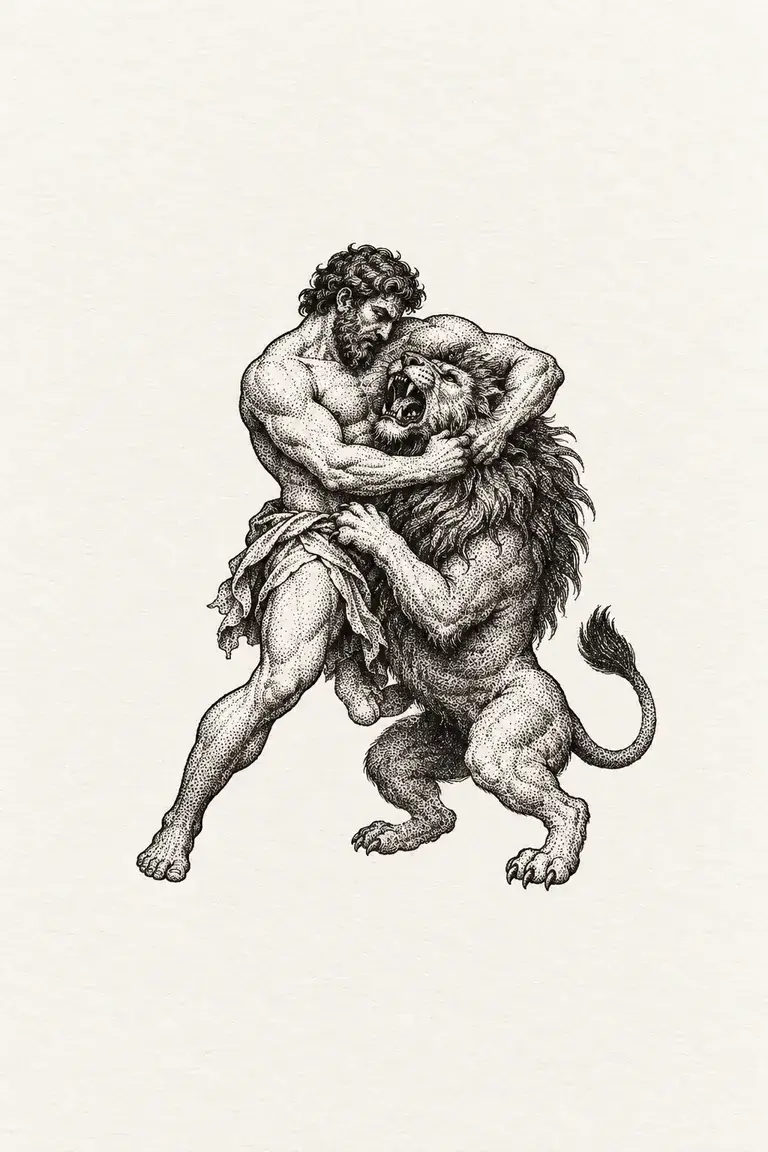
Dotwork, Neck
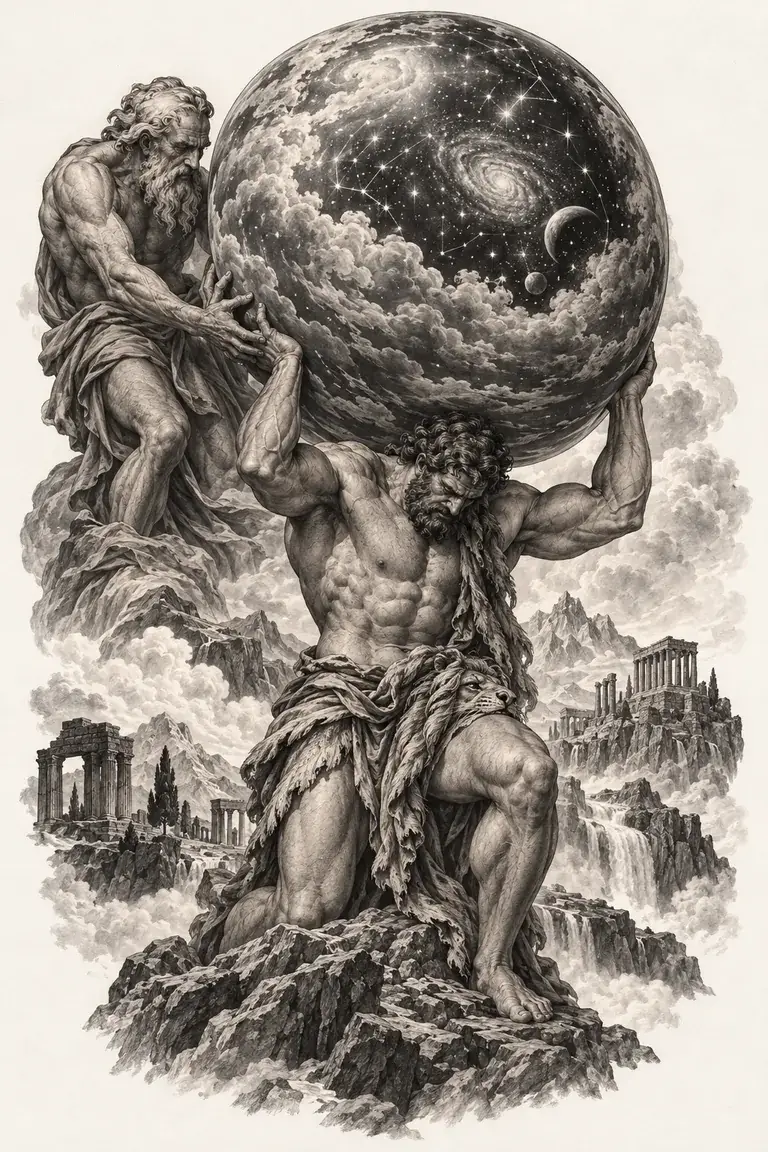
Black and grey realism, Back
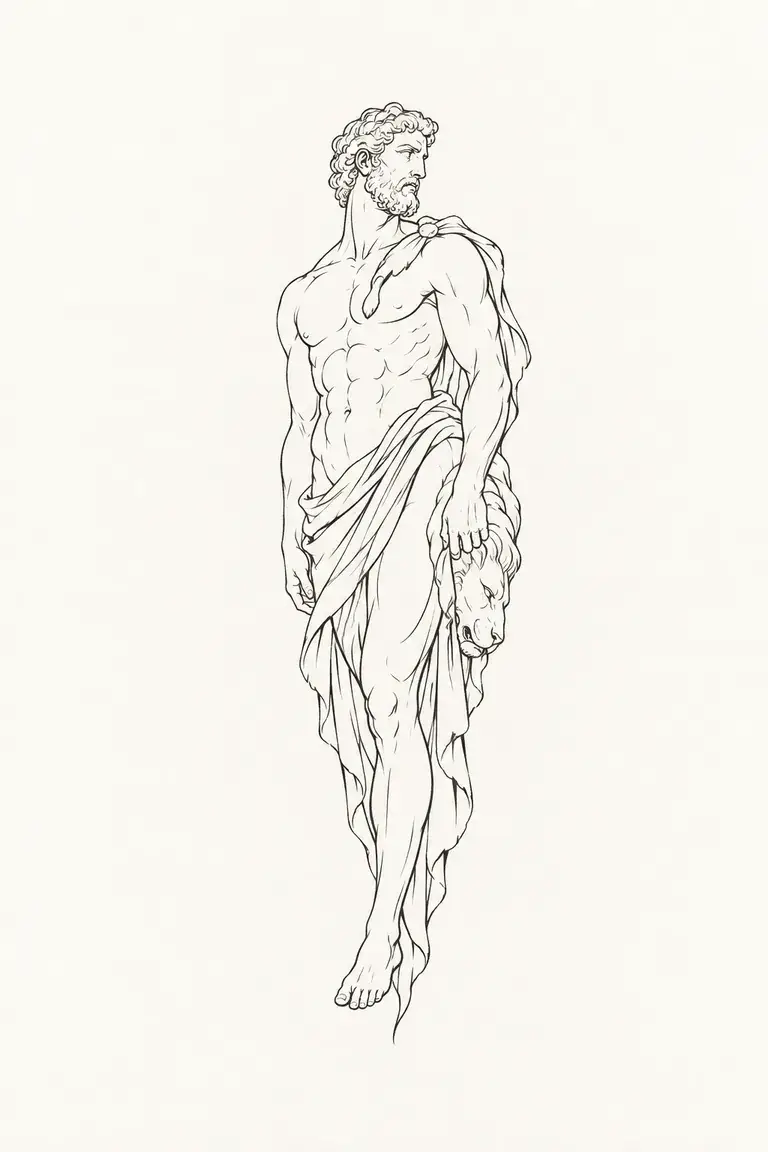
Minimalist, Ribs
Red-figure (Greek vase), Forearm
Frequently asked questions
What does a Hercules tattoo mean?
It most often means strength, perseverance and courage. Because Heracles performed his labours to atone for a terrible crime, it can also stand for redemption and rebuilding yourself after a mistake.
Is it Hercules or Heracles?
Both. Heracles (Herakles) is the original Greek name. Hercules is the Roman form, which became the common English name through Latin literature and art. They are the same hero.
What were the twelve labours of Hercules?
Following Apollodorus: killing the Nemean lion, killing the Lernaean Hydra, capturing the Ceryneian hind, capturing the Erymanthian boar, cleaning the Augean stables, driving off the Stymphalian birds, capturing the Cretan bull, taking the mares of Diomedes, fetching Hippolyta's belt, taking the cattle of Geryon, fetching the apples of the Hesperides and bringing back Cerberus.
Why did Hercules do twelve labours instead of ten?
According to Apollodorus, King Eurystheus originally set ten. He refused to count the Hydra because Heracles' nephew Iolaus helped, and the Augean stables because Heracles asked for payment, so two more were added.
What animal is a symbol of Hercules?
The lion. Heracles wore the skin of the Nemean lion, which no weapon could pierce, as armor and a hood. The lion skin and his wooden club are the two quickest ways to identify him in any design.