Phoenix Tattoo Meaning, Designs and Placement Ideas
The bird that lives for centuries, dies, and comes back from its own remains.
Quick meaning
- Rebirth after loss, illness or a hard ending
- Resilience and rising again
- A fresh start and a new version of yourself
- Endurance over a very long time
- Hope that outlives the worst moment
Carries the meaning of: Rebirth, Resilience, Freedom
What a Phoenix tattoo symbolizes
Rebirth
The core of every phoenix story is that a new bird comes from the old one's death. People get phoenix tattoos after recovering from addiction, illness, divorce or grief, as a sign that an ending turned into a beginning.
Resilience
Fire destroys most things. The phoenix uses it. The tattoo says you were burned down and came back, often stronger and brighter than before.
Long endurance
Ancient writers stressed how long the phoenix lived, around 500 years in most accounts. It can stand for patience and lasting through a long, slow struggle, not just a sudden comeback.
Continuity and legacy
In the oldest Greek account, the young phoenix carries its father's body to the temple of the Sun. That detail makes it a quiet symbol of family, honoring a parent and carrying something forward.
The story behind the phoenix
The phoenix is a Greek-recorded legend with Egyptian roots. The earliest full account comes from the historian Herodotus, writing in the 5th century BCE. In Book 2 of his Histories he says the priests of Heliopolis, the City of the Sun in Egypt, told him about a sacred bird that visits only once every 500 years, when its father dies. He describes it as shaped like an eagle, with feathers partly red and partly gold.
According to the priests, the young bird shapes an egg out of myrrh, hollows it out, places its father’s body inside and seals it, then carries it all the way from Arabia to the temple of the Sun in Heliopolis. Herodotus is open about his doubts. He says he never saw the bird, only pictures of it, and that he does not believe the story.
Scholars often connect the legend to the Egyptian bennu, a heron-like bird tied to the sun god and to creation, although how directly the two are related is still debated.
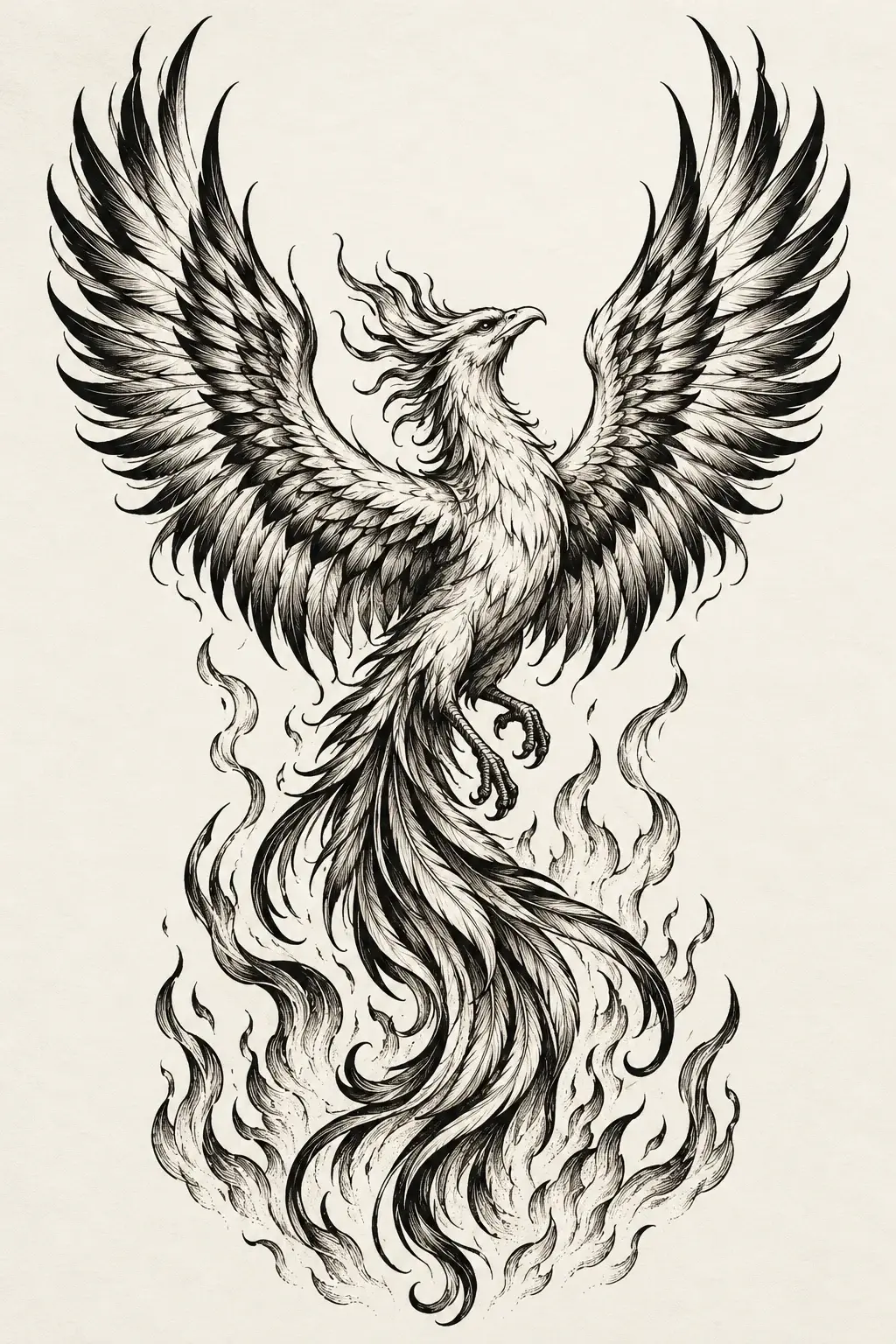
Later authors changed the story. In Ovid’s Metamorphoses, the phoenix lives five centuries, builds a nest of cinnamon, nard and myrrh at the top of a palm tree and dies there. A new phoenix rises from its father’s body and carries the nest to Heliopolis. The idea that the bird burns and is reborn from its own ashes grew in later Roman and early Christian writings, where it became a symbol of resurrection. That fiery version is the one tattoos usually show.
Making a phoenix tattoo feel like your own
Phoenix tattoos are common, so the details are what make yours personal. Think about what you came back from and let that shape the design: a phoenix rising from a specific flower, a date hidden in the flames or ashes made from something meaningful.
Decide which phoenix you want. The Greek and Roman bird is eagle-like and red-gold. The modern tattoo phoenix has long, almost peacock-like tail feathers. The Egyptian bennu is a heron. Your artist will draw very different birds for each.
Size matters for flames. Fire looks best with room to flow, so a phoenix rarely works well under palm size unless it is kept very simple.
Phoenix tattoo design ideas
Rising phoenix in a V shape
Wings raised symmetrically above the head, long tail feathers curling down into stylized flames. It fits the upper back between the shoulder blades and looks balanced from any angle.
Phoenix wrapping the body
A long, flowing composition where the tail trails down the ribs or thigh and the wings open across the shoulder or hip. Ask your artist to follow the natural curves so the bird seems to move with you.
Phoenix from the ashes
A small pile of ash and embers at the base with the bird just emerging, wings half open. A strong option if the story of recovery matters more than the spectacle.
Egyptian-influenced phoenix
A nod to the legend's roots: a heron-like bird with a sun disc, inspired by the Egyptian bennu bird, framed by simple hieroglyph-style lines. Works well in fine-line or blackwork.
Minimal flame bird
A few sweeping lines suggesting wings, tail and fire, sometimes done with a single continuous line. Small, elegant and good for the wrist, collarbone or behind the ear.
Best placements for a Phoenix tattoo
- Back
- The classic phoenix placement. A full back piece gives room for spread wings and a long tail, and an upper-back version fits between the shoulder blades.
- Ribs or side
- Lets the tail flow downward along the body. Painful, but the shape suits a vertical bird perfectly.
- Thigh or hip
- Large, curved and easy to cover. A phoenix wrapping from hip to thigh is especially popular.
- Forearm or collarbone
- Good for smaller, simplified designs. Keep flame detail bold enough to stay readable.
Styles that suit Phoenix
- Blackwork
- Solid black wings with fine detail give a striking, graphic phoenix that ages well and suits large ornamental layouts.
- Neo-traditional
- Bold outlines with red, orange and gold flames. If you want color, this is the style where the phoenix shines.
- Fine-line
- Delicate, flowing feathers for a softer, more personal phoenix. Best at small to medium size.
- Dotwork
- Stippled shading for embers and smoke gives a subtle glow without color.
32 more Phoenix tattoo designs
Different styles and placements to show your tattoo artist.
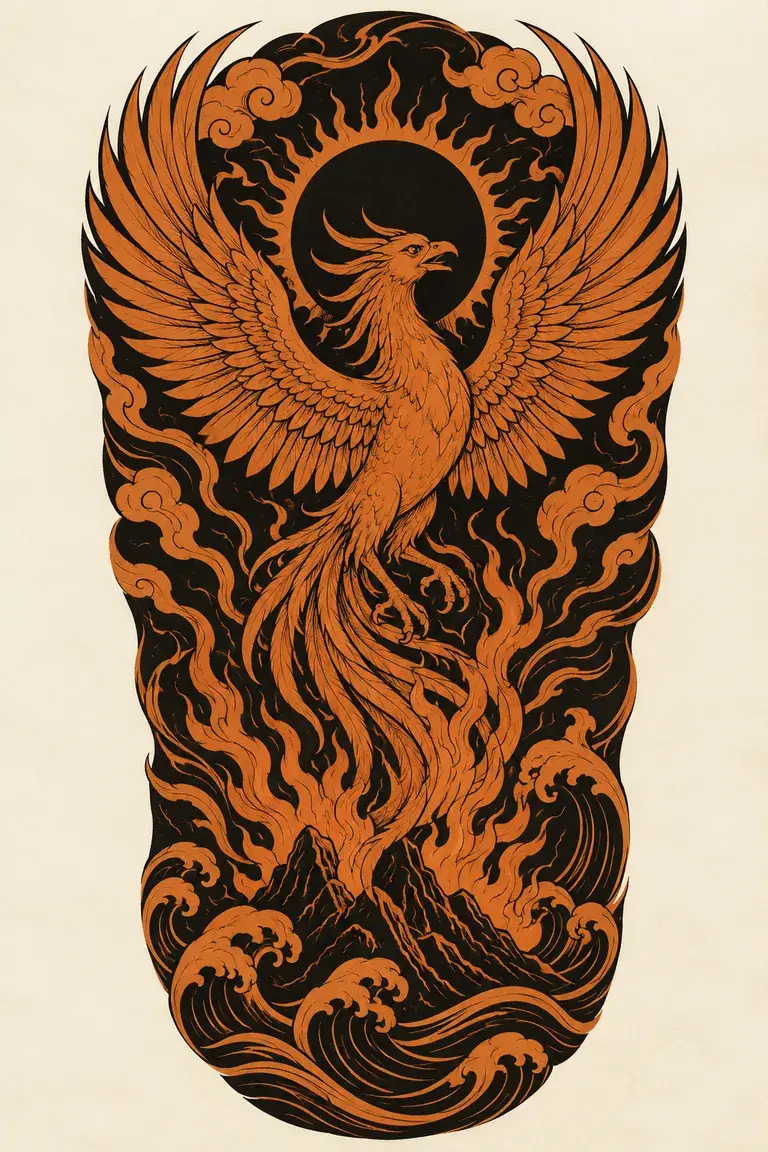
Red-figure (Greek vase), Sleeve
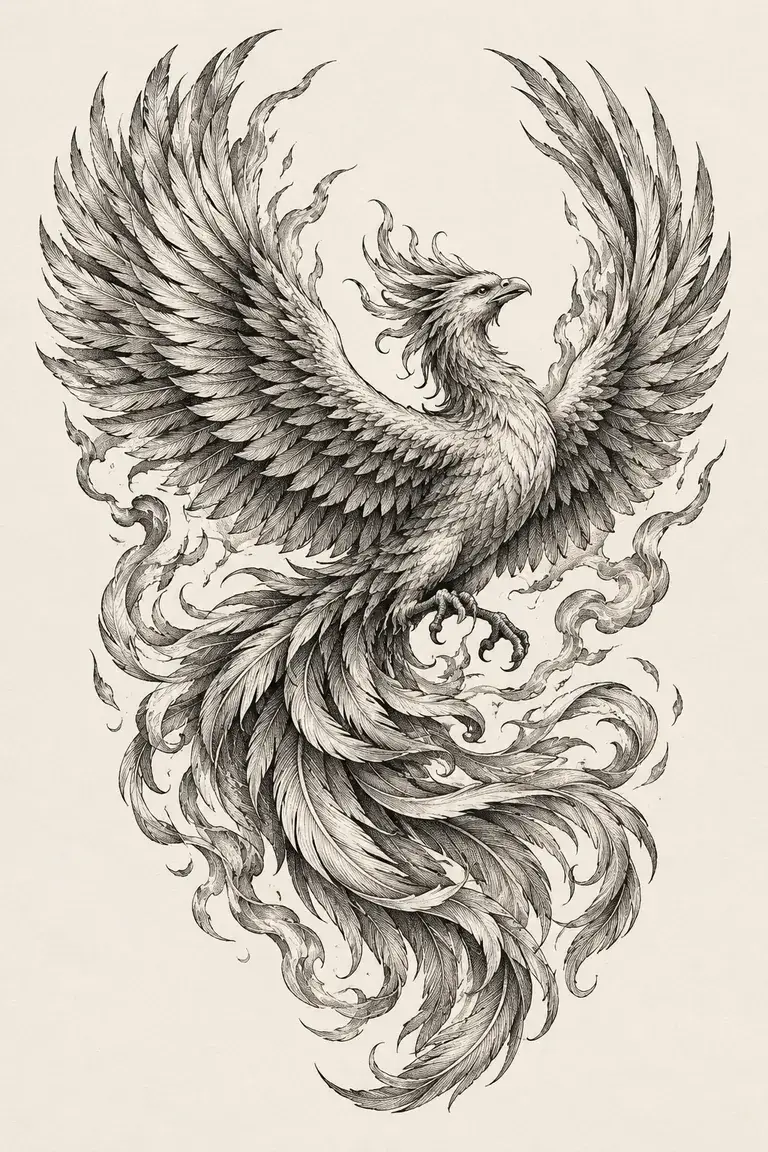
Engraving, Shoulder
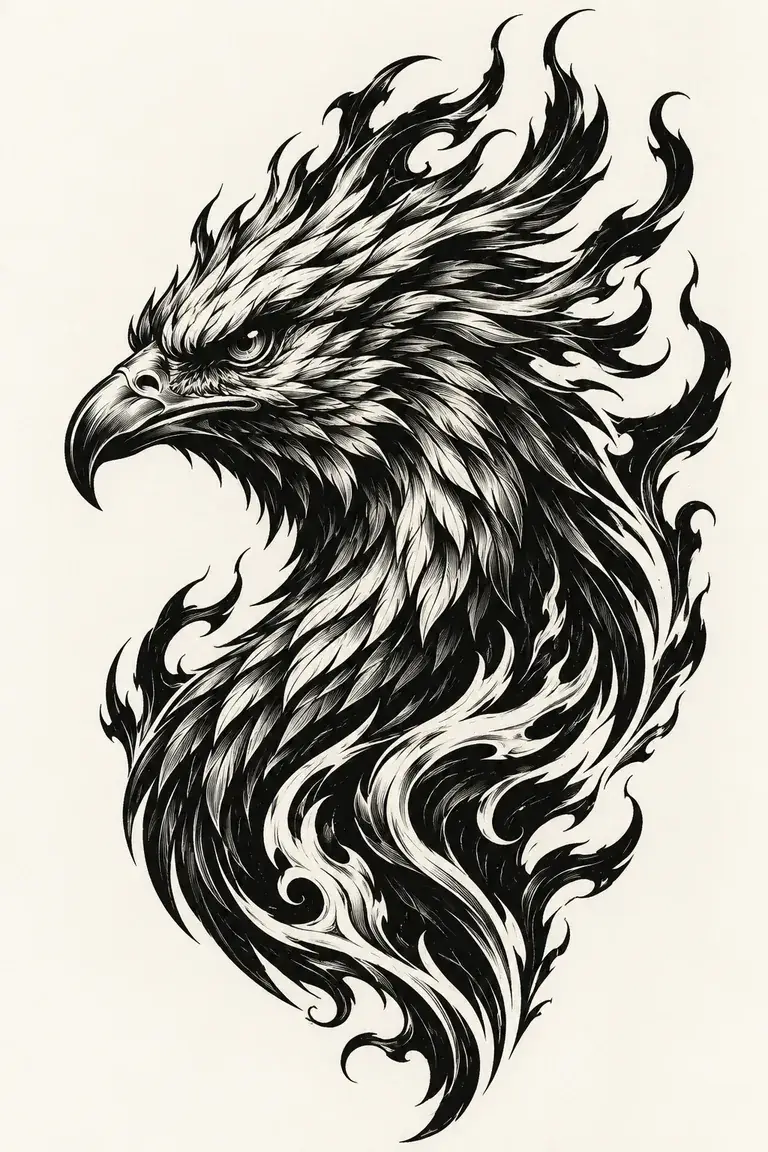
Blackwork, Thigh
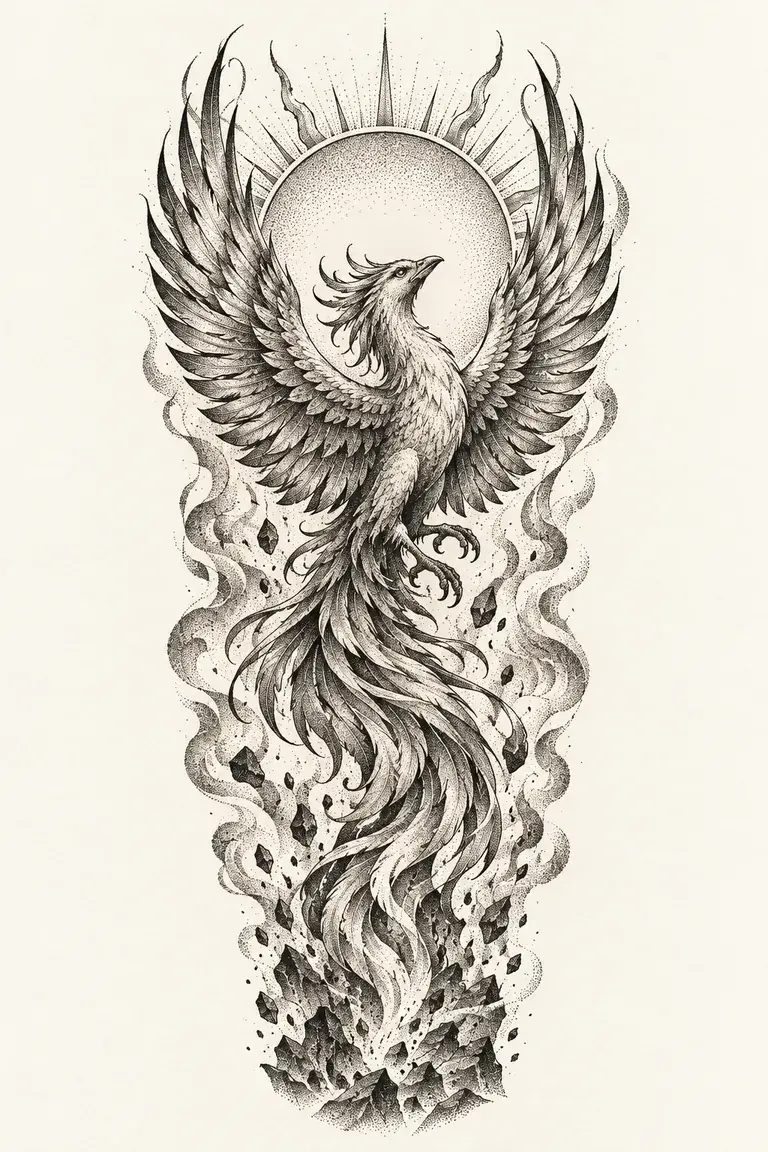
Dotwork, Forearm
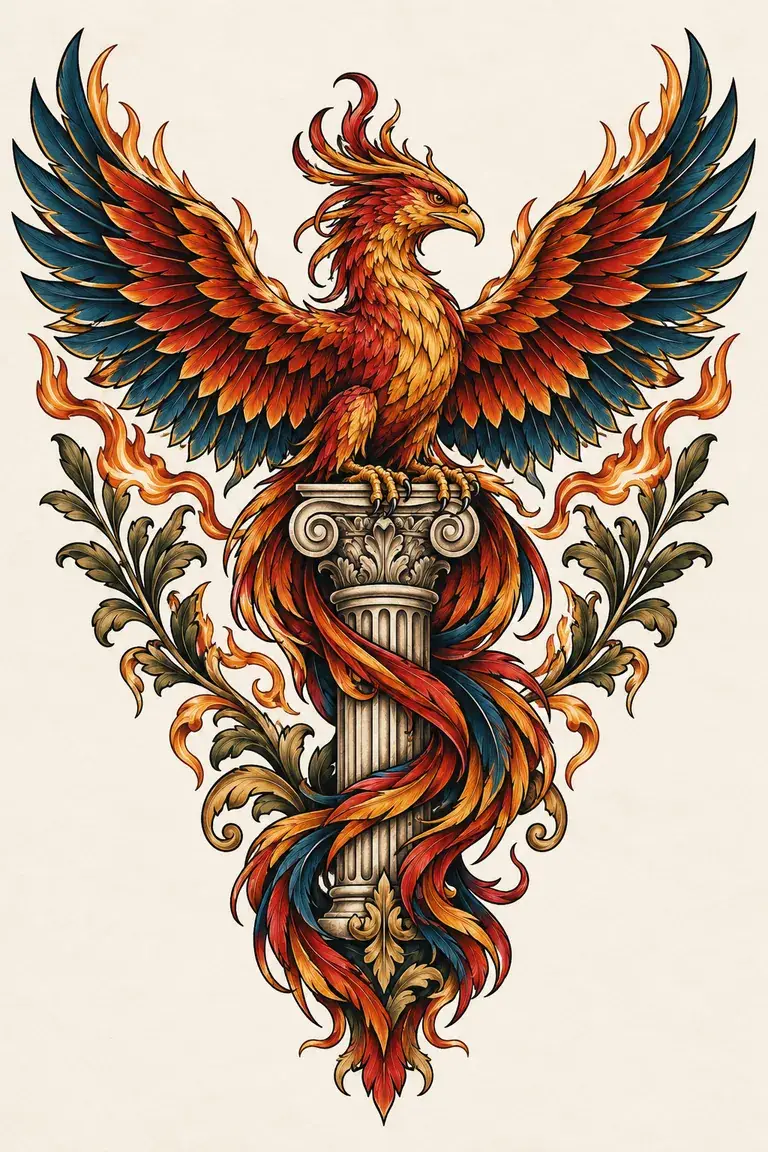
Neo-traditional, Chest
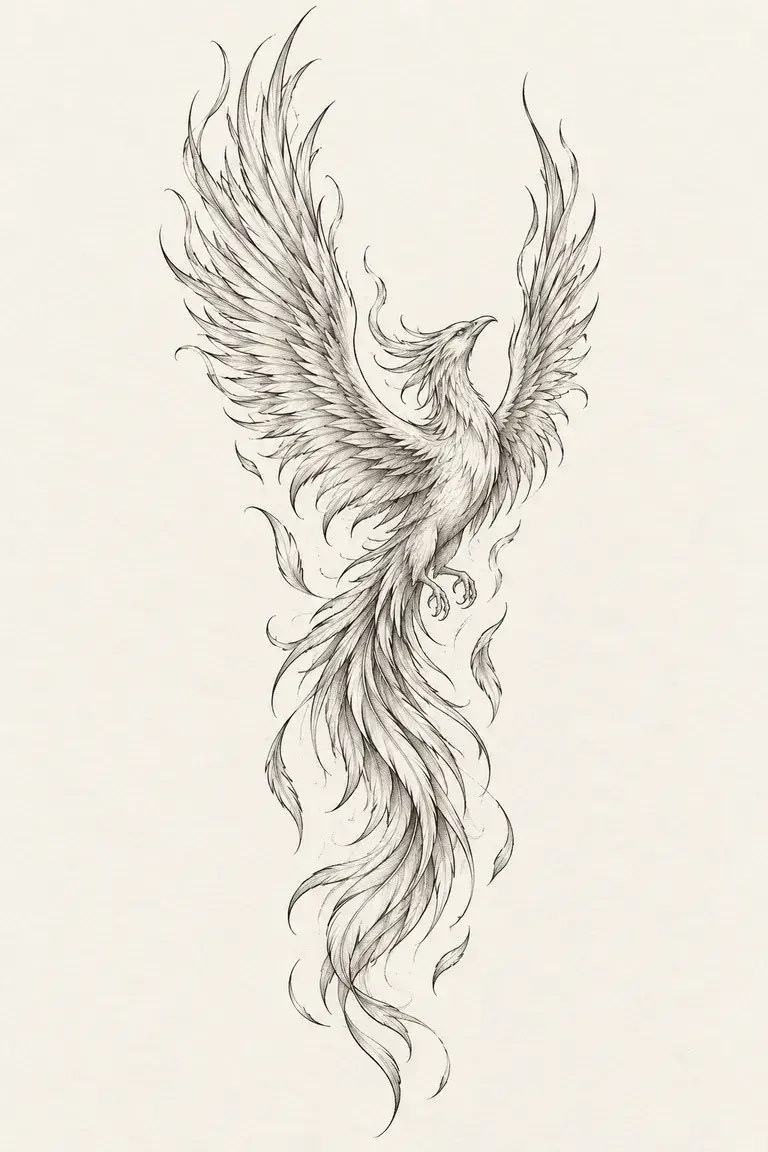
Fine-line, Forearm
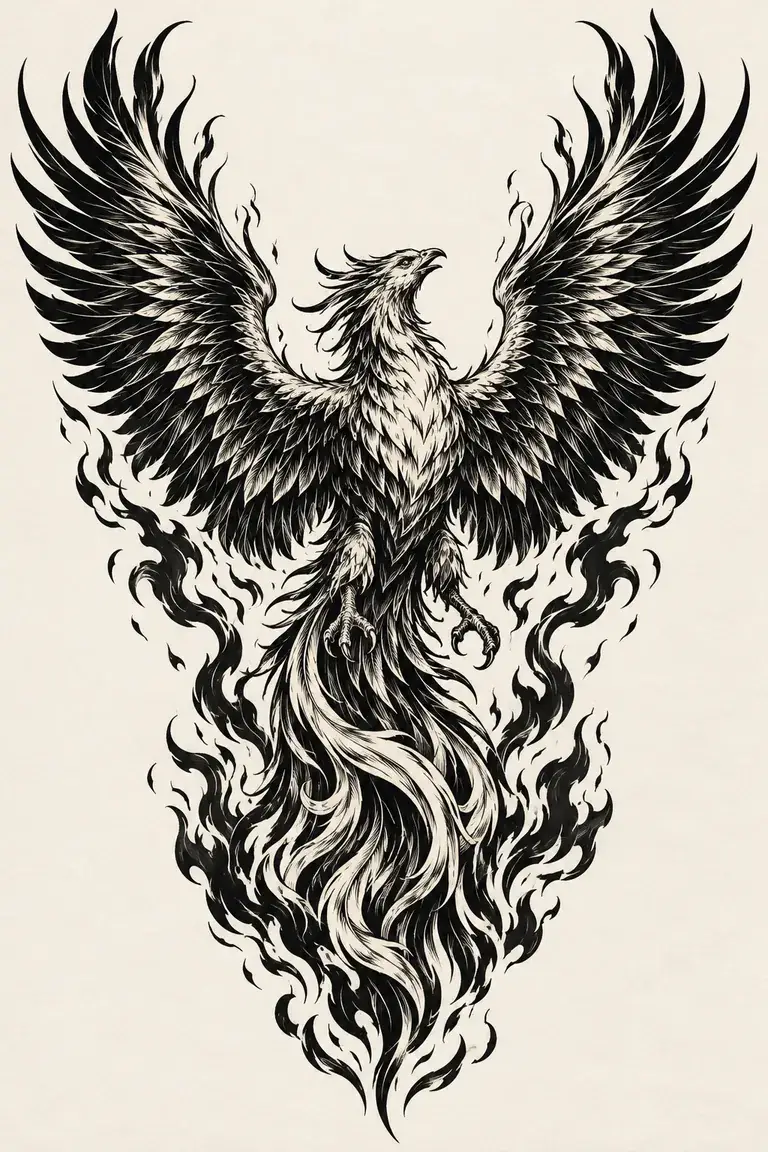
Blackwork, Back
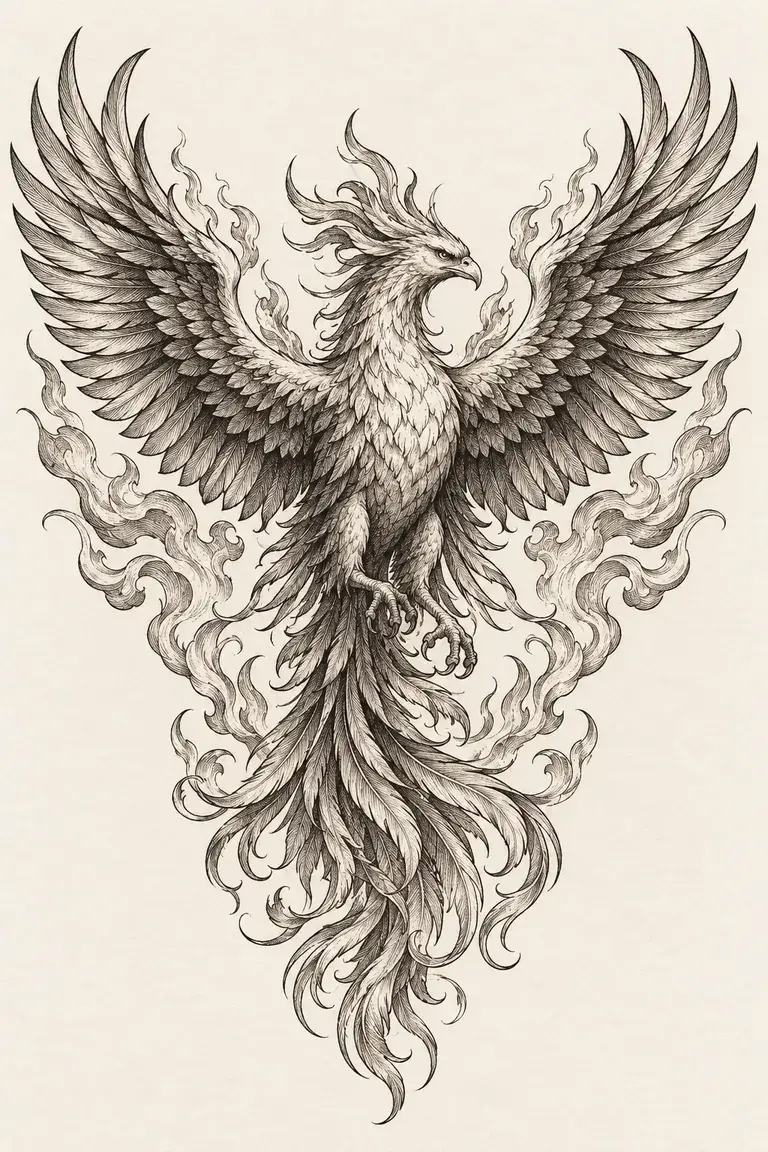
Engraving, Chest
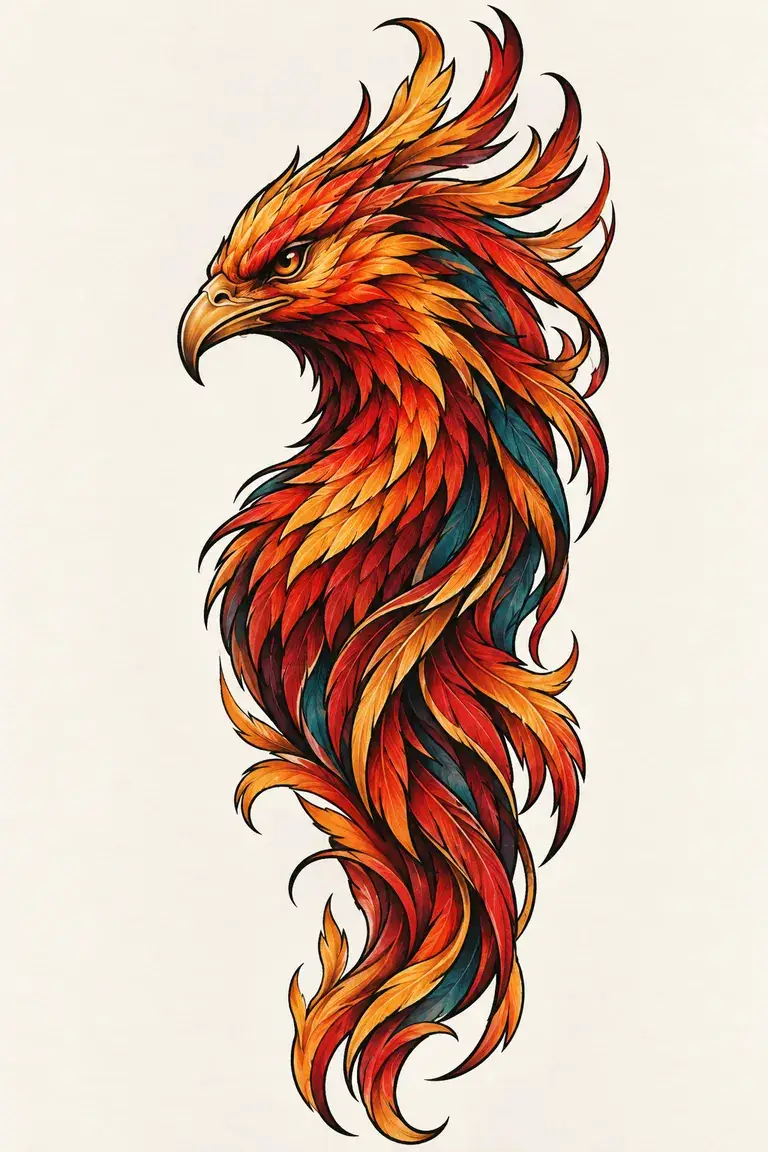
Neo-traditional, Forearm
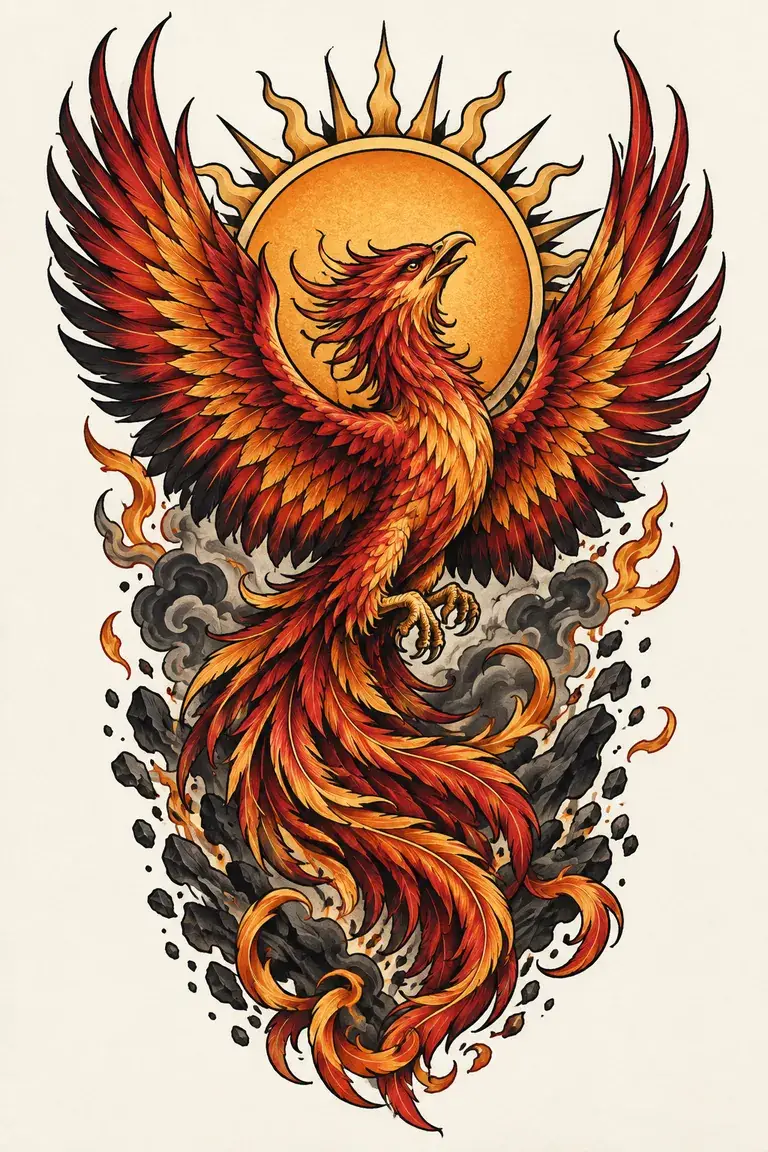
Neo-traditional, Thigh
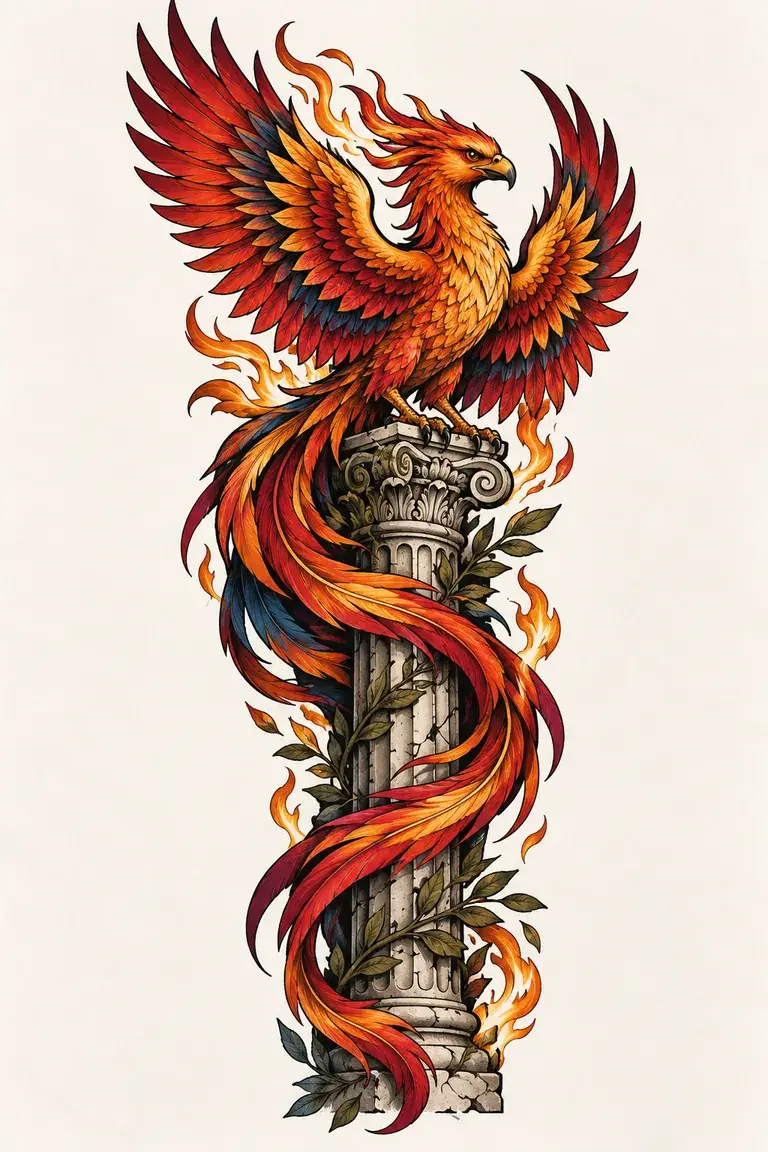
Neo-traditional, Calf
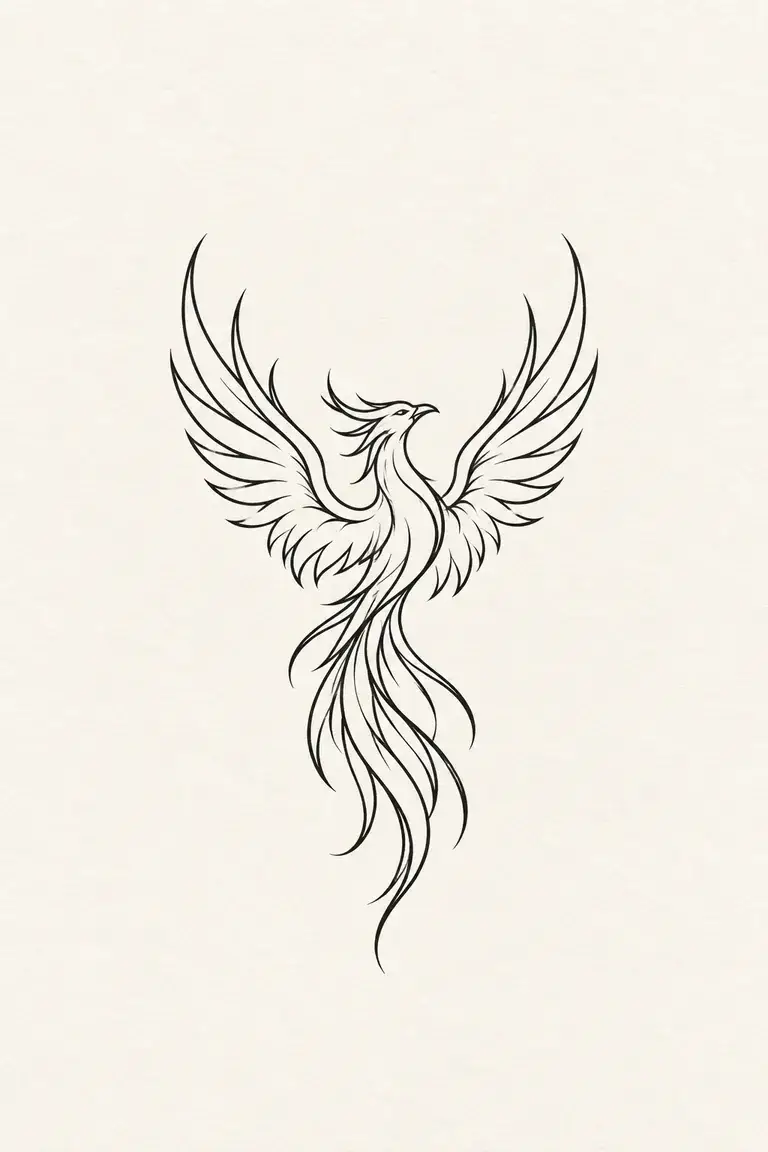
Minimalist, Wrist
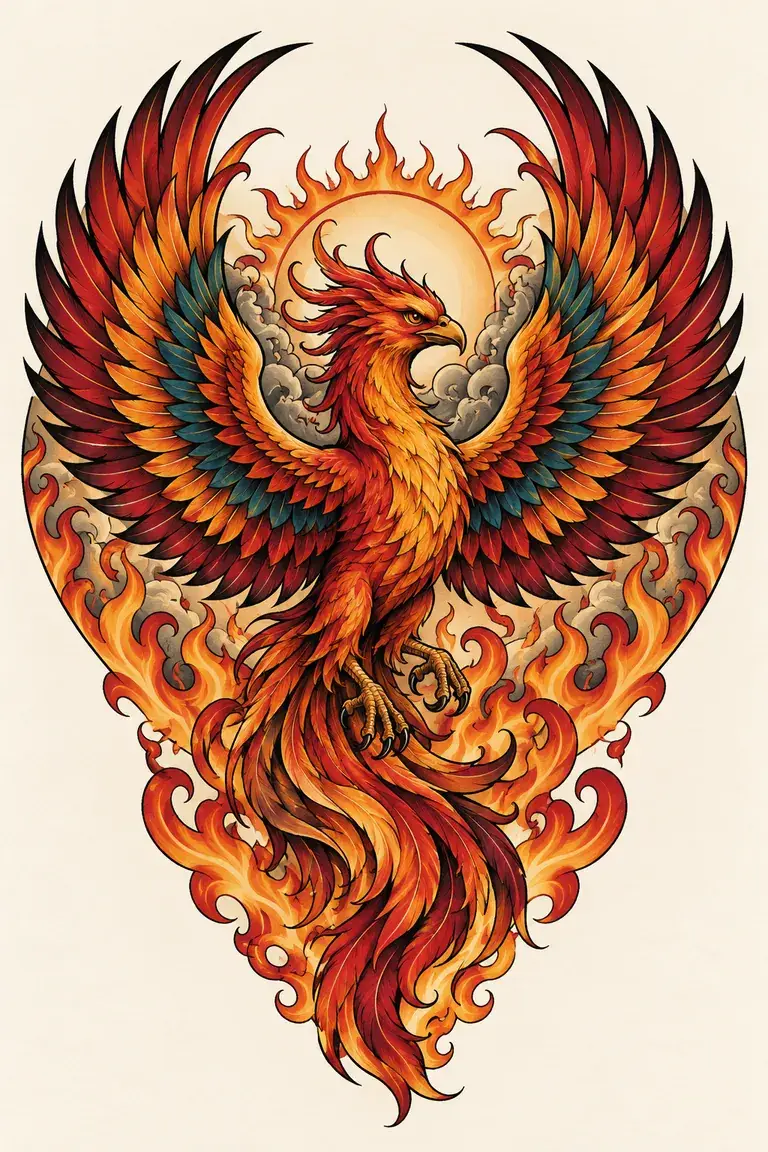
Neo-traditional, Shoulder
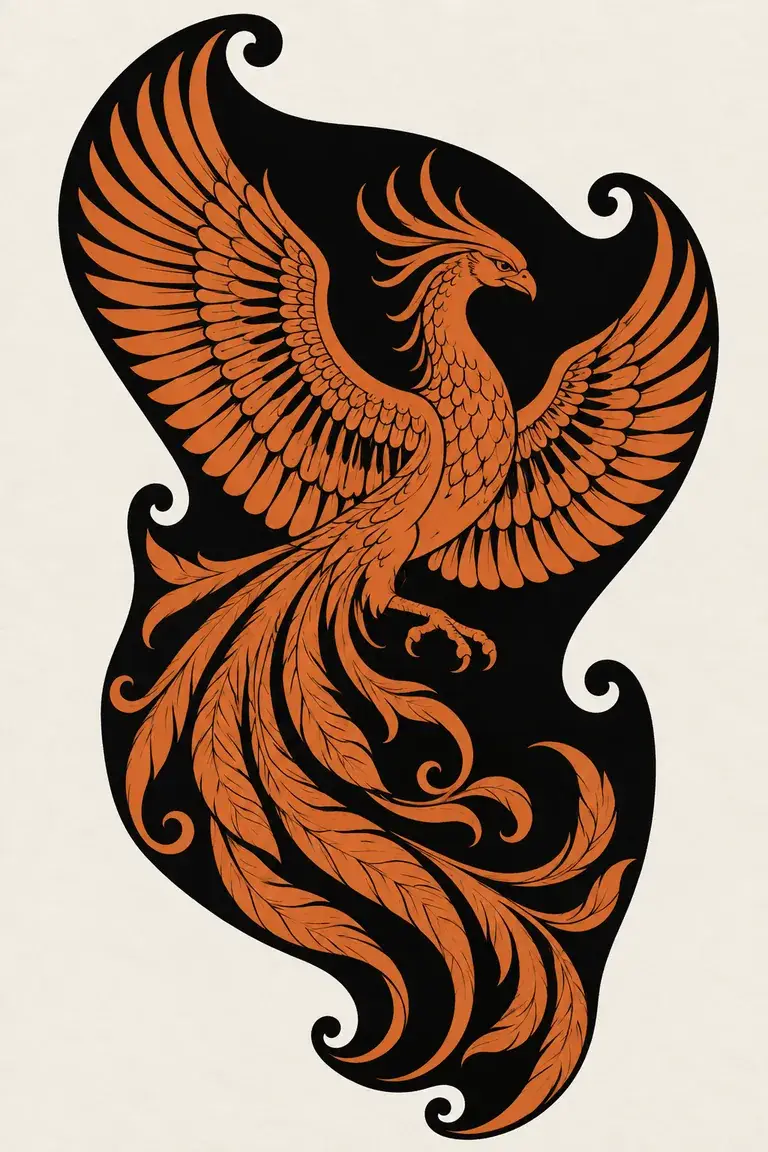
Red-figure (Greek vase), Upper arm
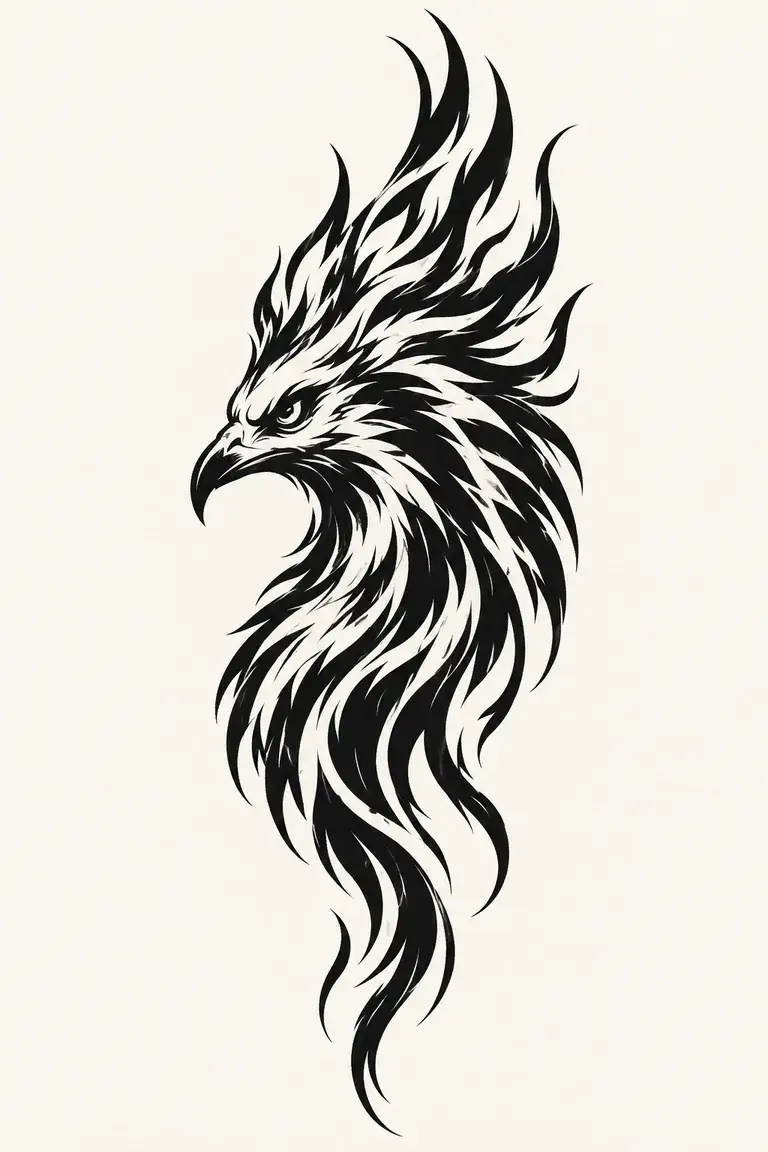
Blackwork, Forearm
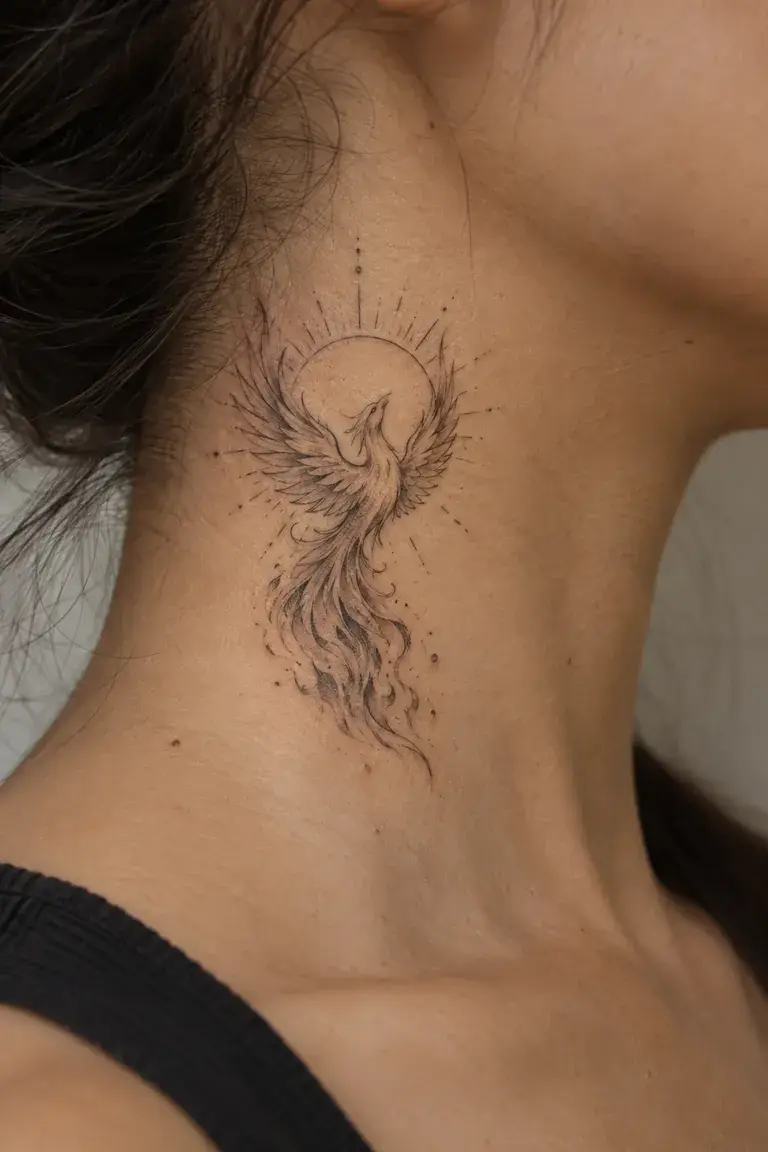
Fine-line, Neck
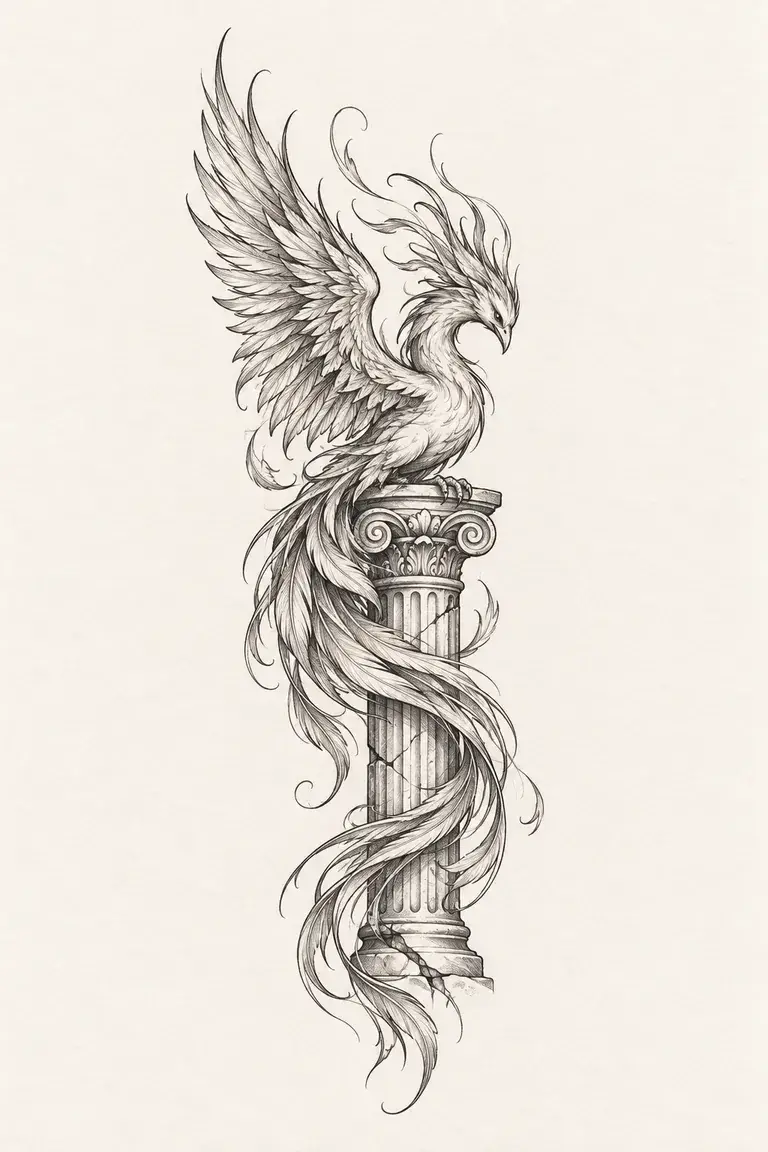
Fine-line, Ankle
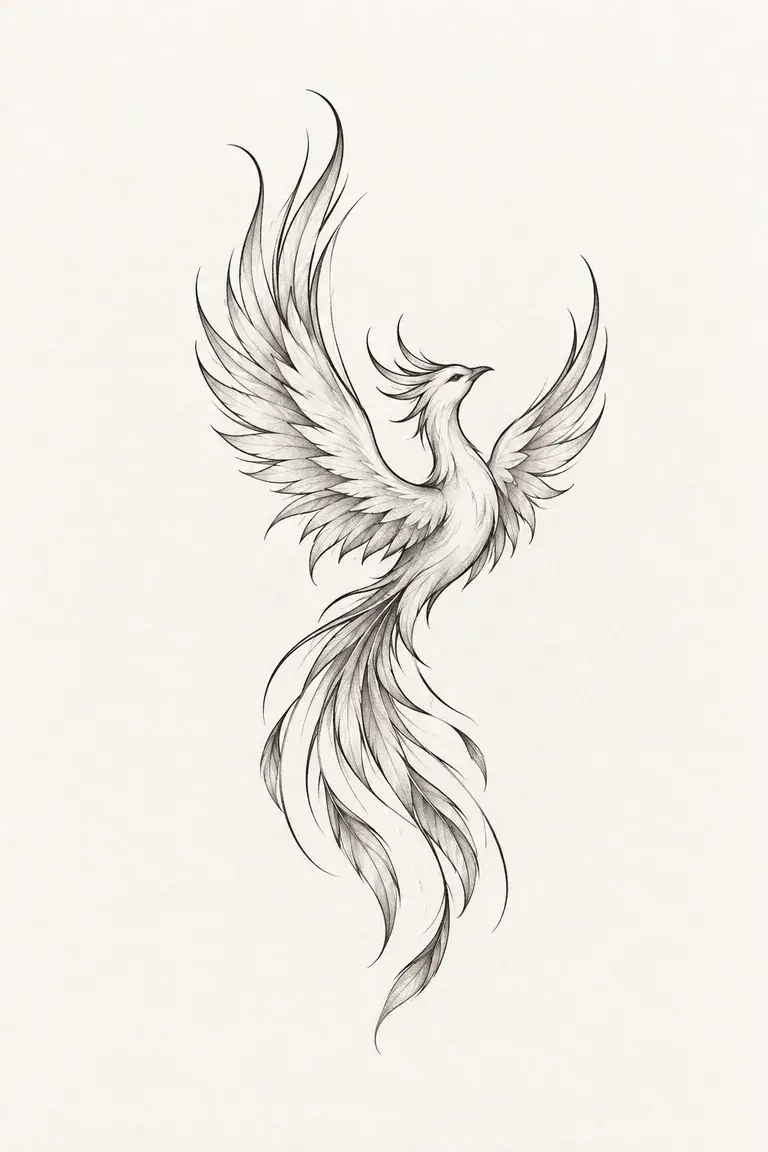
Fine-line, Ankle
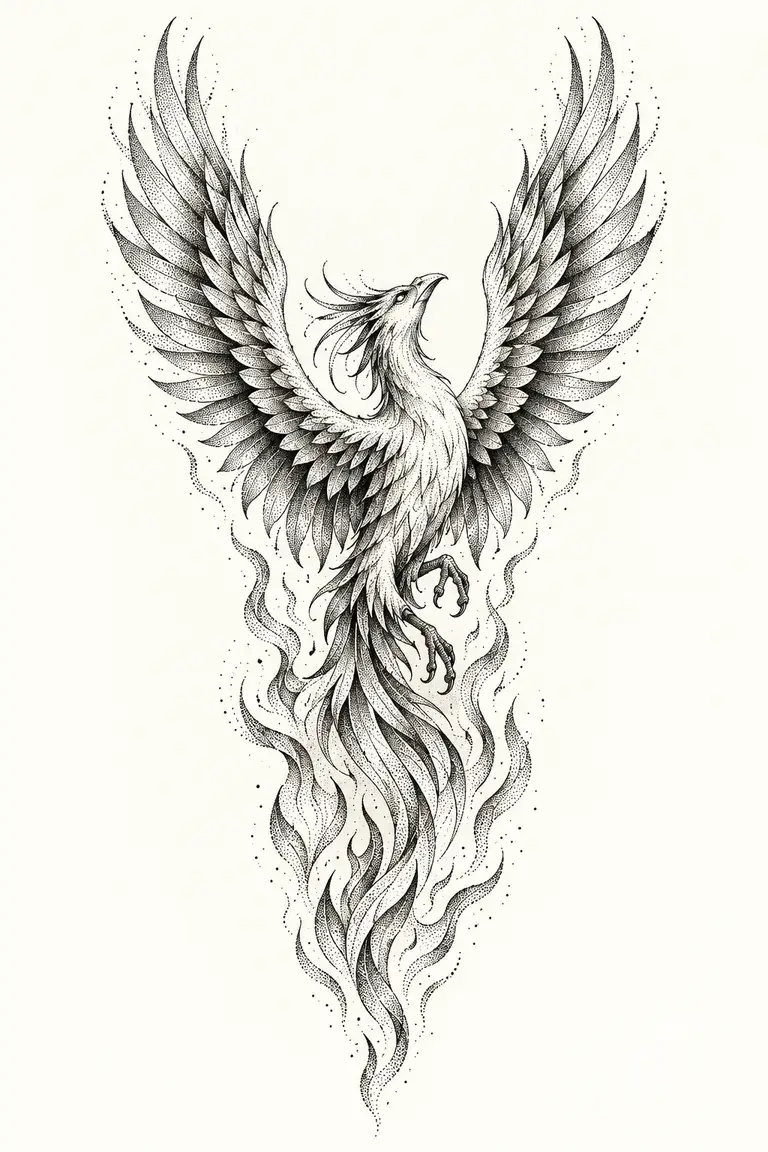
Dotwork, Ribs
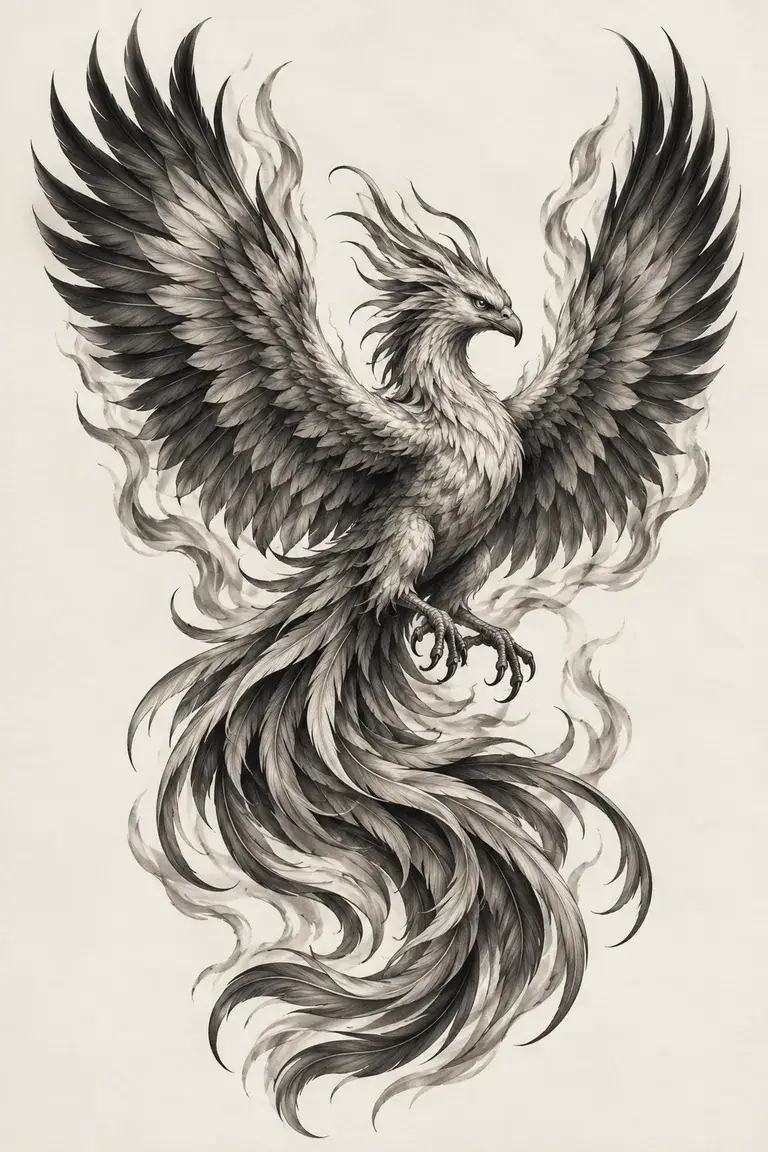
Black and grey realism, Thigh
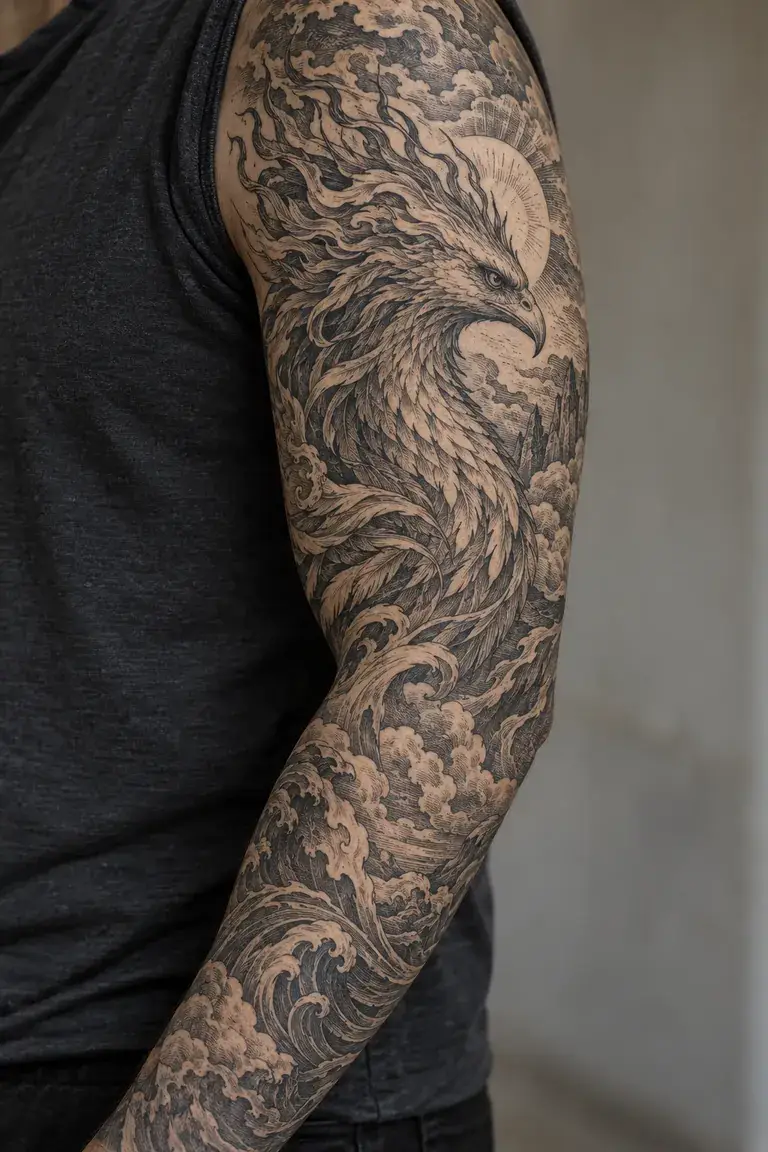
Engraving, Sleeve
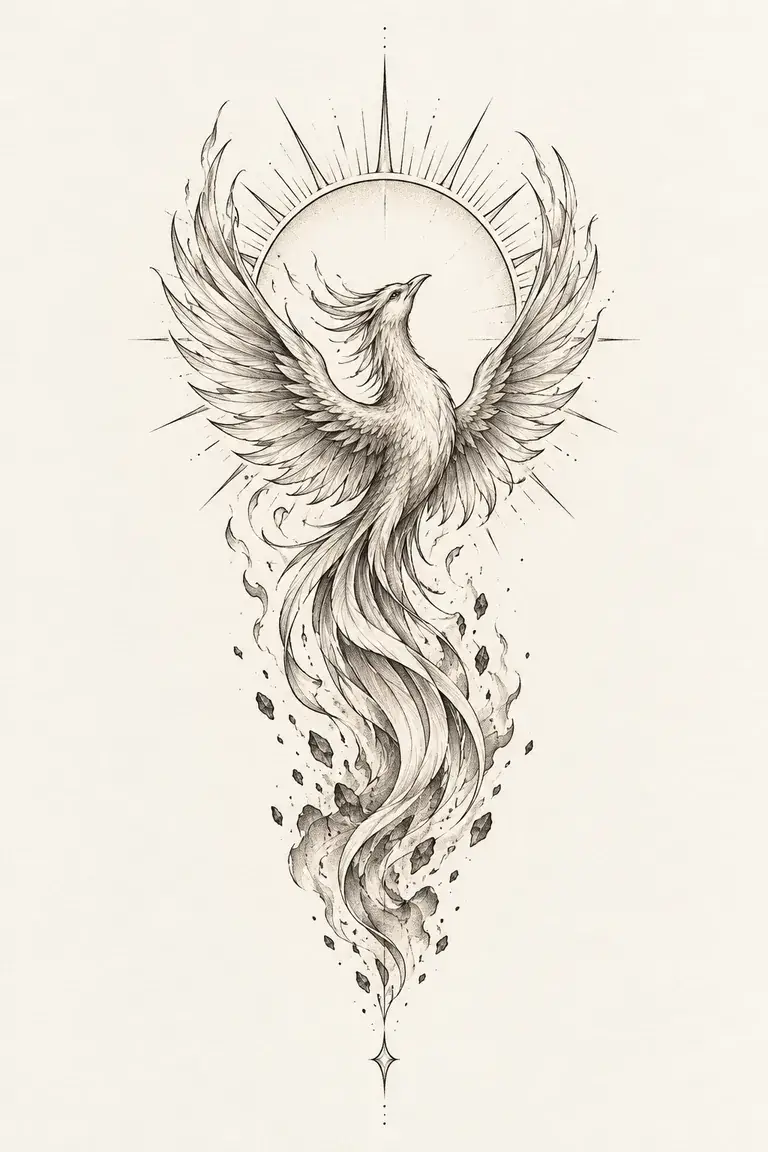
Fine-line, Forearm
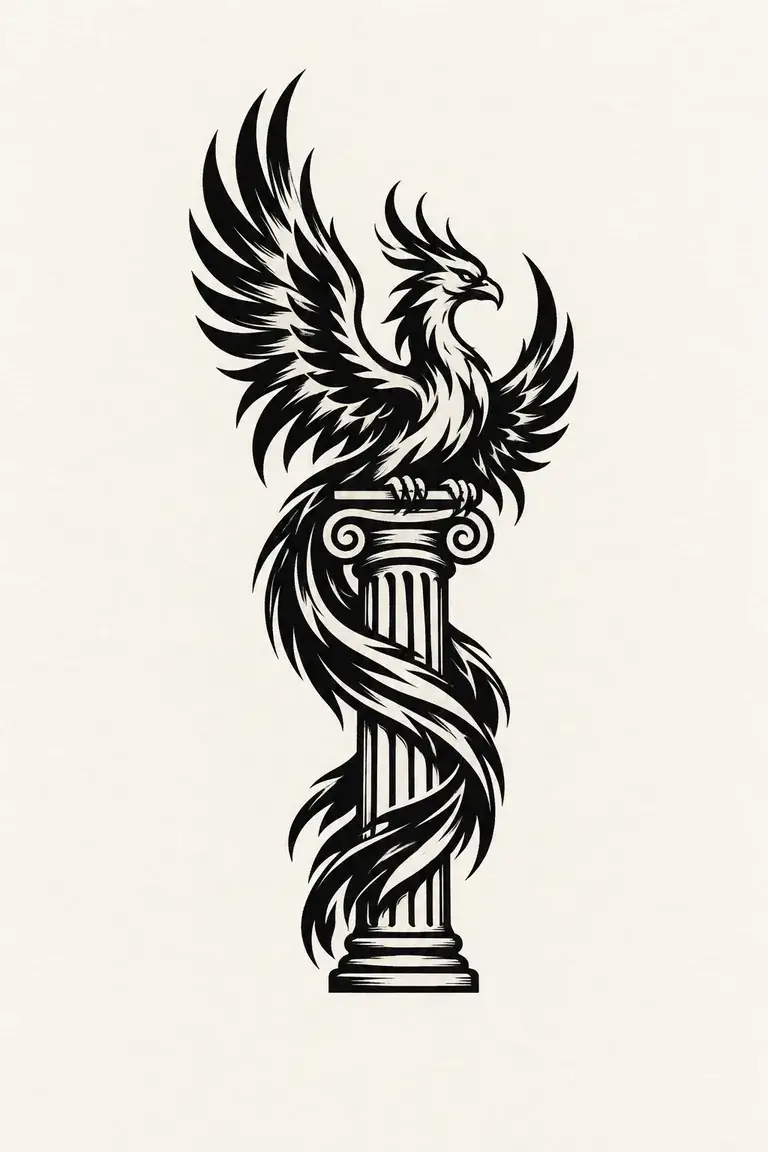
Blackwork, Wrist
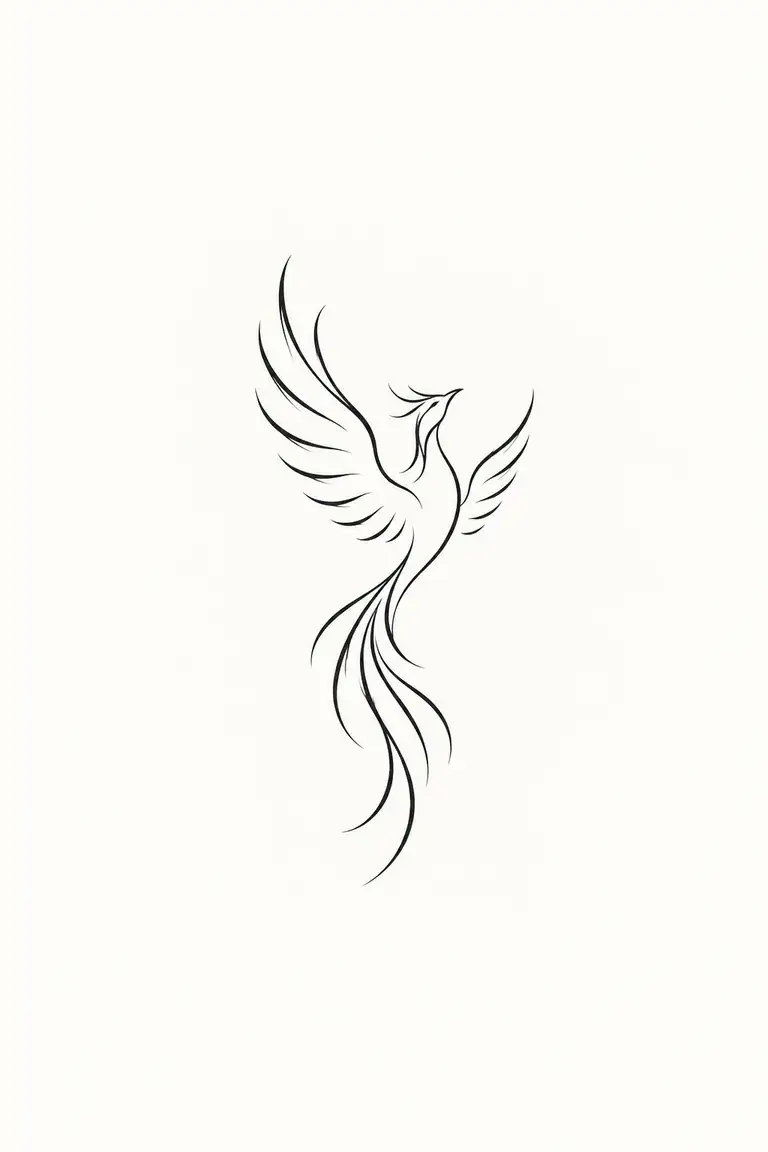
Minimalist, Neck
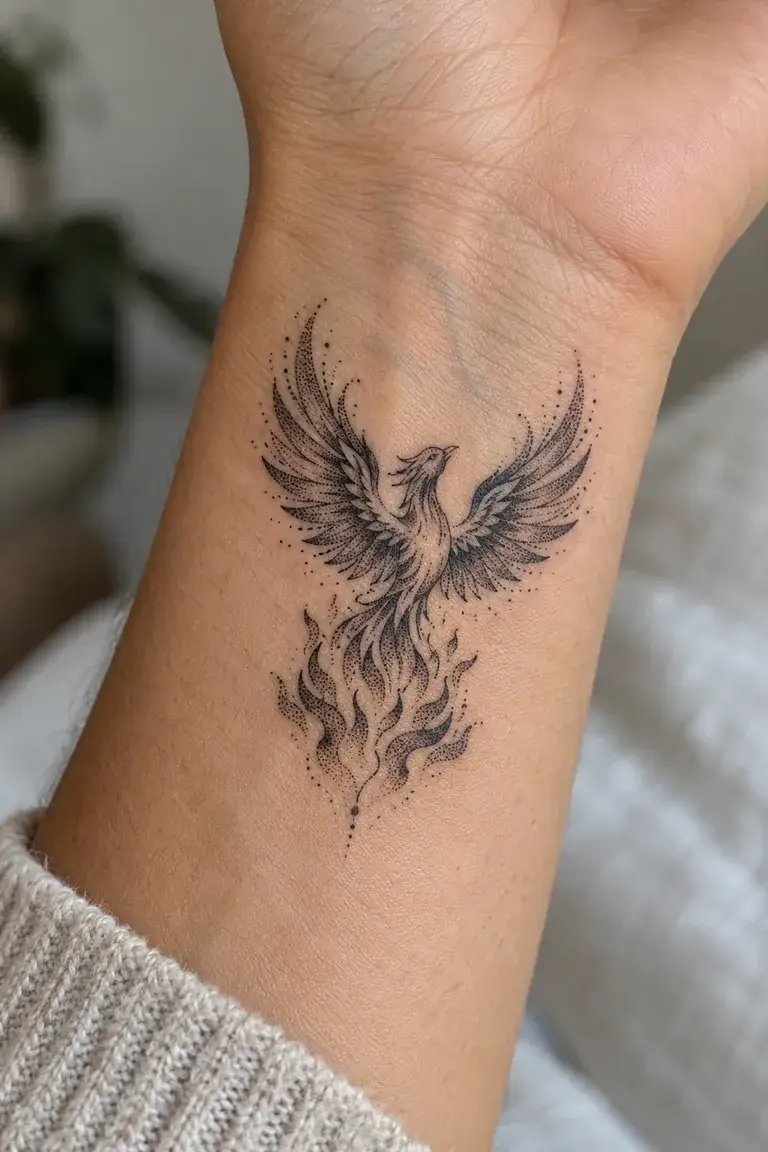
Dotwork, Wrist
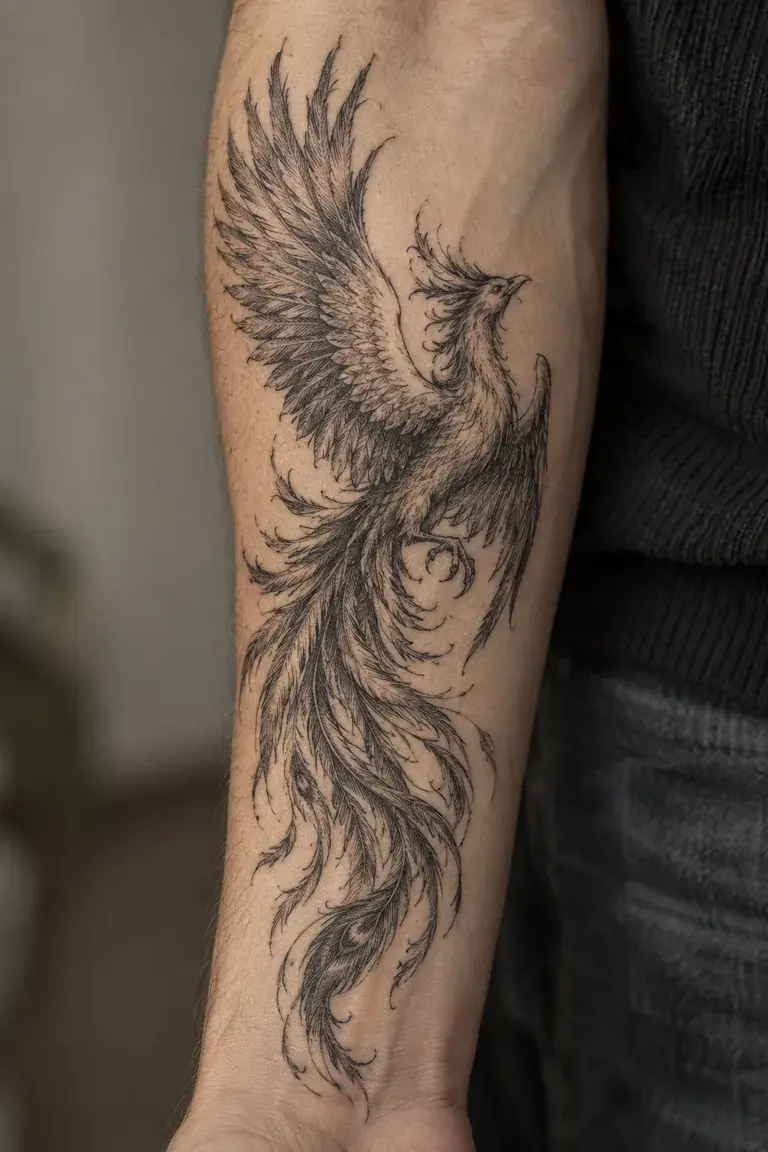
Engraving, Forearm
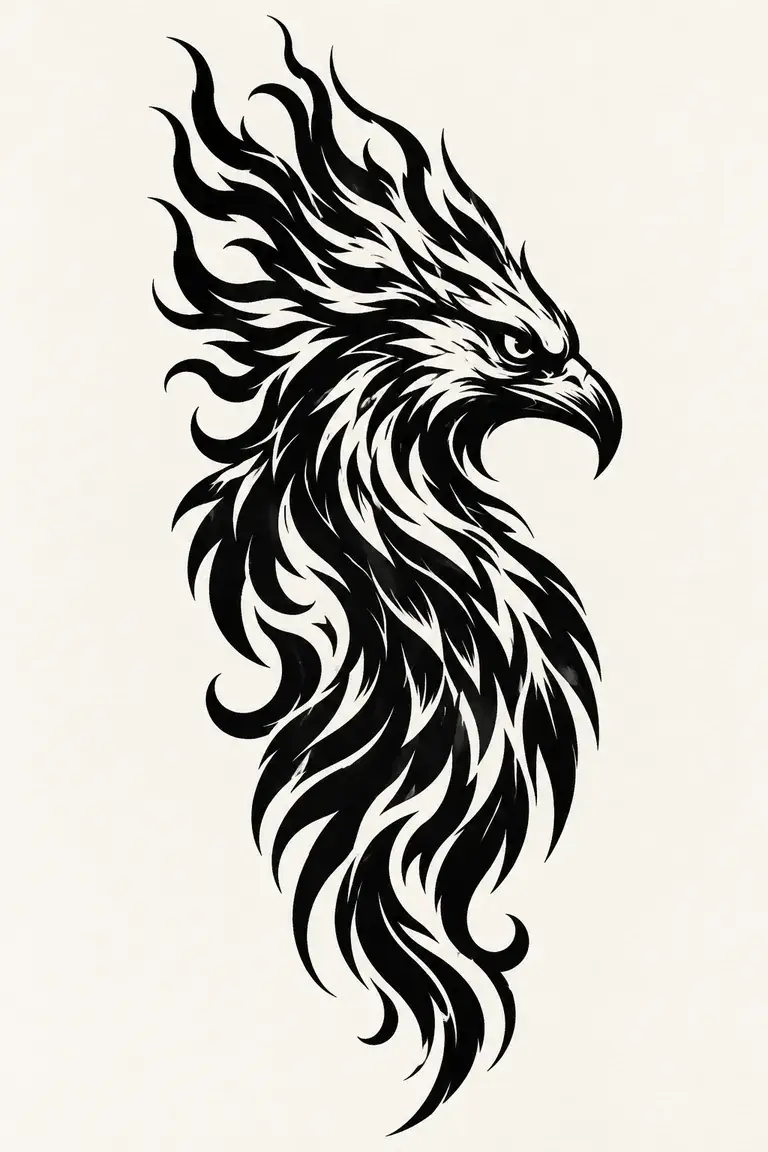
Blackwork, Calf
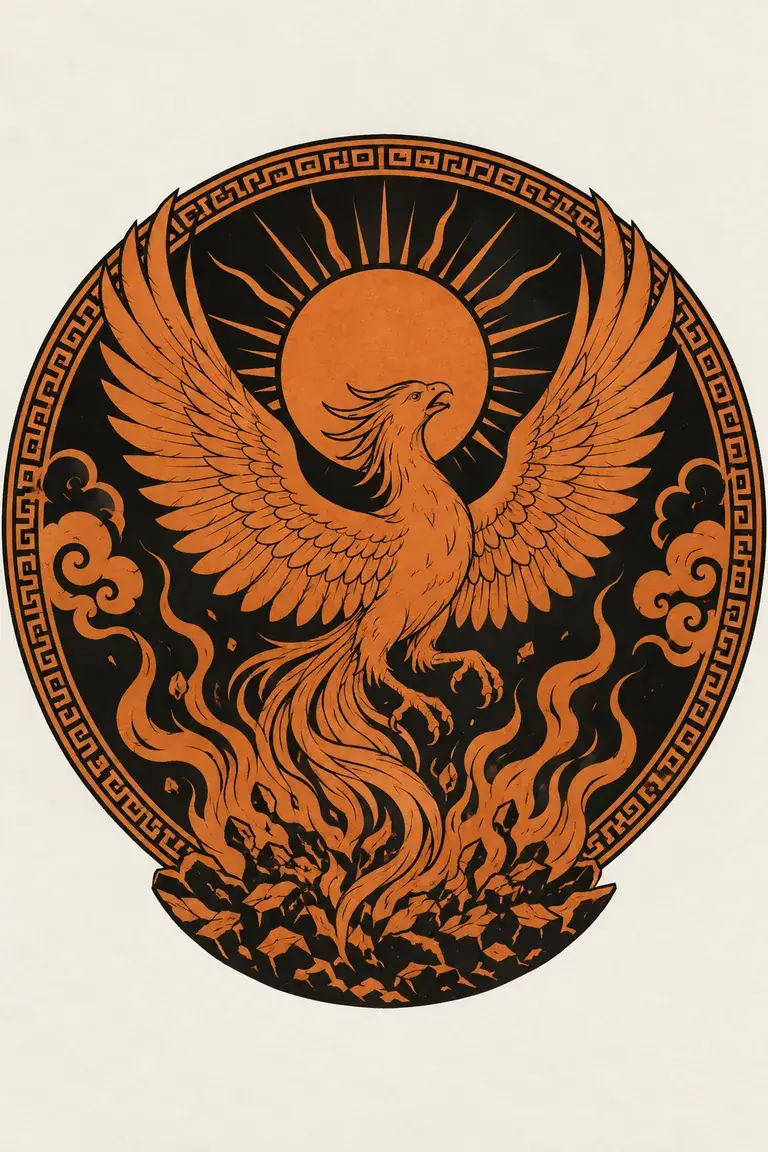
Red-figure (Greek vase), Upper arm
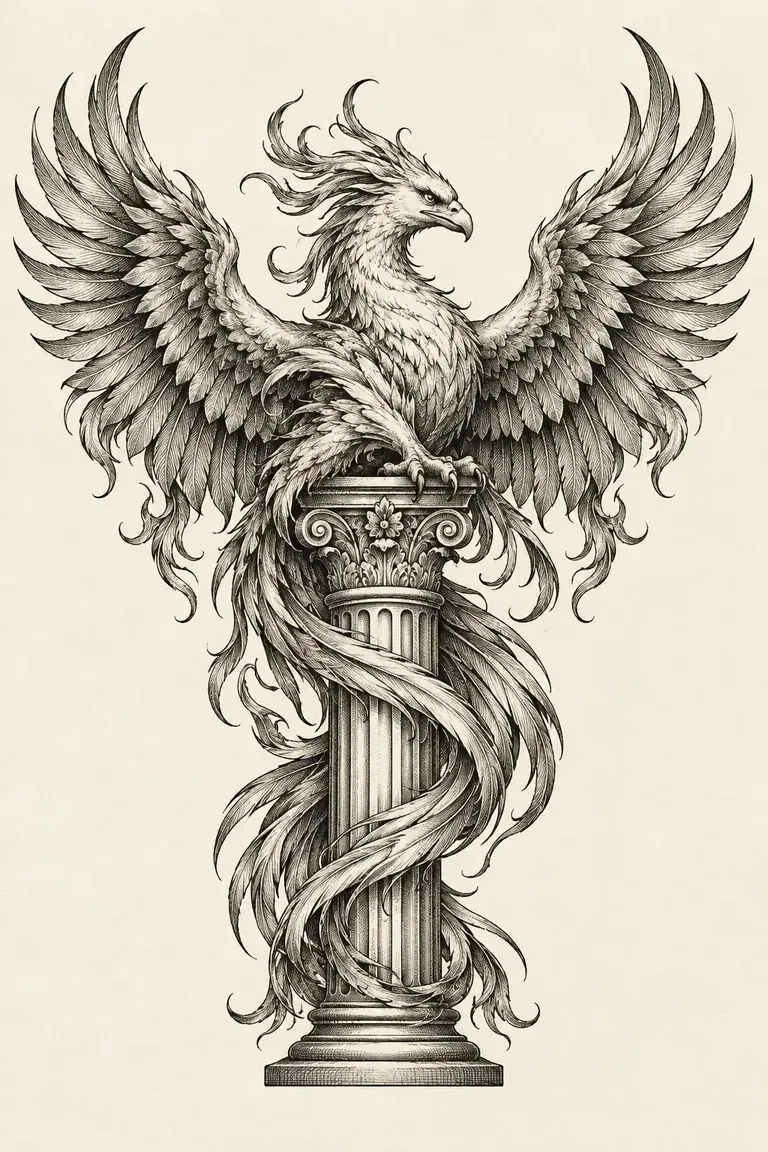
Engraving, Chest
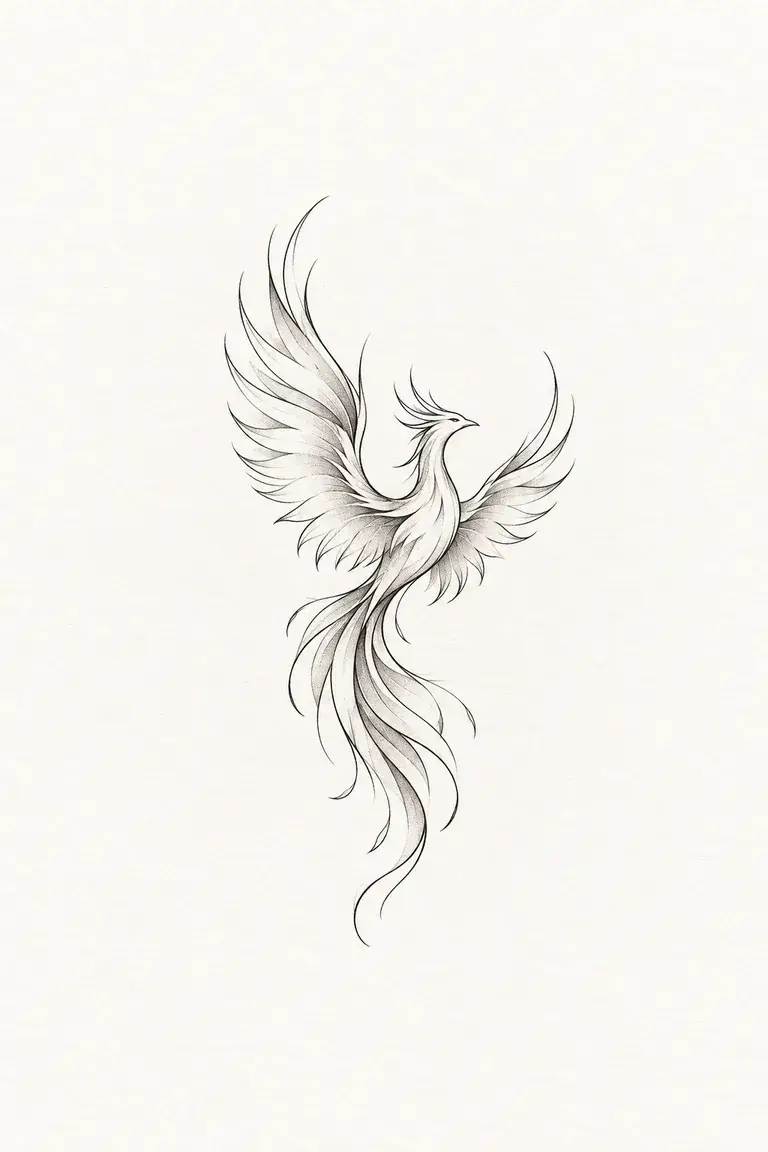
Fine-line, Wrist
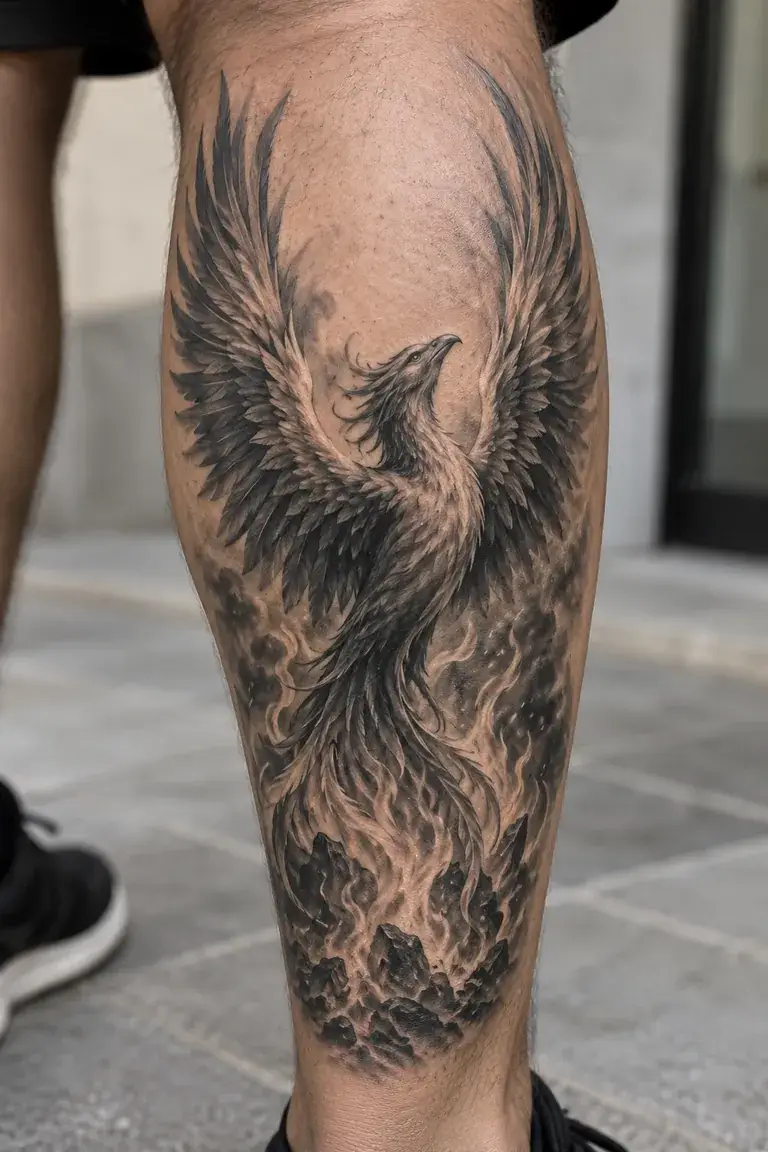
Black and grey realism, Calf
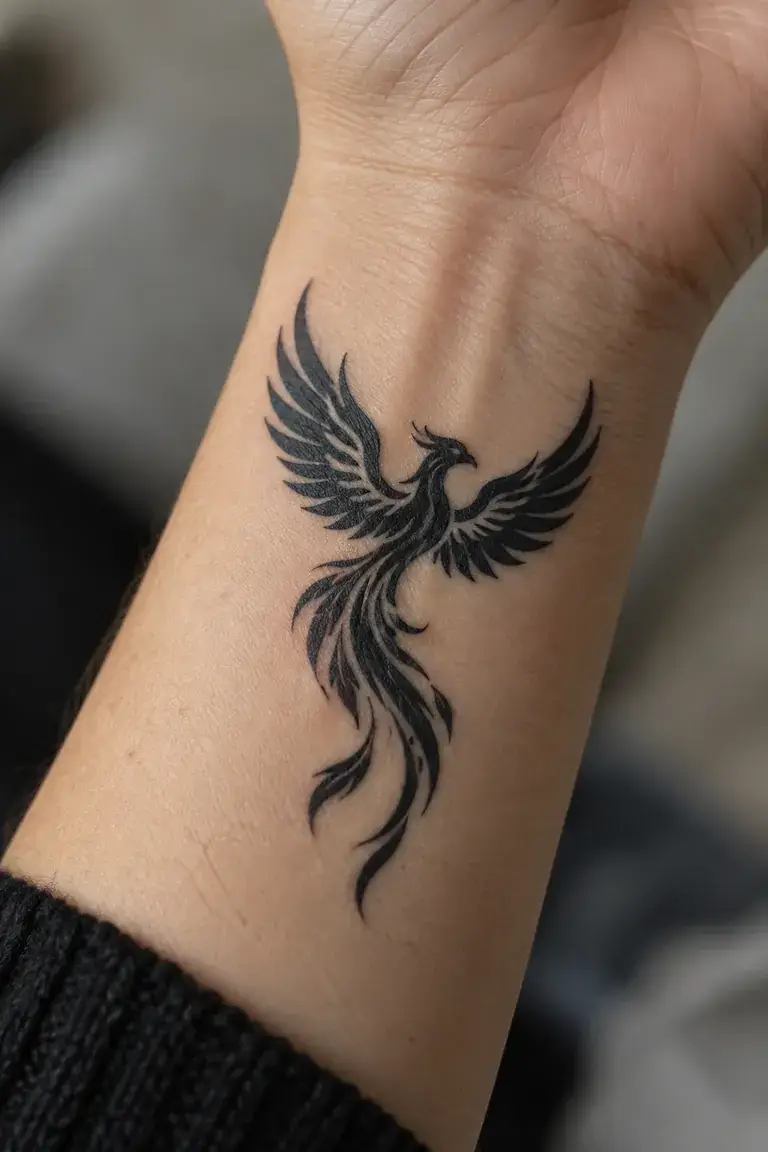
Blackwork, Wrist
Frequently asked questions
What does a phoenix tattoo mean?
Above all, rebirth and resilience. It marks coming back after something that felt like an ending, such as illness, addiction, grief or a breakup.
Is the phoenix Greek or Egyptian?
Both, in a way. The Greek historian Herodotus wrote down the legend in the 5th century BCE but said he heard it from priests at Heliopolis in Egypt. Many scholars link it to the Egyptian bennu bird. The story we know was shaped by Greek and Roman writers.
Does the phoenix really burst into flames?
Not in the earliest Greek account. Herodotus and Ovid describe nests of myrrh and spices, death and a new bird, but no fire. The fiery death and rebirth became standard in later Roman and early Christian writing, and that is the version most people know today.
What colors are best for a phoenix tattoo?
Red, orange and gold are traditional. Herodotus himself said the bird's feathers were partly red and partly gold. Black and grey or solid blackwork also work well if you prefer no color.
Where should I get a phoenix tattoo?
The back is the classic spot for a big phoenix with spread wings. The ribs, hip and thigh suit a flowing tail, and the forearm or collarbone suit small versions.