Ouroboros Tattoo Meaning, Designs and Placement Ideas
The serpent that devours its own tail: an Egyptian image that Greek alchemists turned into a symbol of the whole universe.
Quick meaning
- Eternity and the endless cycle of life
- Death and renewal, endings that feed beginnings
- Unity: 'the All is One'
- Self-reliance and self-renewal
- Personal transformation and inner work
Carries the meaning of: Rebirth, Mystery, Wisdom
What a Ouroboros tattoo symbolizes
Endless cycles
A circle with no beginning and no end, the ouroboros stands for the repeating rhythms of life: seasons, days, generations. Many wearers use it to mark acceptance that everything comes around again.
Death and rebirth
The serpent consumes itself and is renewed by what it consumes. That makes it a symbol of letting an old version of yourself go so a new one can grow. Snakes shedding their skin add to the idea.
All is one
In the most famous Greek alchemical drawing, the ouroboros encircles the words 'hen to pan,' meaning 'the All is One.' For people drawn to philosophy or spirituality, it says that everything is connected.
Transformation
Alchemists saw the ouroboros as the cycle of their work, turning base matter into gold. Today it often stands for psychological change. The psychologist Carl Jung wrote about it as a symbol of the self.
The story behind the ouroboros
The ouroboros is not a character in a Greek myth. It is an image, and it started in Egypt. The oldest known example is on one of the gilded shrines that surrounded the sarcophagus of Tutankhamun, from the 14th century BCE. It is part of a funerary text sometimes called the Enigmatic Book of the Netherworld, and it shows two serpents, each holding its own tail in its mouth, encircling the head and feet of a large figure. In Egyptian thought, the image had to do with the sun’s journey, the cycle of time and the world surrounded by chaos.
The Greek name came later. Ouroboros simply means “tail-eater.” The image became a key symbol in the alchemy of Greek-speaking Egypt, a tradition rooted in Hellenistic Alexandria and written down in Greek in the Roman era. Its most famous appearance is in the Chrysopoeia (“gold-making”) of Cleopatra the Alchemist, probably working around the 3rd century CE and not the same person as the queen. The single sheet survives in later Byzantine manuscripts. It shows a serpent biting its tail and enclosing the Greek words hen to pan, “the All is One.” For the alchemists, the serpent stood for the endless cycle of matter breaking down and coming back together.
Late Greek writers also used the symbol. Horapollo, in his Hieroglyphica from around the 5th century CE, says the Egyptians drew a serpent devouring its tail to represent the universe.
From there the ouroboros passed into medieval and Renaissance alchemy, Gnostic texts and, much later, the psychology of Carl Jung.
Making the circle work
The ouroboros looks simple, but a lopsided circle is obvious. Ask your artist to build the stencil from a true circle and to check it on your body, because a circle drawn flat can stretch into an oval on a curved arm or calf.
Decide what goes inside. An empty center feels minimal and open. A symbol, geometric figure or the words “hen to pan” (ΕΝ ΤΟ ΠΑΝ) adds meaning but needs room, so increase the overall size.
Make the bite convincing. The jaws should clearly grip the tail, with the head slightly larger than the body, so the design reads as a living serpent and not a decorative ring.
Ouroboros tattoo design ideas
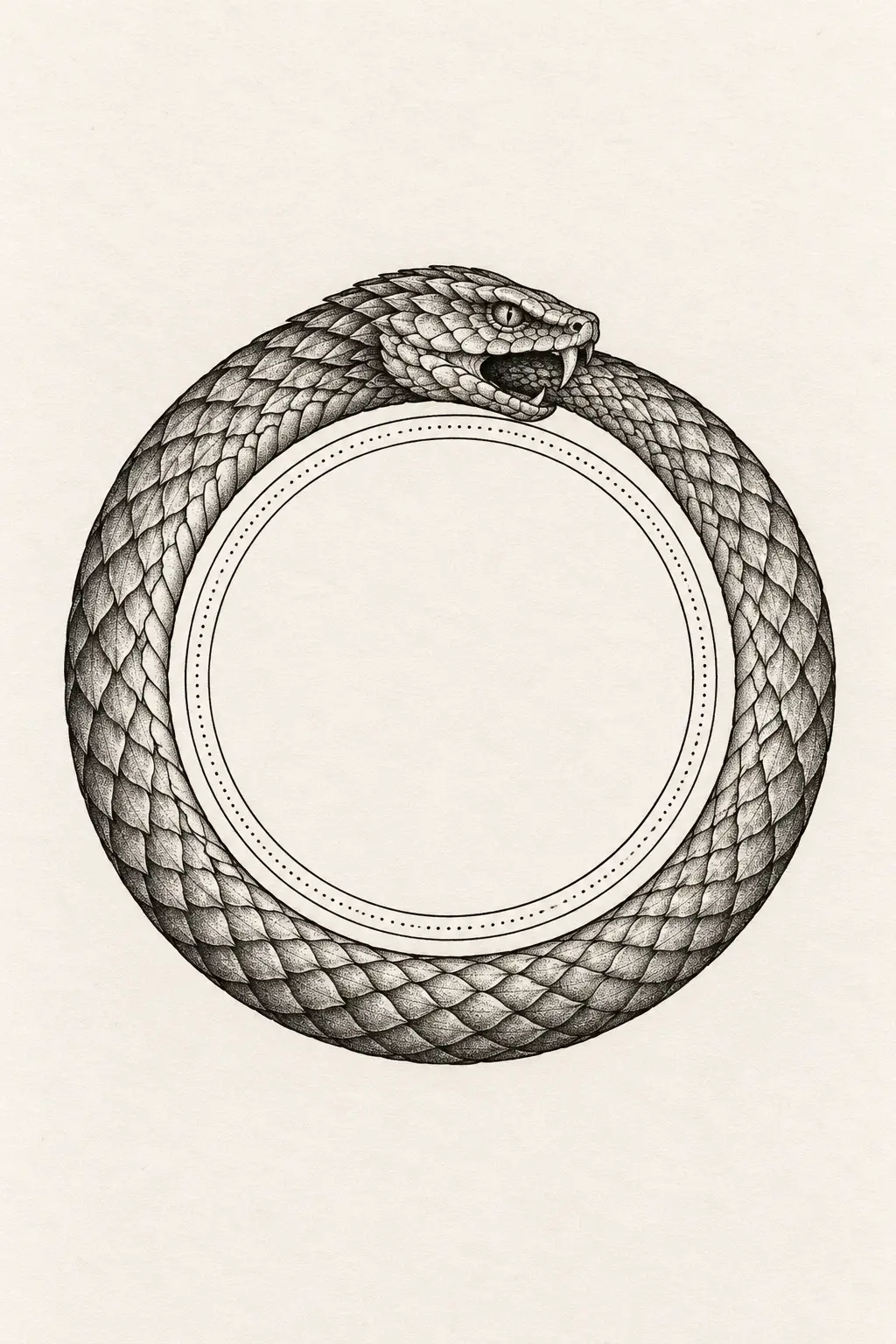
Classic circle serpent
A single scaled serpent forming a near-perfect circle, jaws clamped on its own tail. Ask your artist to make the bite point clear and the scales shrink toward the tail, which makes the loop feel alive rather than like a ring.
Alchemical ouroboros
Based on the Chrysopoeia of Cleopatra drawing: a serpent with the Greek words ΕΝ ΤΟ ΠΑΝ (the All is One) inside the circle. You can also shade one half dark and the other light to suggest opposites joined together. A thoughtful choice for people who love history or esoteric ideas.
Ouroboros with sacred geometry
The serpent wrapped around a thin geometric figure such as a triangle, hexagon or circle inside a circle. Dotwork shading on the scales and crisp lines on the geometry look sharp.
Egyptian-style double serpent
Two serpents biting each other's tails, as in the oldest known example from Tutankhamun's tomb. A distinctive, historically grounded version that few people have.
Ouroboros armband or wrap
The serpent circling the wrist, ankle, upper arm or even the neck, so the circle is formed by your own body. Elegant and literal.
Best placements for a Ouroboros tattoo
- Upper arm or shoulder
- A round design sits well on the outer upper arm or the cap of the shoulder, which naturally suits a circle.
- Wrist or ankle
- Perfect for a wraparound ouroboros that closes the loop around the limb.
- Back of the neck or upper back
- A centered circle reads cleanly here and suits geometric versions.
- Sternum
- A symmetrical ouroboros over the sternum feels personal and central. Expect sharper pain over the bone.
Styles that suit Ouroboros
- Dotwork
- Stippled scales and geometric elements give the ouroboros a mystical, carved look.
- Blackwork
- A bold black serpent with negative-space scales is striking and stays readable for decades.
- Fine-line
- Delicate scales and a thin body suit small and wraparound designs.
- Engraving
- Hatched lines in the style of old alchemical woodcuts suit the symbol's history perfectly.
23 more Ouroboros tattoo designs
Different styles and placements to show your tattoo artist.
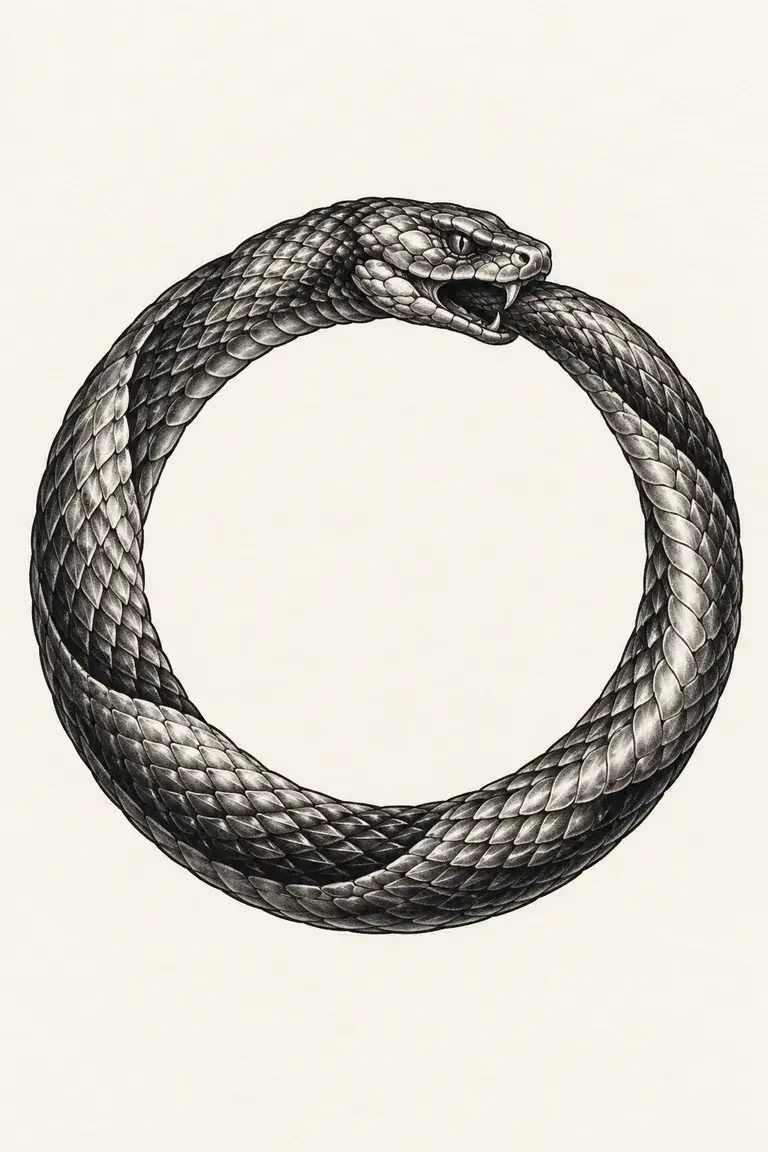
Black and grey realism, Upper arm
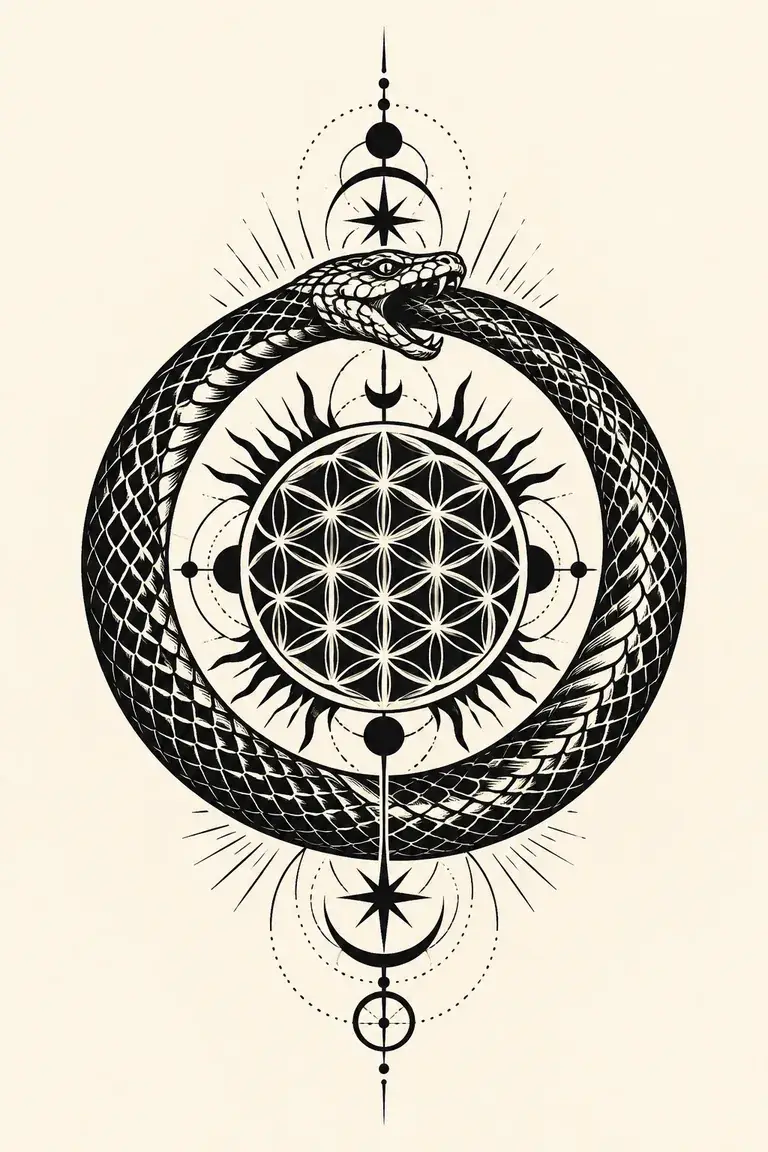
Blackwork, Calf
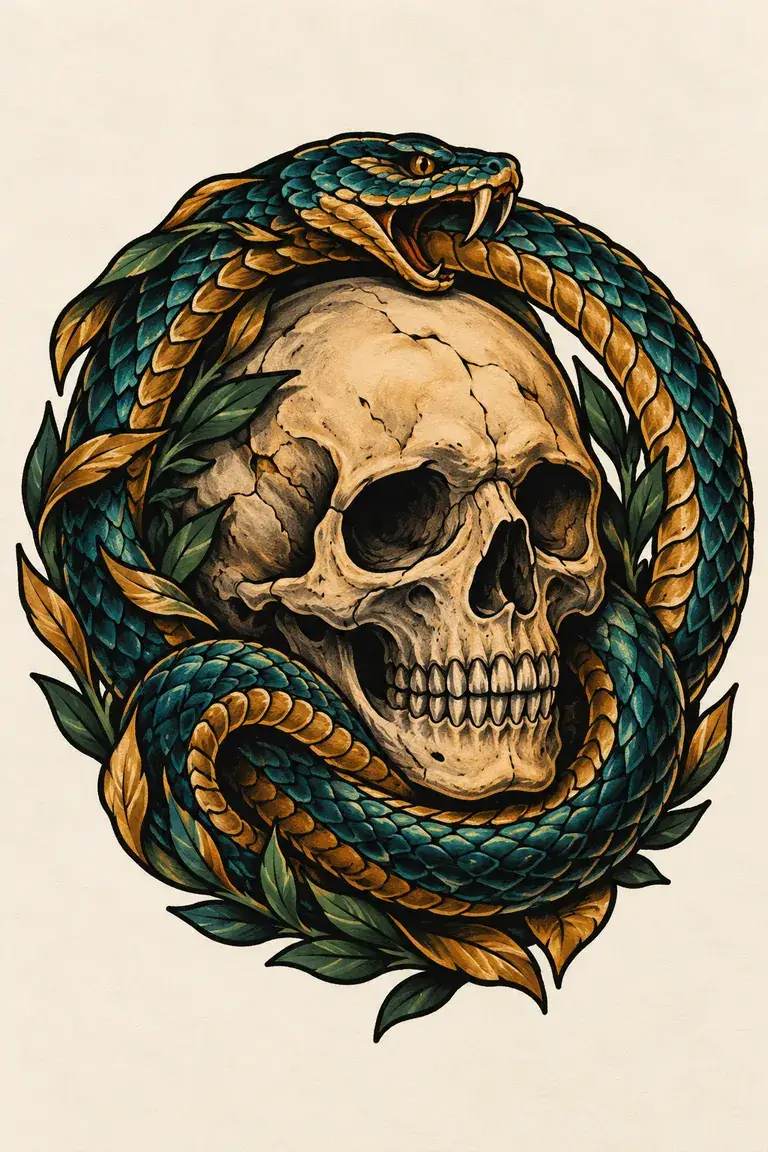
Neo-traditional, Shoulder
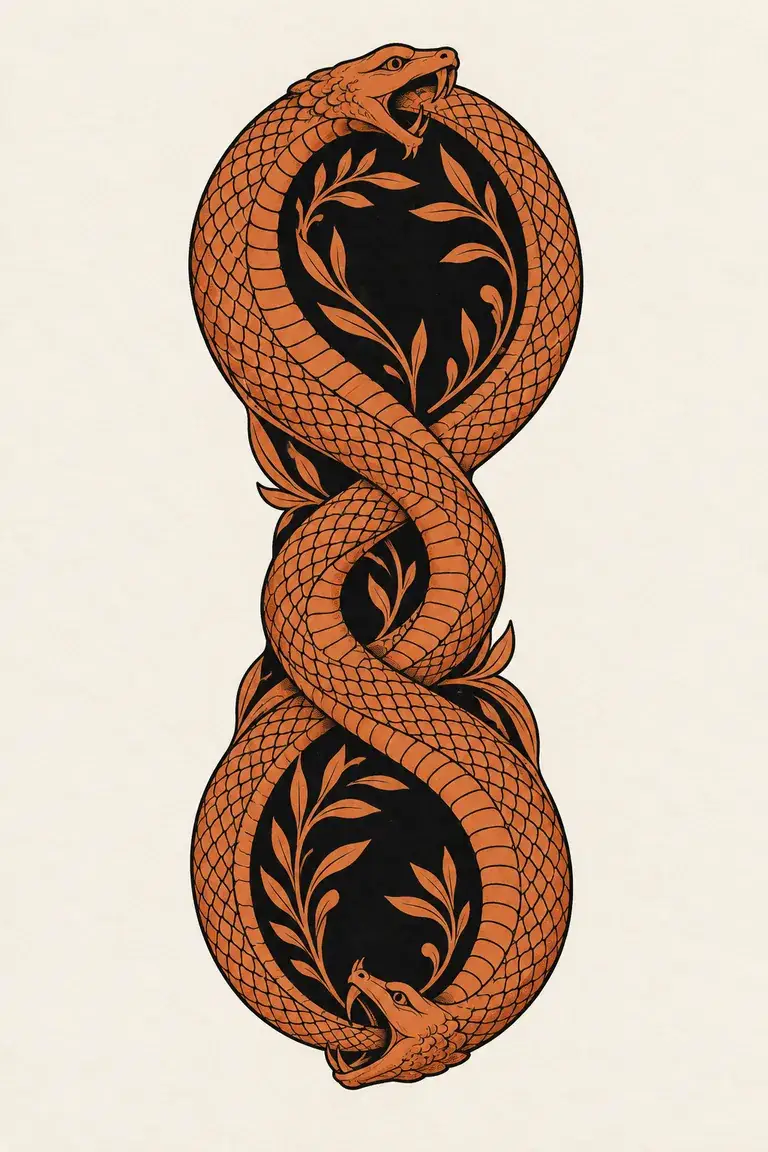
Red-figure (Greek vase), Forearm
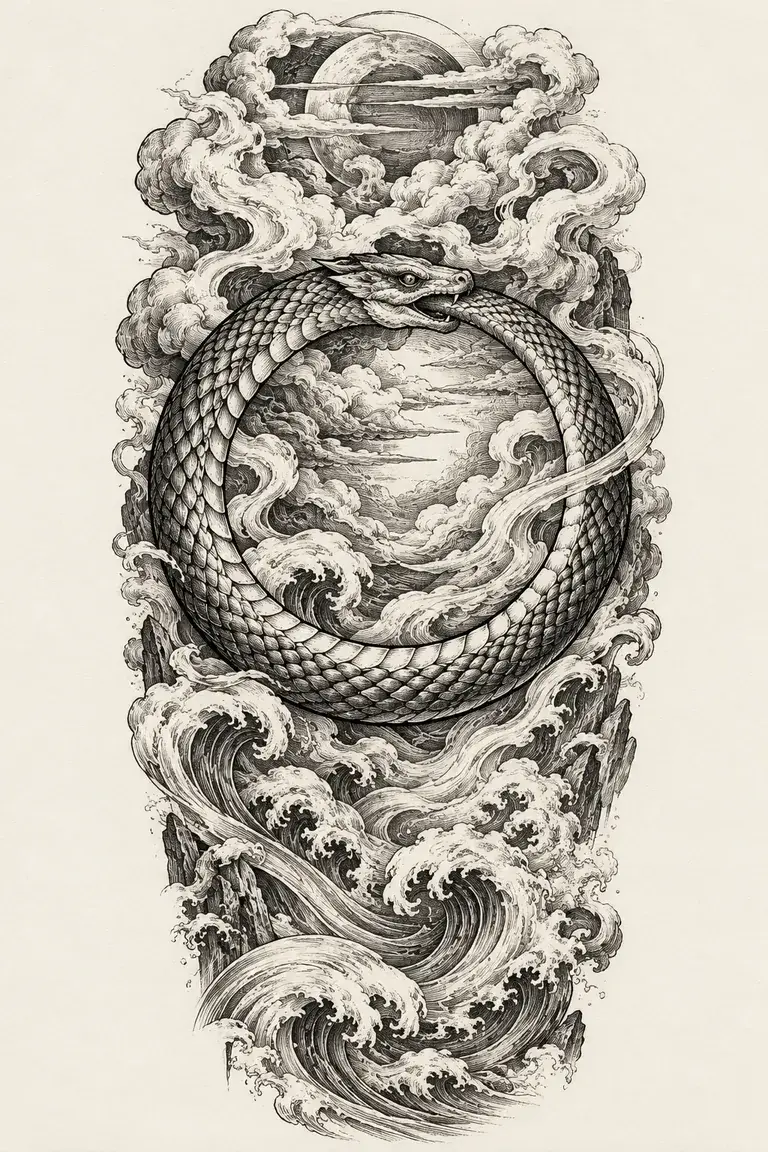
Engraving, Sleeve
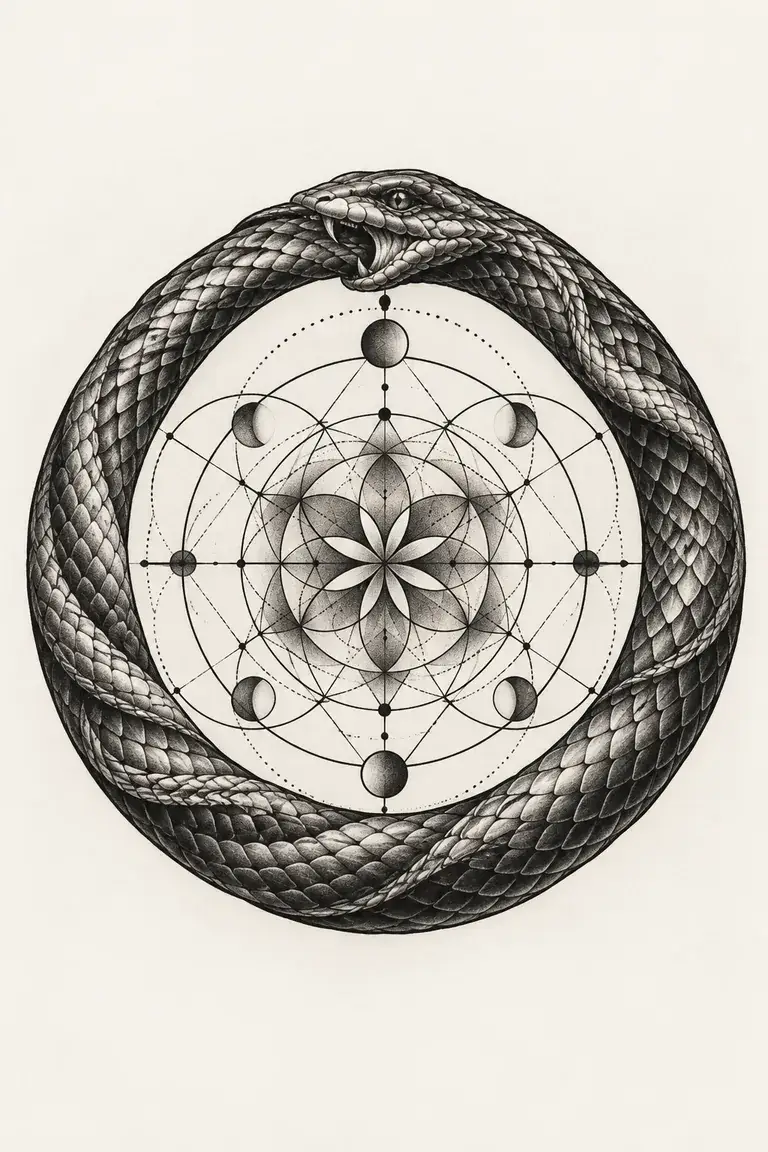
Black and grey realism, Shoulder
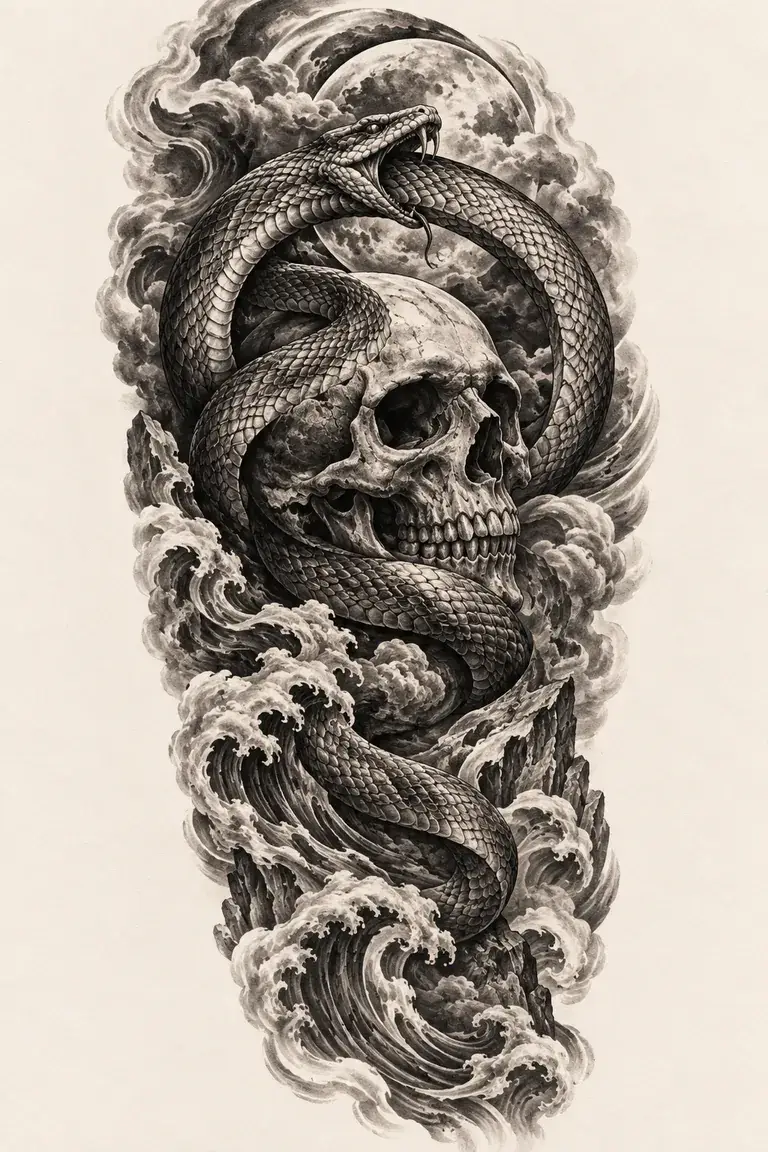
Black and grey realism, Sleeve
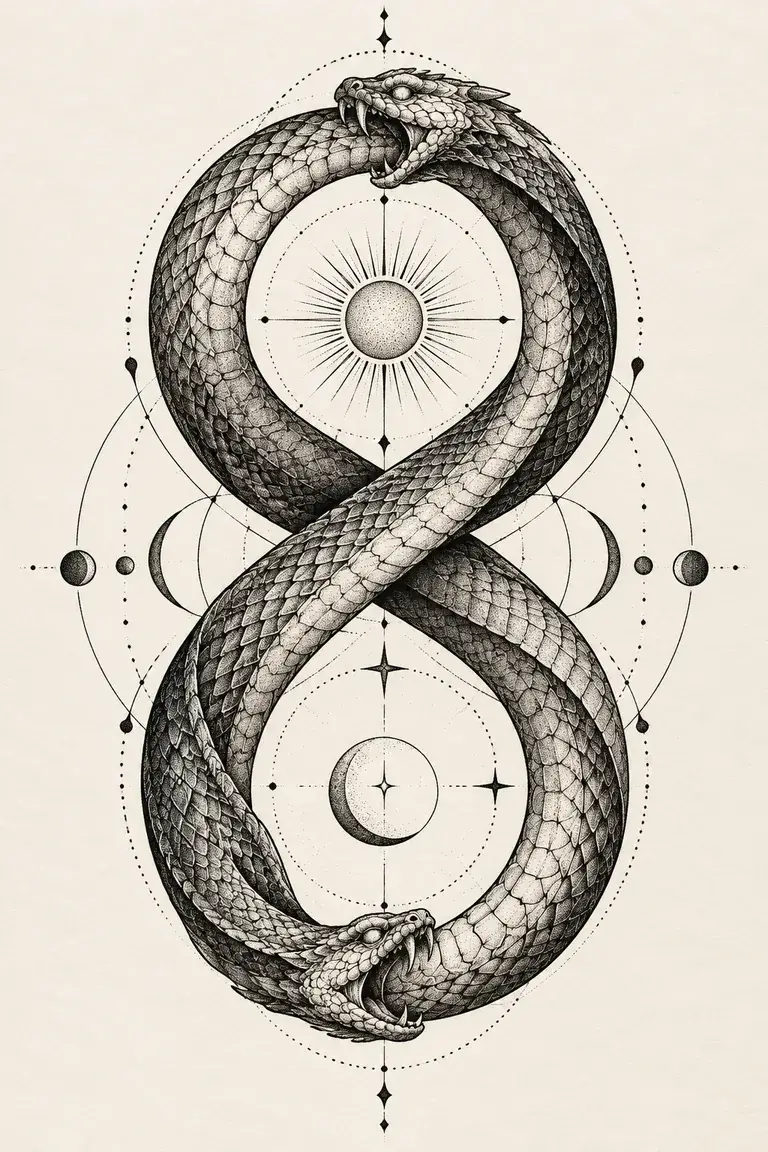
Dotwork, Back
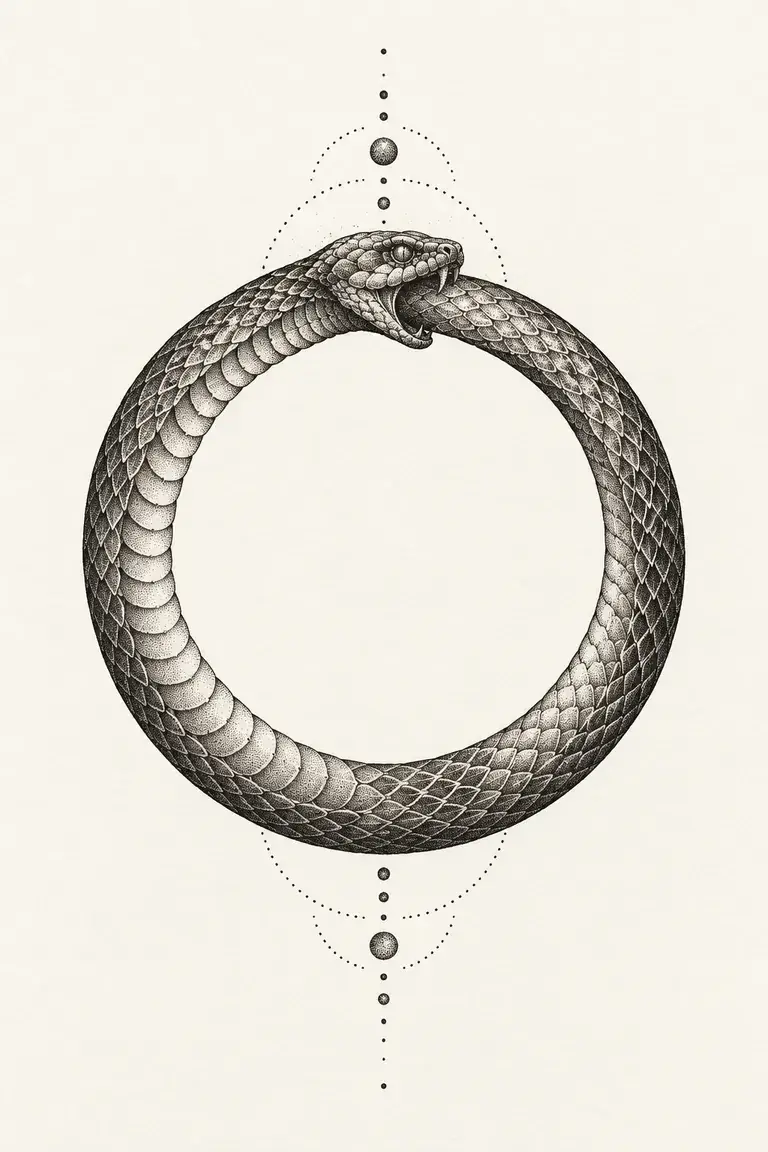
Dotwork, Forearm
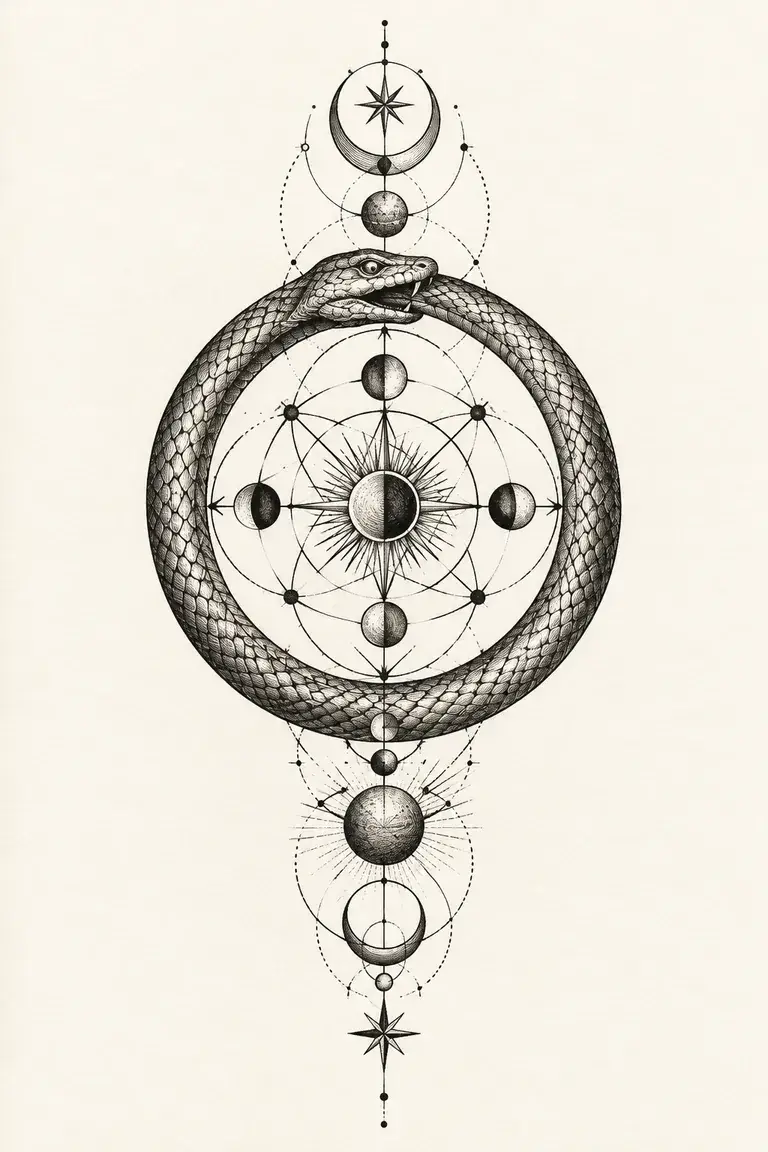
Engraving, Forearm
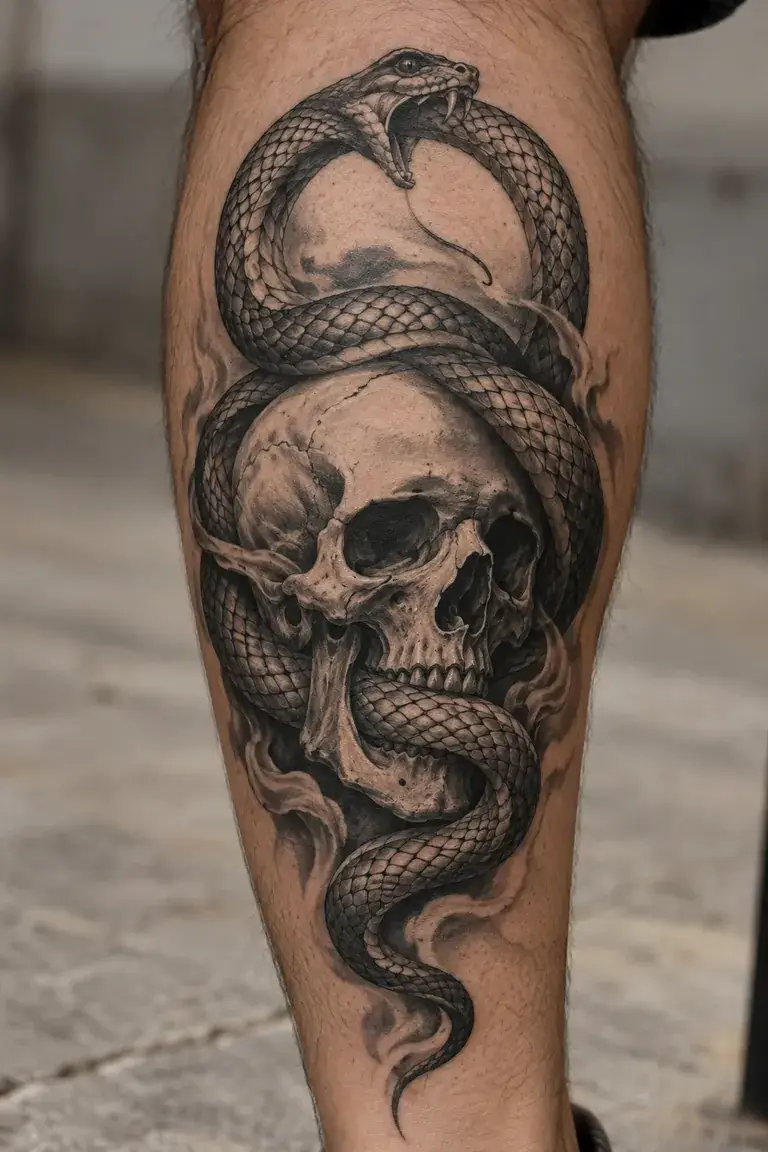
Black and grey realism, Calf
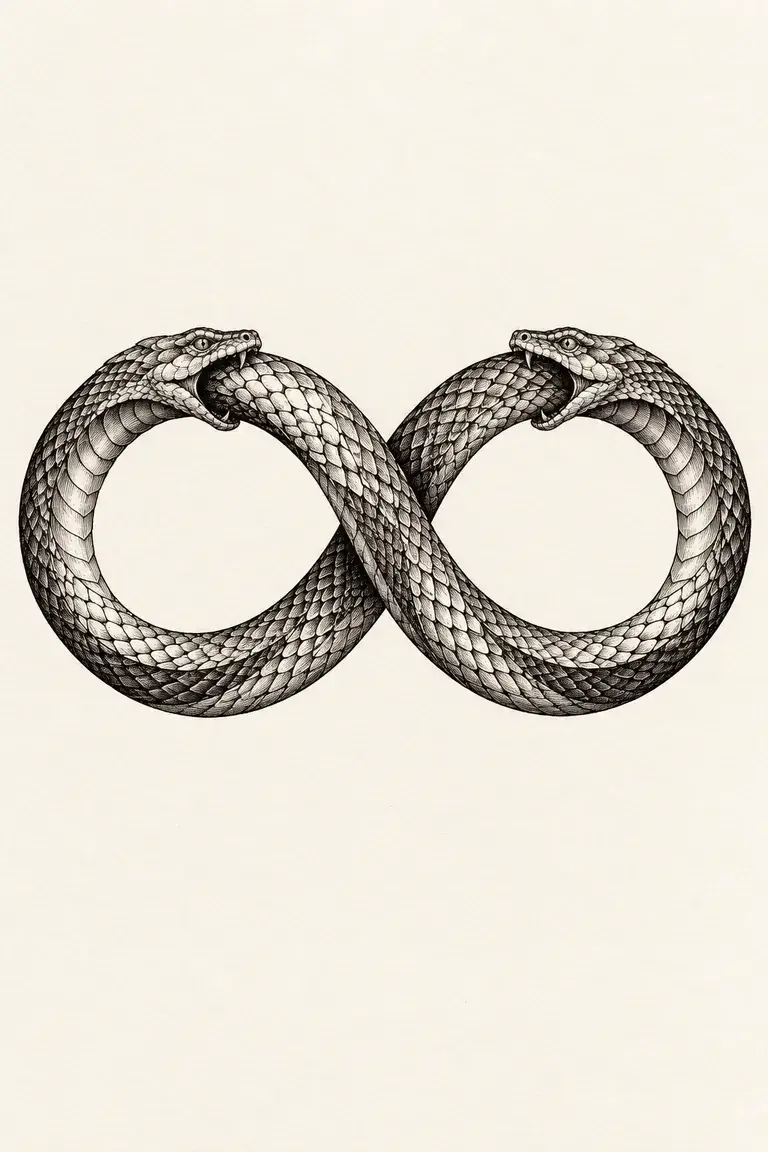
Engraving, Chest
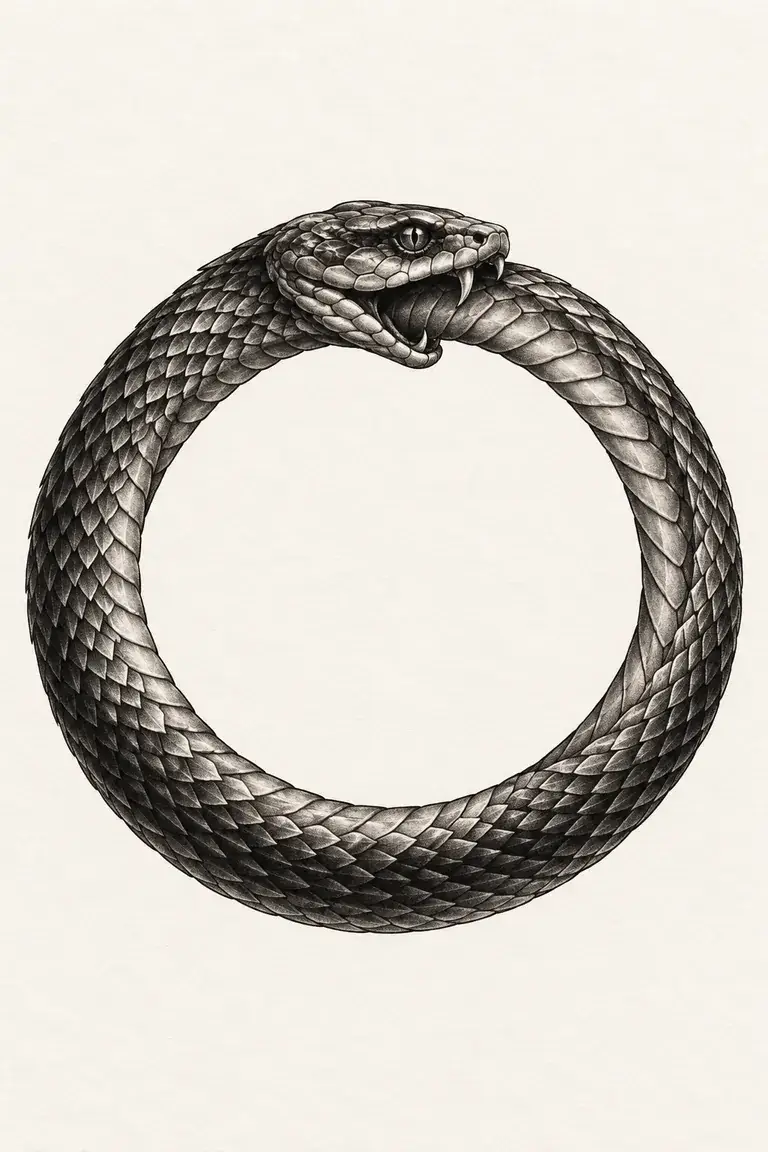
Black and grey realism, Shoulder
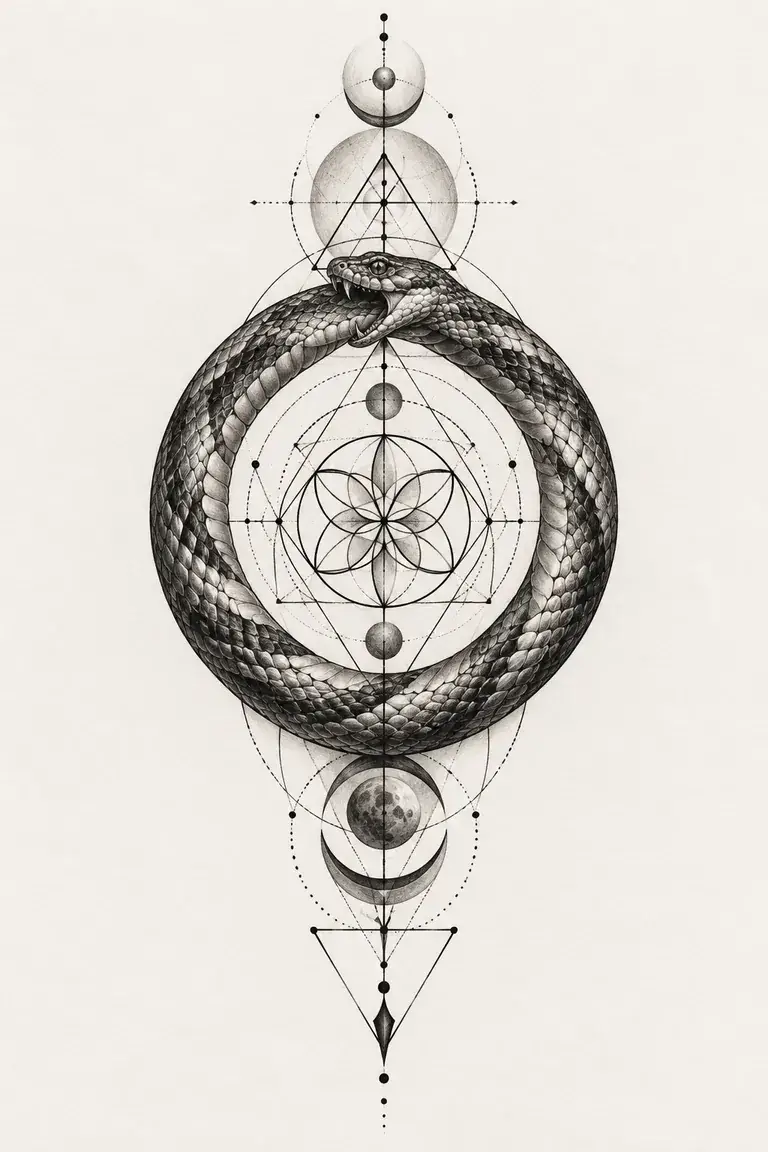
Black and grey realism, Forearm
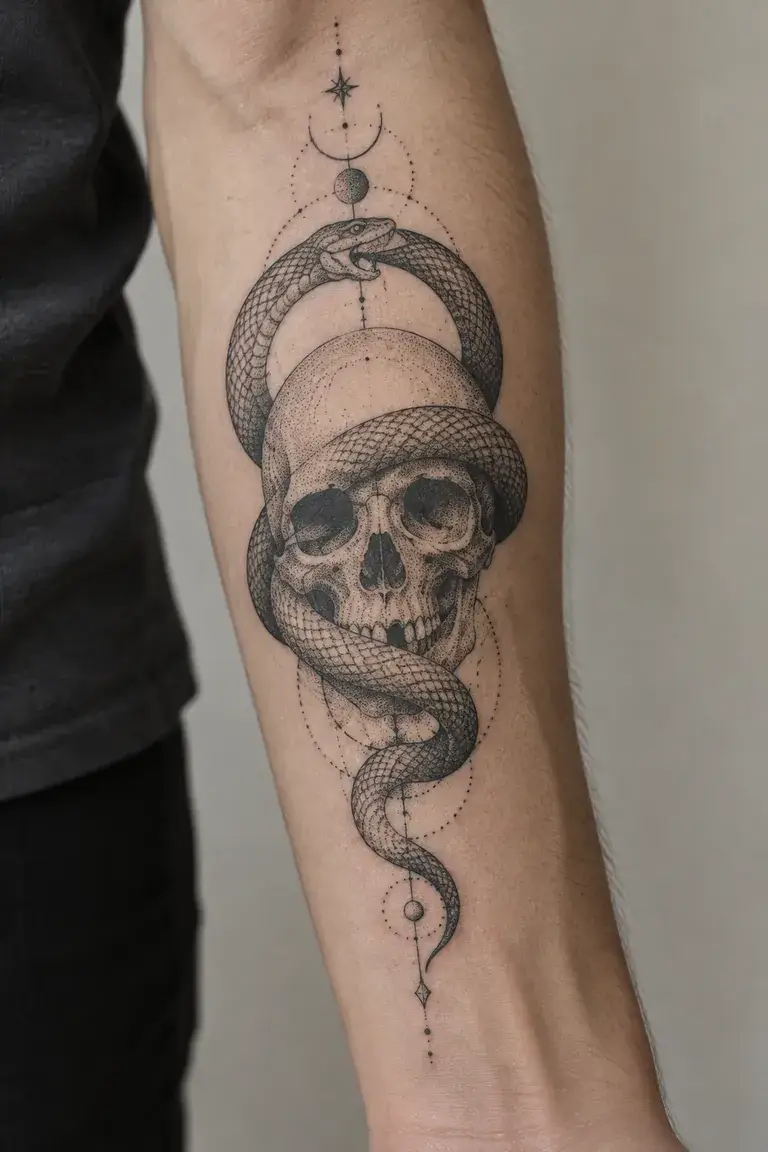
Dotwork, Forearm
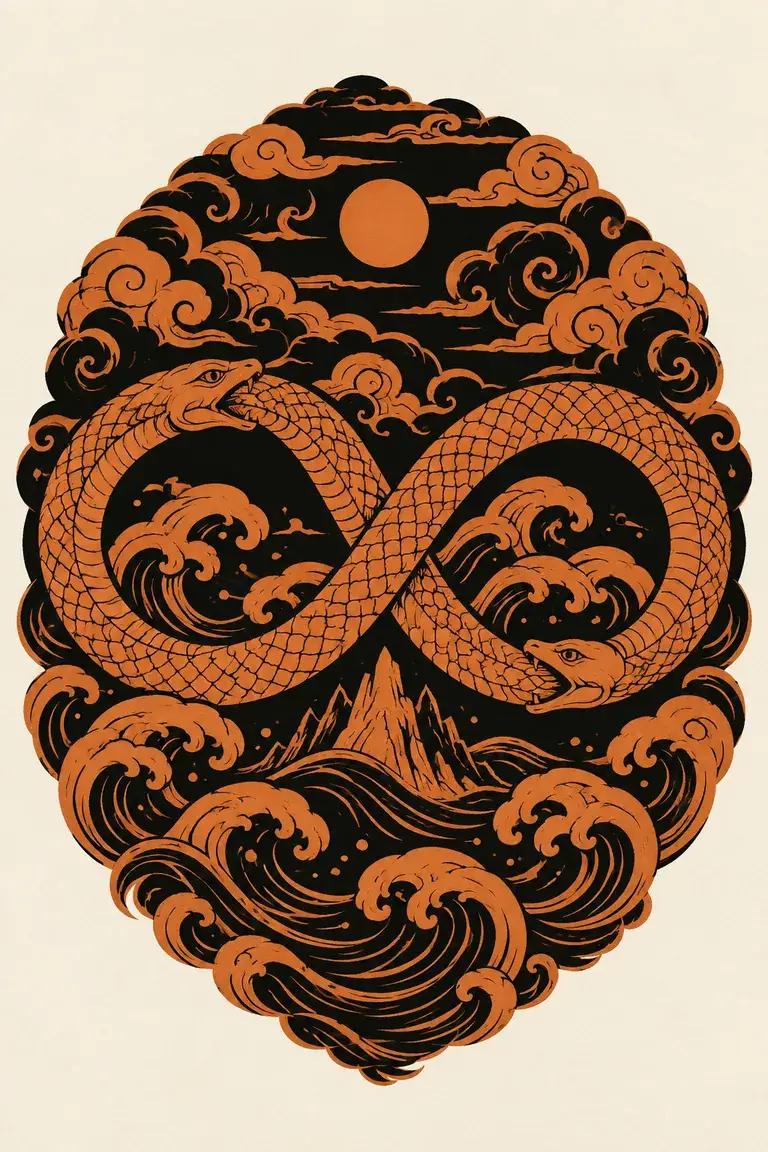
Red-figure (Greek vase), Sleeve
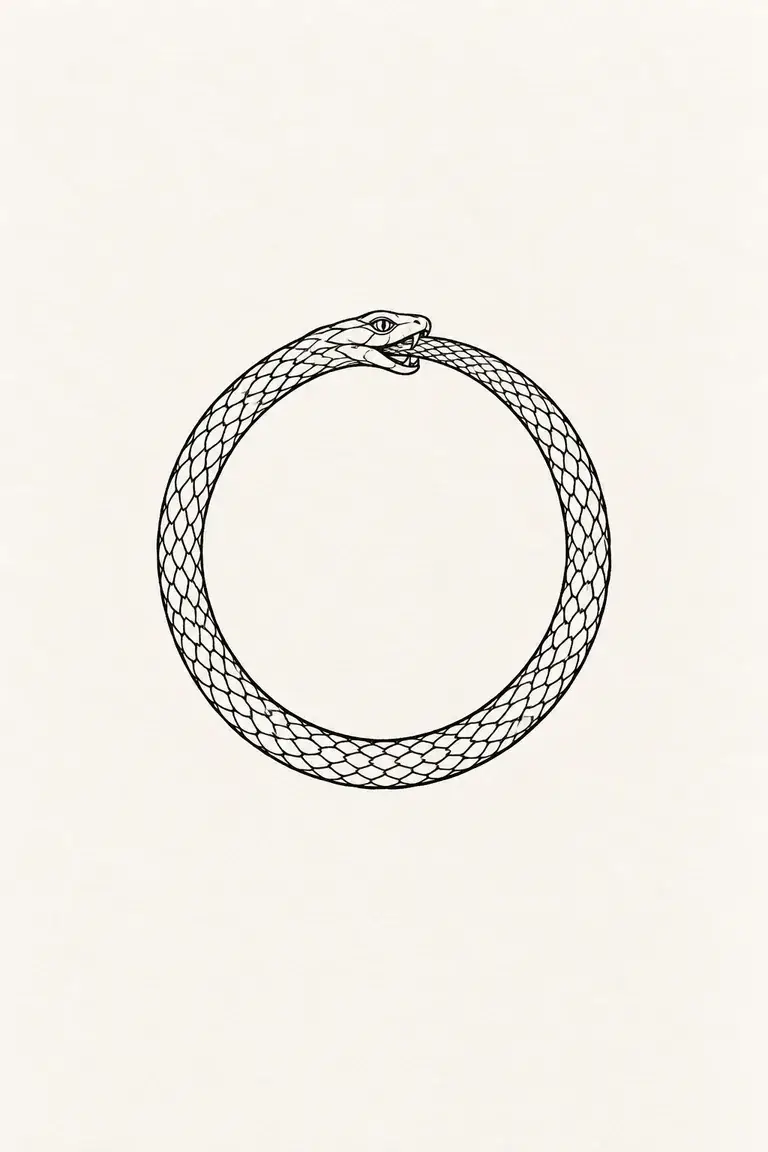
Minimalist, Ribs
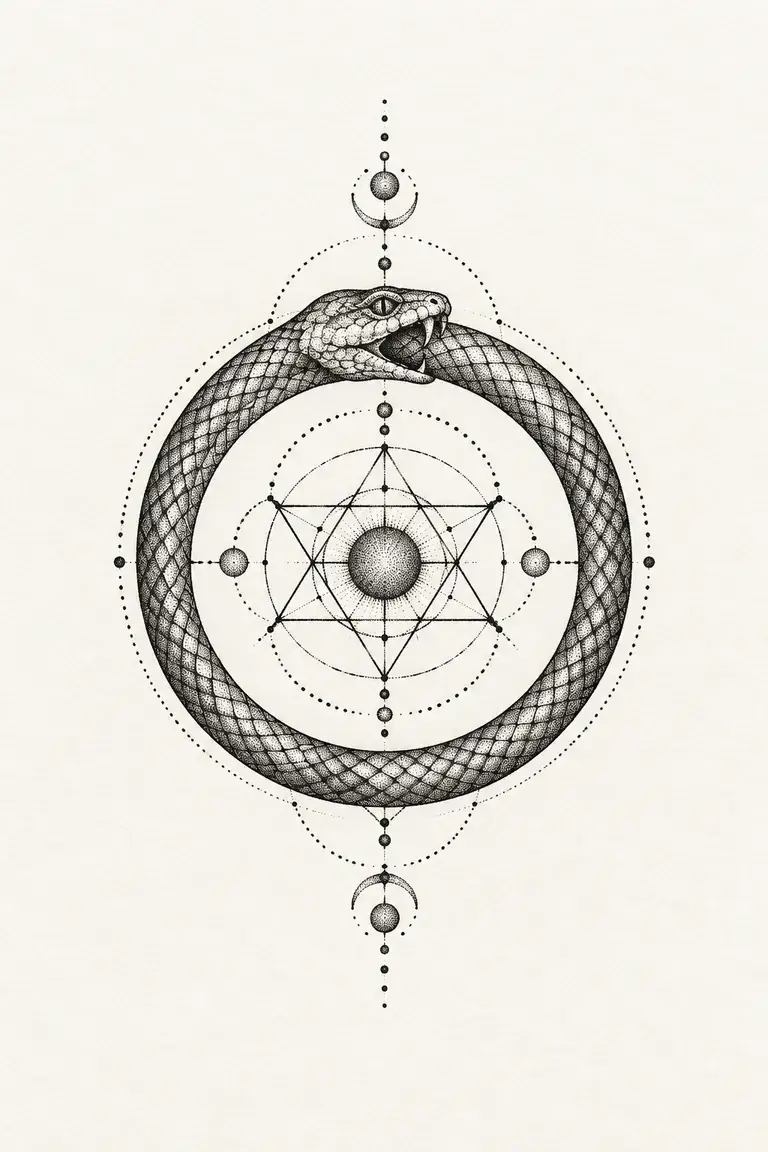
Dotwork, Neck
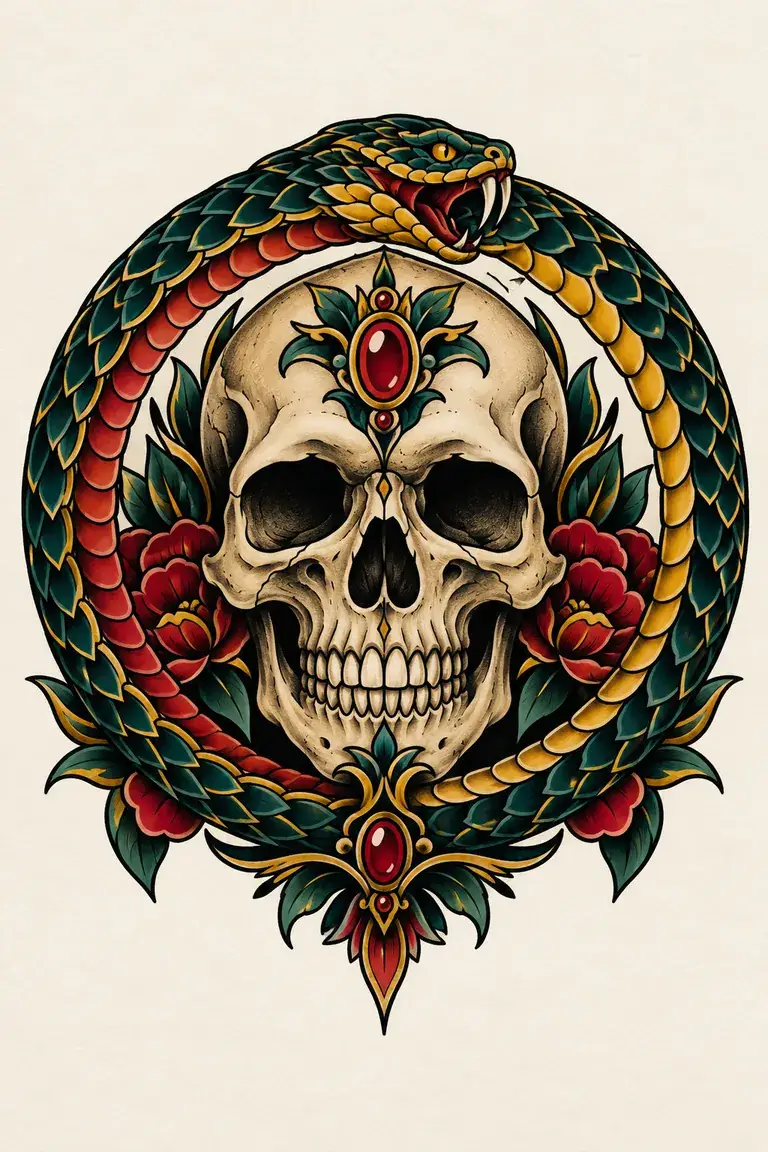
Neo-traditional, Chest
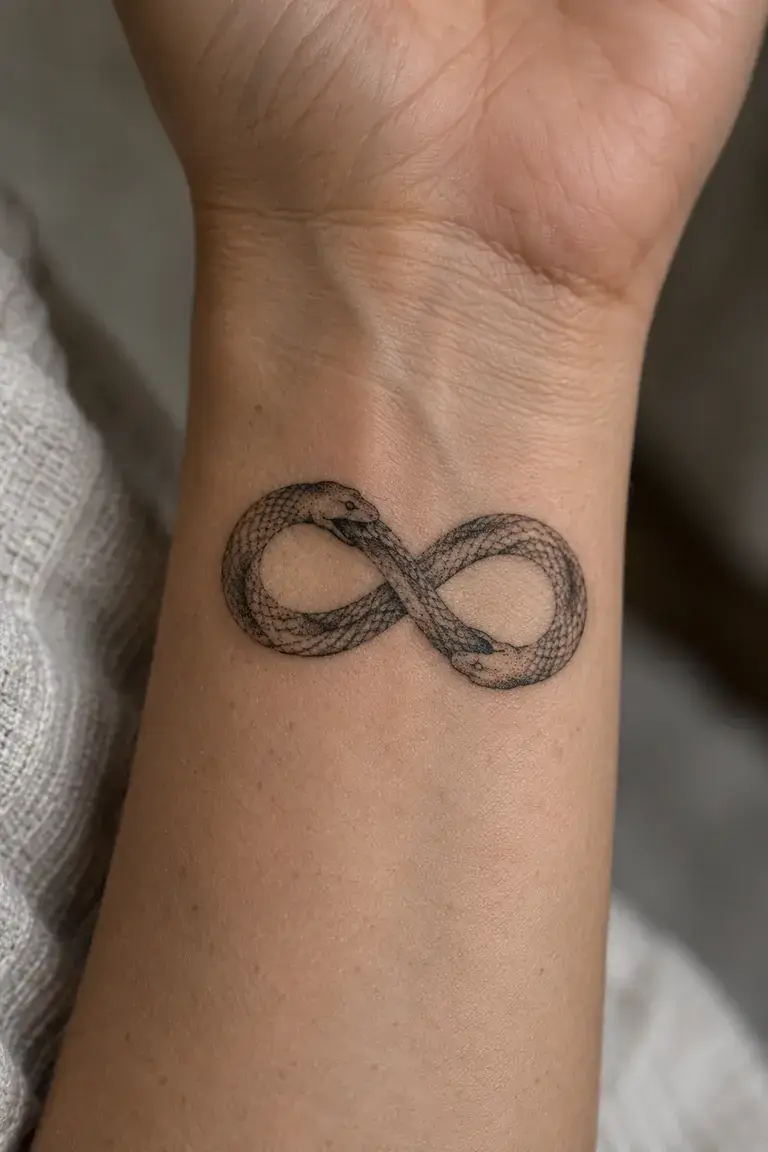
Dotwork, Wrist
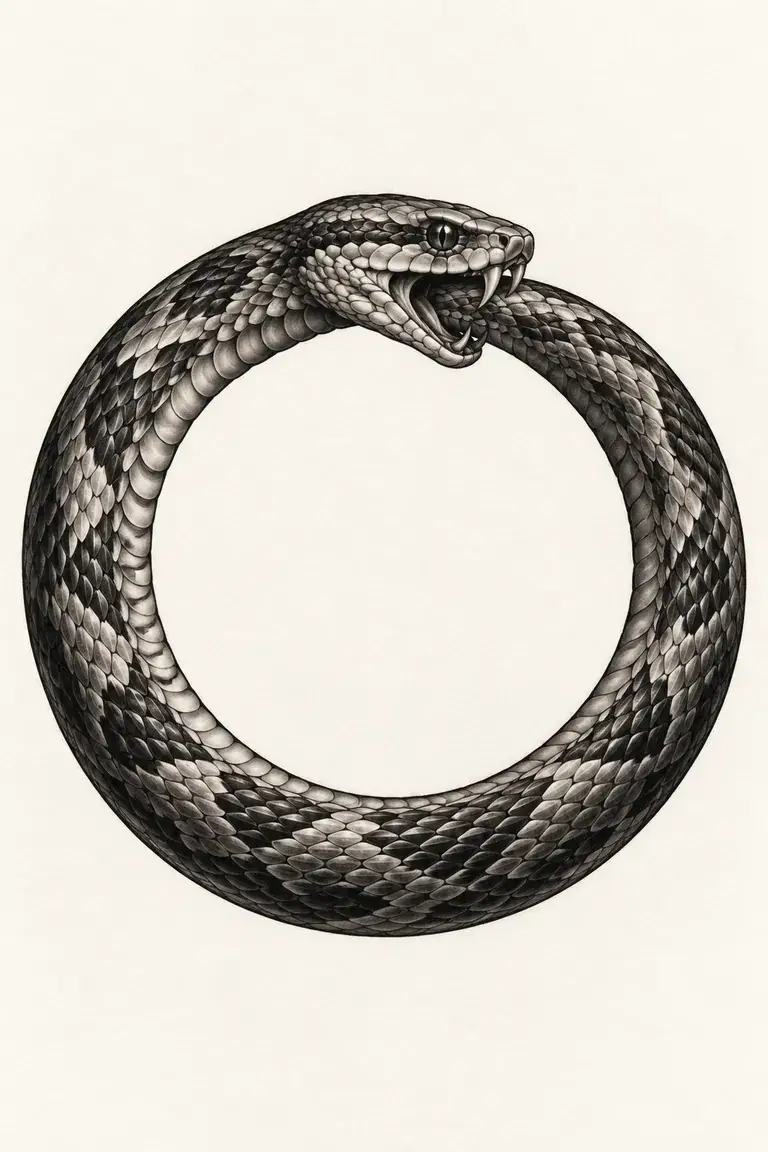
Black and grey realism, Thigh
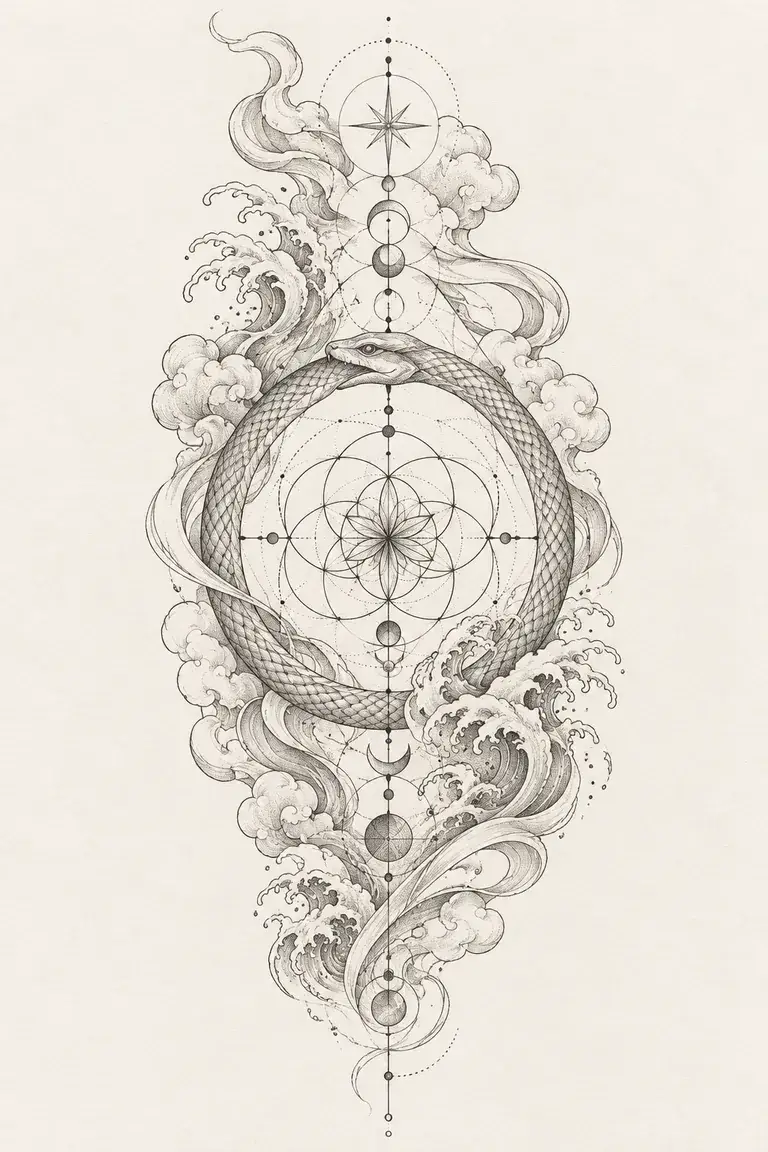
Fine-line, Sleeve
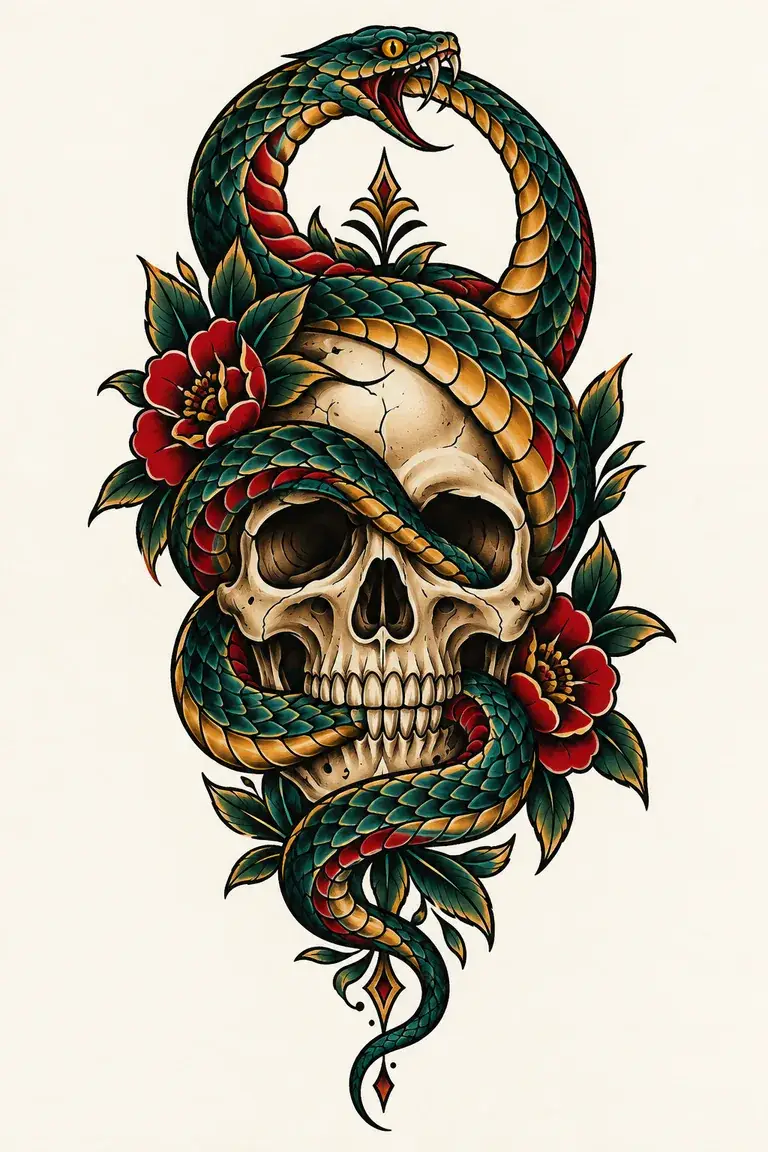
Neo-traditional, Calf
Frequently asked questions
What does an ouroboros tattoo mean?
Mainly eternity, cycles and renewal. The serpent eating its tail suggests that endings feed new beginnings. Many people also connect it to transformation and to the idea that everything is one.
Is the ouroboros Greek?
The name is Greek, meaning 'tail-eater,' and Greek-speaking alchemists in Egypt made it famous. But the image itself is older and Egyptian. The earliest known example appears on a gilded shrine from Tutankhamun's tomb, more than a thousand years before the Greek alchemists.
Is the ouroboros a bad or evil symbol?
No. It has no evil meaning in its Egyptian or Greek history. It stands for cycles, eternity and the unity of things. Some modern readings treat it as a symbol of self-destruction, but that is not its traditional sense.
What is the Chrysopoeia of Cleopatra?
A single page of drawings from a Greek alchemical text, attributed to Cleopatra the Alchemist, who lived in Egypt in the Roman era (not the famous queen). It contains one of the best-known ouroboros images, with the words 'hen to pan,' or 'the All is One,' inside.
Should the snake eat its tail clockwise or counterclockwise?
There is no fixed rule in ancient sources, and examples go both ways. Choose the direction that flows best with your placement, or ask your artist to match it to the way the muscle curves.