Greek Key Tattoo Meaning, Designs and Placement Ideas
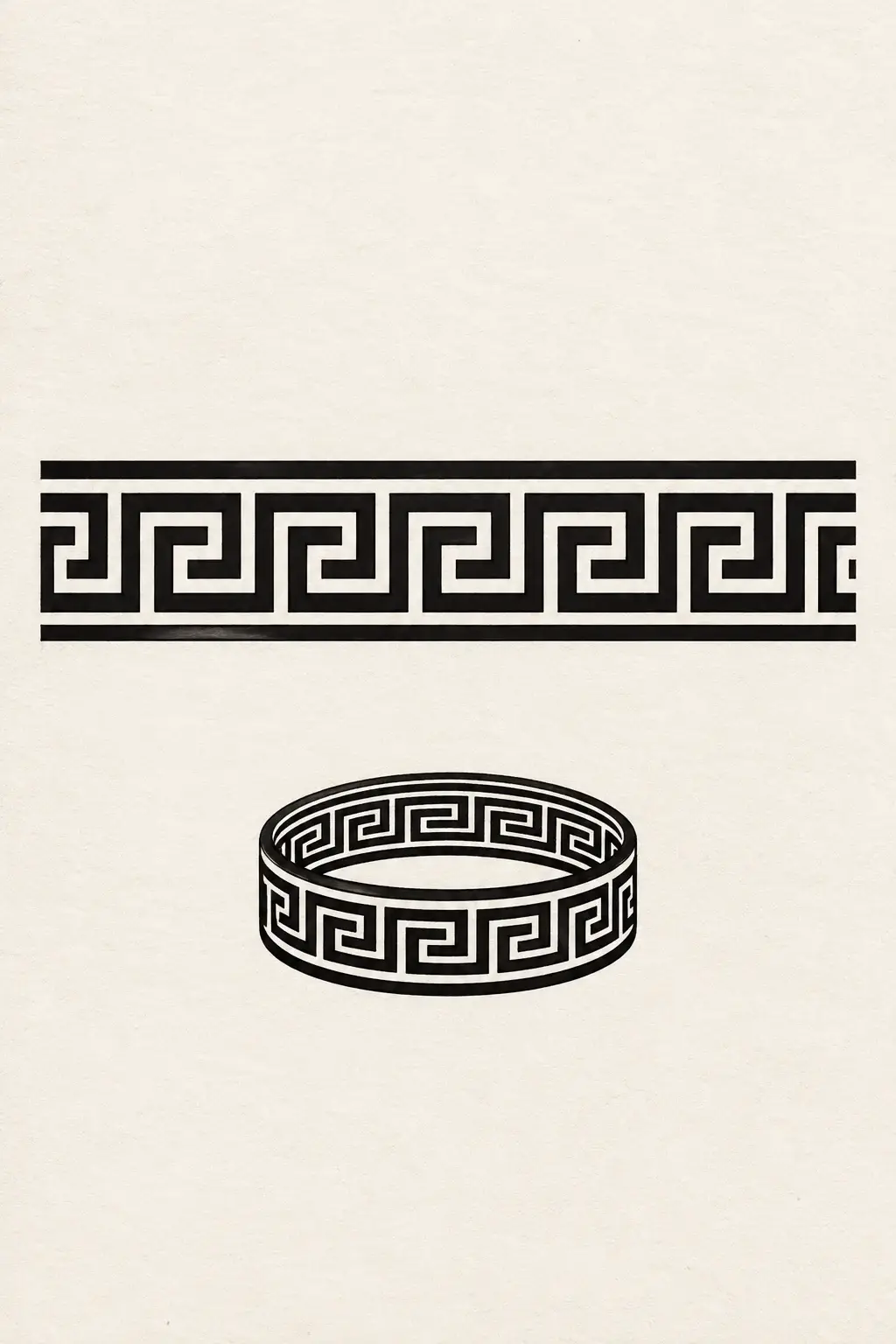
The meander: a single unbroken line that folds back on itself, painted on Greek pottery for nearly three thousand years.
Quick meaning
- Continuity and the flow of life
- Unity and lasting bonds
- Pride in Greek heritage
- Order, balance and discipline
- A classical frame for other Greek designs
Carries the meaning of: Loyalty, Wisdom, Resilience
What a Greek Key tattoo symbolizes
An unbroken line
The meander is drawn as one continuous line that turns and doubles back but never stops. Many people read it as the flow of life, or as a commitment that keeps going through every turn.
Heritage
Few patterns say 'Greek' as clearly. It appears on ancient vases, temples and mosaics, and still shows up on Greek buildings, jewelry and textiles. For people with Greek roots it is a quiet badge of identity.
Order and balance
The Greek key is pure geometry, with exact right angles and even spacing. It suits people who value structure, discipline and calm, controlled design.
Bonds and unity
Because the pattern interlocks endlessly, it is often chosen for matching tattoos between partners, siblings or friends, as a sign of a bond that keeps going.
The story behind the Greek key
The Greek key has no myth of its own. It is one of the oldest ornaments in Greek art, and its story is told in clay and stone rather than in poems.
The pattern takes its other name, meander, from the Maeander river in Asia Minor, in today’s western Turkey. The river wound so wildly toward the sea that ancient writers used it as a byword for twisting paths. Ovid, describing the labyrinth of Daedalus, compares its confusing passages to the Maeander turning back on itself.
The motif became a signature of Greek pottery in the Geometric period, roughly 900 to 700 BCE, when potters covered whole vases in bands of zigzags, circles and meanders. It stayed in use through the black-figure and red-figure eras, framing scenes of gods and heroes, and spread to temple friezes, floor mosaics and textiles. The Romans copied it, and from there it moved into Renaissance and neoclassical design. Similar zigzag and meander patterns turn up on even older objects elsewhere, such as carved mammoth ivory from Mezin in Ukraine, but the version we call the Greek key is firmly tied to Greece.
What the ancient Greeks thought it meant is not recorded. Modern ideas of eternity, unity and the flow of life are interpretations added later. They are reasonable ones, and they give the pattern real personal value, but it is honest to know that the Greeks themselves may have seen it mainly as beautiful order.
Getting a perfect meander
The Greek key is unforgiving. One uneven turn and the whole band looks off. Choose an artist with a strong portfolio of geometric or ornamental work, and ask to see healed photos of bands they have done.
For an armband, measure the circumference and let the artist calculate the repeat so the pattern closes without a squeezed or stretched unit. Most artists hide the join on the inner arm.
Keep line weight bold enough for the size. Thin lines spaced close together will blur into a grey strip over the years. Wider lines with clear gaps between turns stay crisp.
Greek Key tattoo design ideas
Classic armband
A Greek key band wrapping all the way around the upper arm or forearm. Give your artist your exact arm circumference so the pattern repeats evenly and the seam lands cleanly on the inner arm.
Border for a larger piece
A meander band framing the top and bottom of a god, hero or vase scene, just like on real Greek pottery. It instantly makes a design look classical.
Ring or finger band
A thin meander around a finger, often as a wedding band substitute. Keep the pattern simple with only a few turns, because fine detail on fingers fades quickly.
Meander with a gap
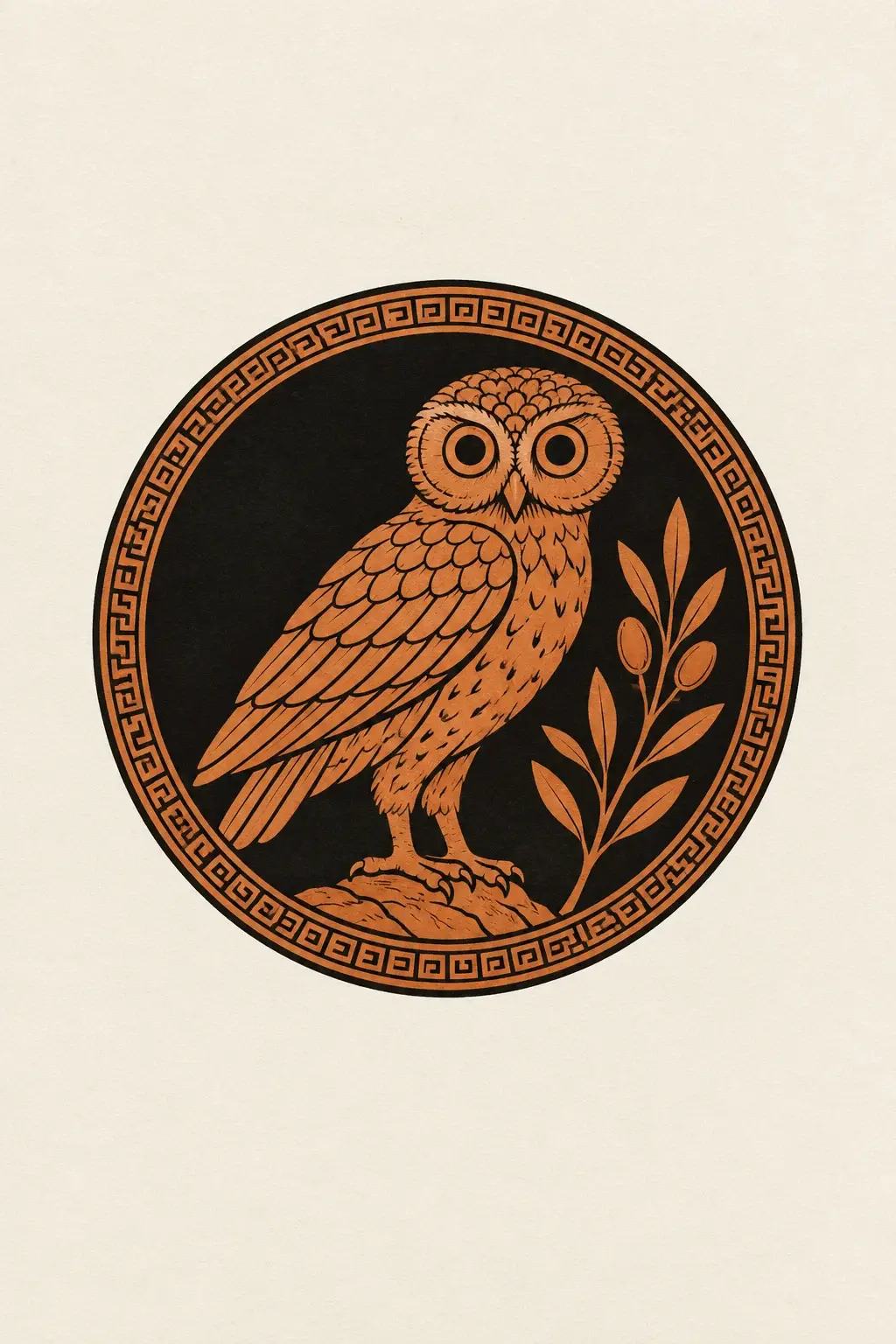
A band that is left open on purpose, with a small symbol such as an owl, laurel leaf or initial set into the break.
Spine or vertical strip
A meander running down the spine or along the side of the forearm. A bold, architectural look that pairs well with other Greek symbols.
Best placements for a Greek Key tattoo
- Upper arm or forearm
- The classic armband placement. The outer upper arm is one of the easier spots for pain, though the inner arm where the band closes is more tender.
- Wrist or ankle
- A thinner band works here like a bracelet or anklet. Simple versions hold up better.
- Finger
- A popular ring tattoo. Expect fading and plan for touch-ups.
- Spine
- A vertical meander strip down the back looks clean and striking, though the bony areas are painful.
Styles that suit Greek Key
- Blackwork
- Solid, even black lines make the geometry crisp and keep it sharp for years.
- Minimalist
- A single thin line pattern for a light, modern band.
- Red-figure (Greek vase)
- Terracotta and black like ancient pottery, best as a border around a larger vase-style scene.
- Dotwork
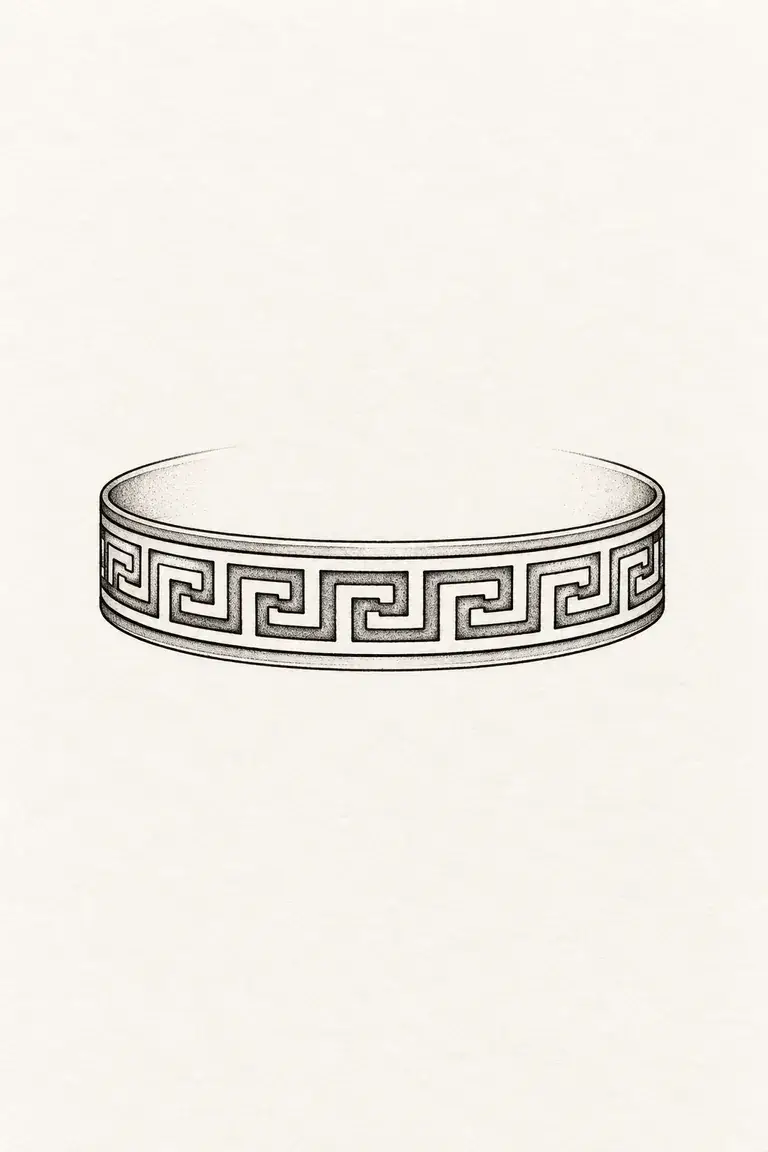
- A stippled meander gives a softer, textured version that pairs well with geometric and mandala work.
19 more Greek Key tattoo designs
Different styles and placements to show your tattoo artist.
Fine-line, Neck
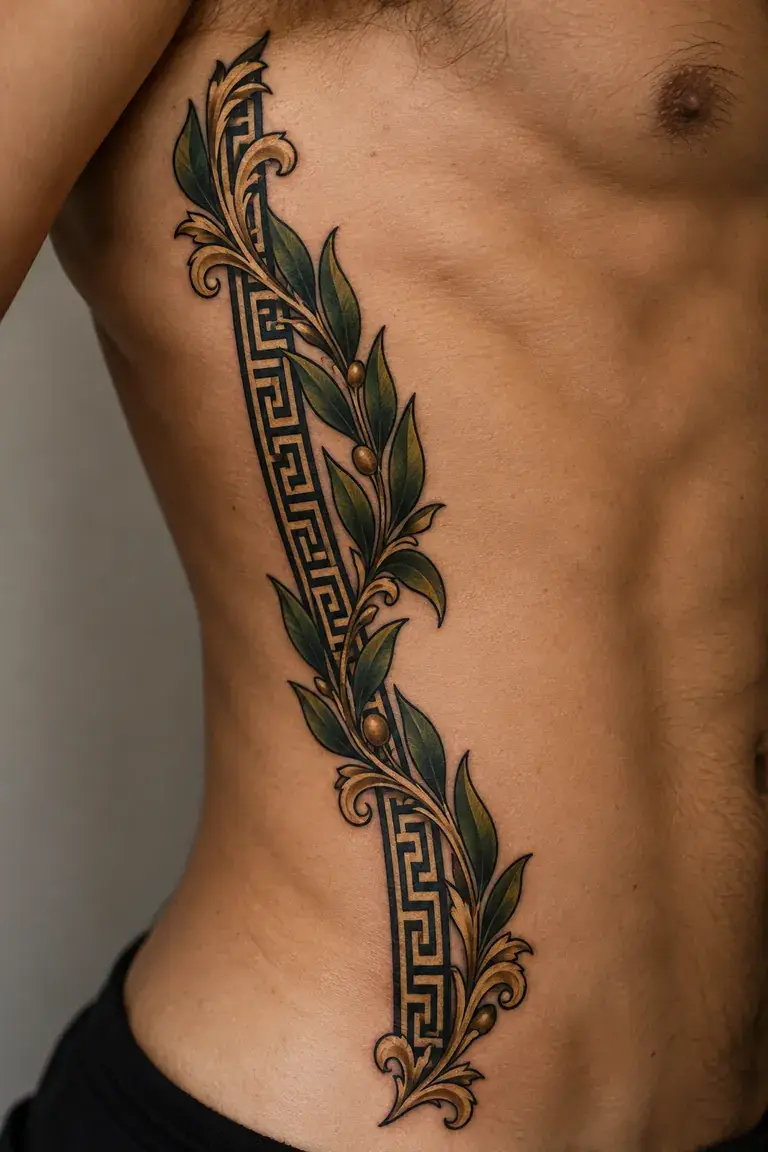
Neo-traditional, Ribs
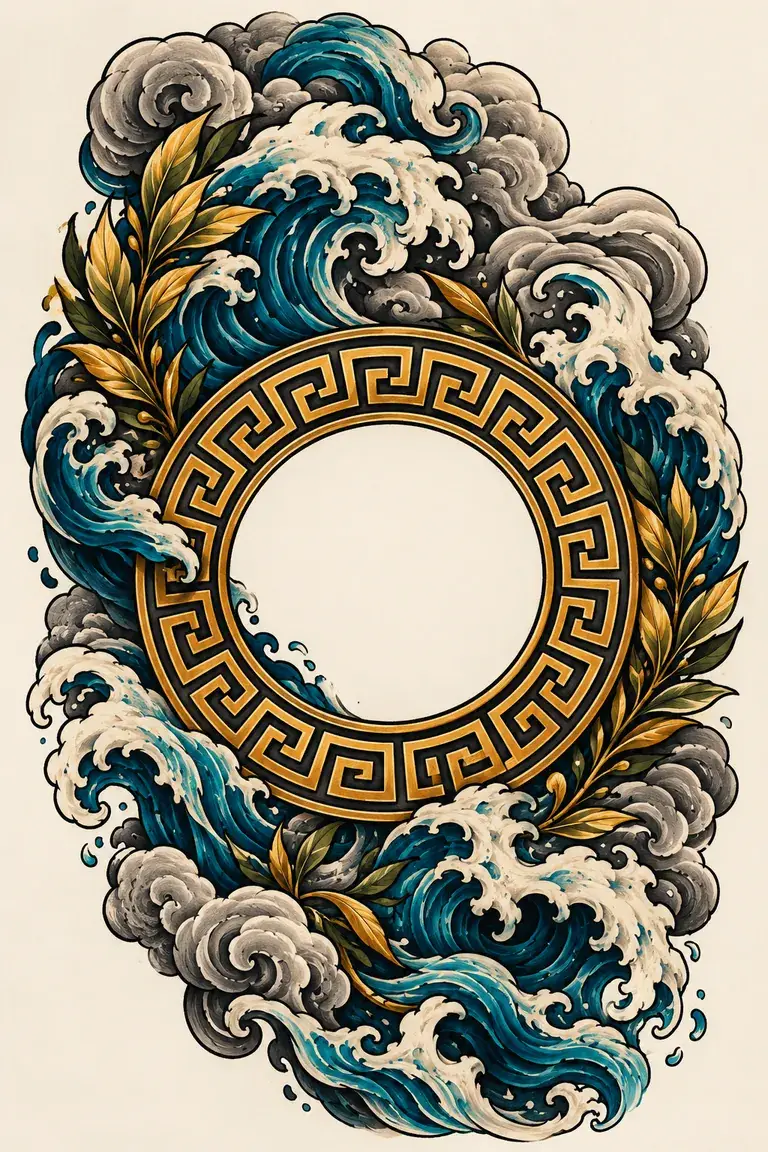
Neo-traditional, Sleeve
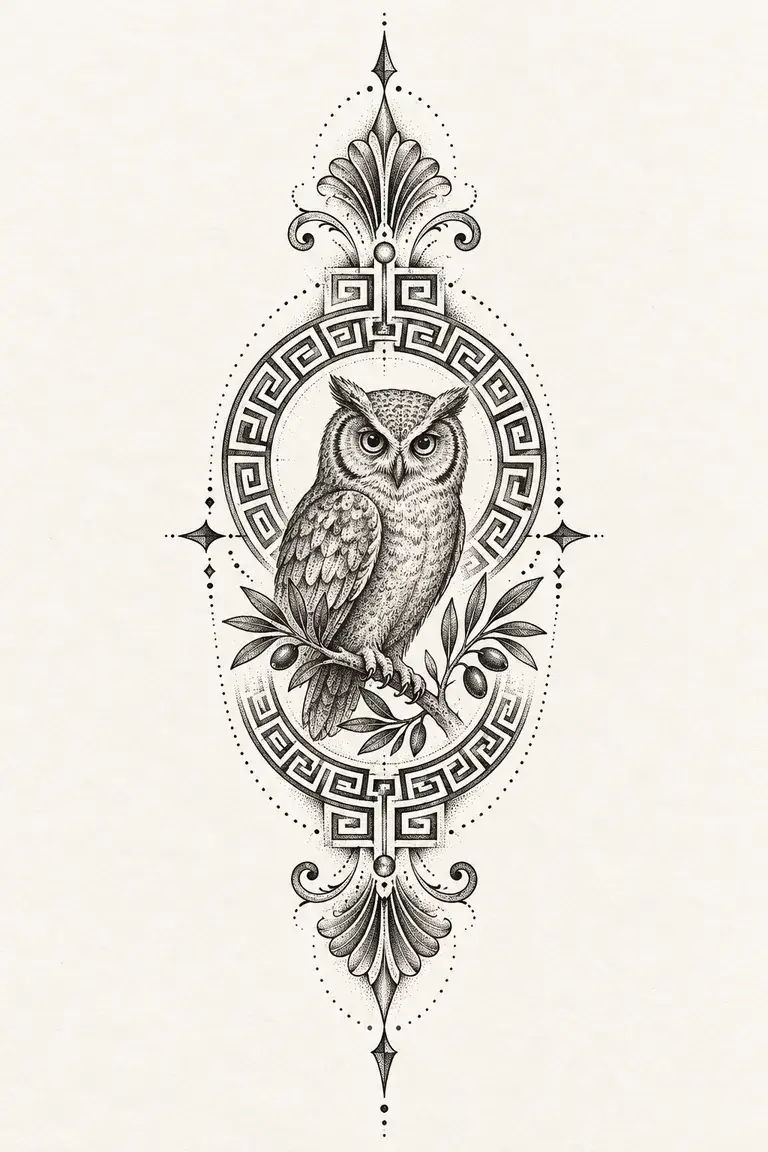
Dotwork, Forearm
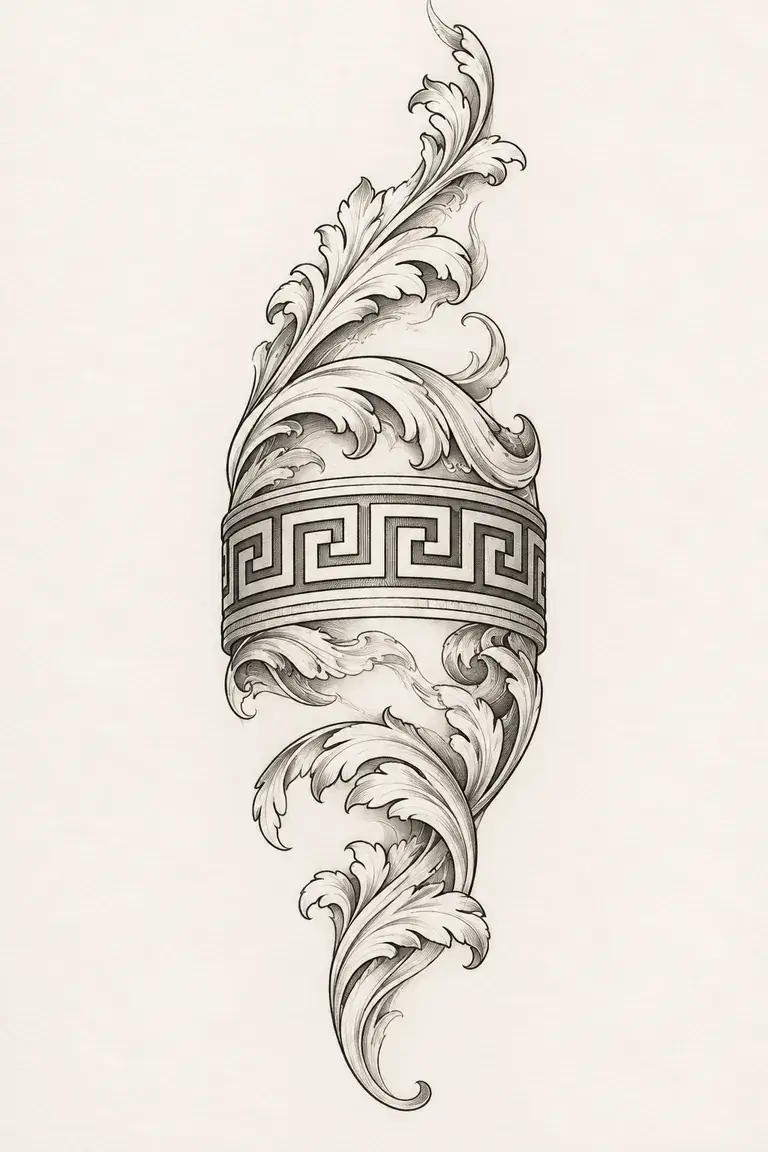
Fine-line, Calf
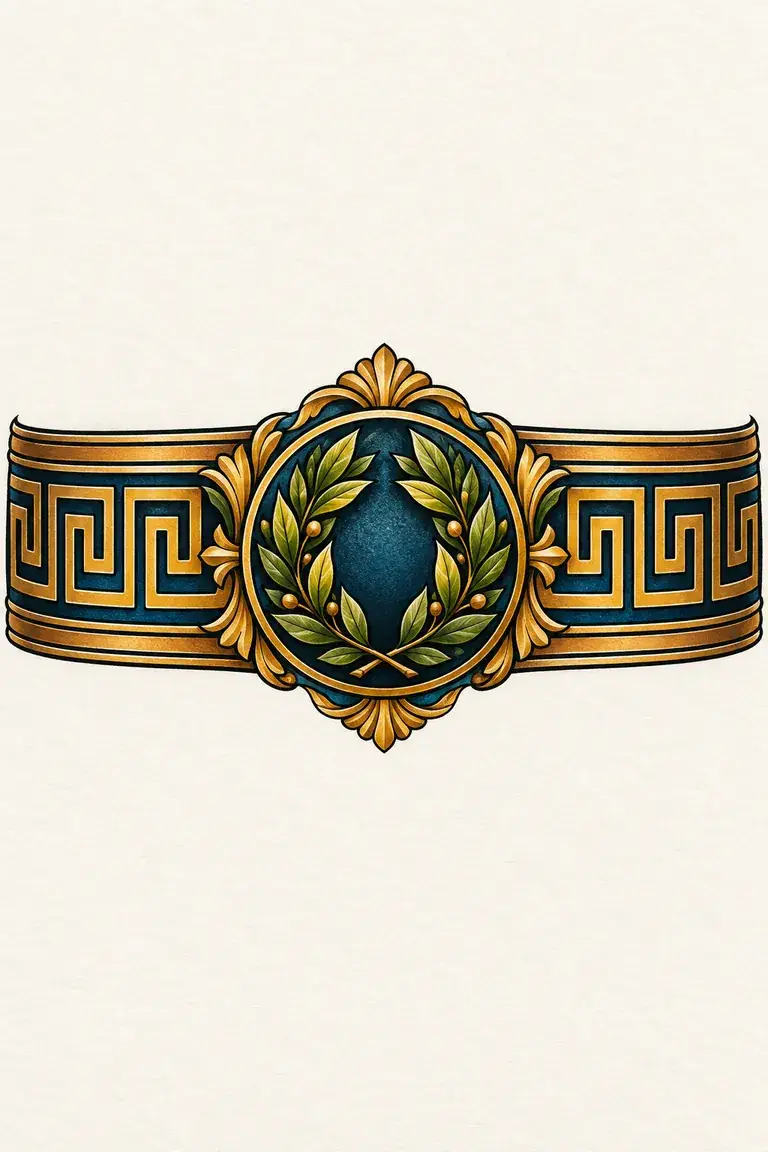
Neo-traditional, Upper arm
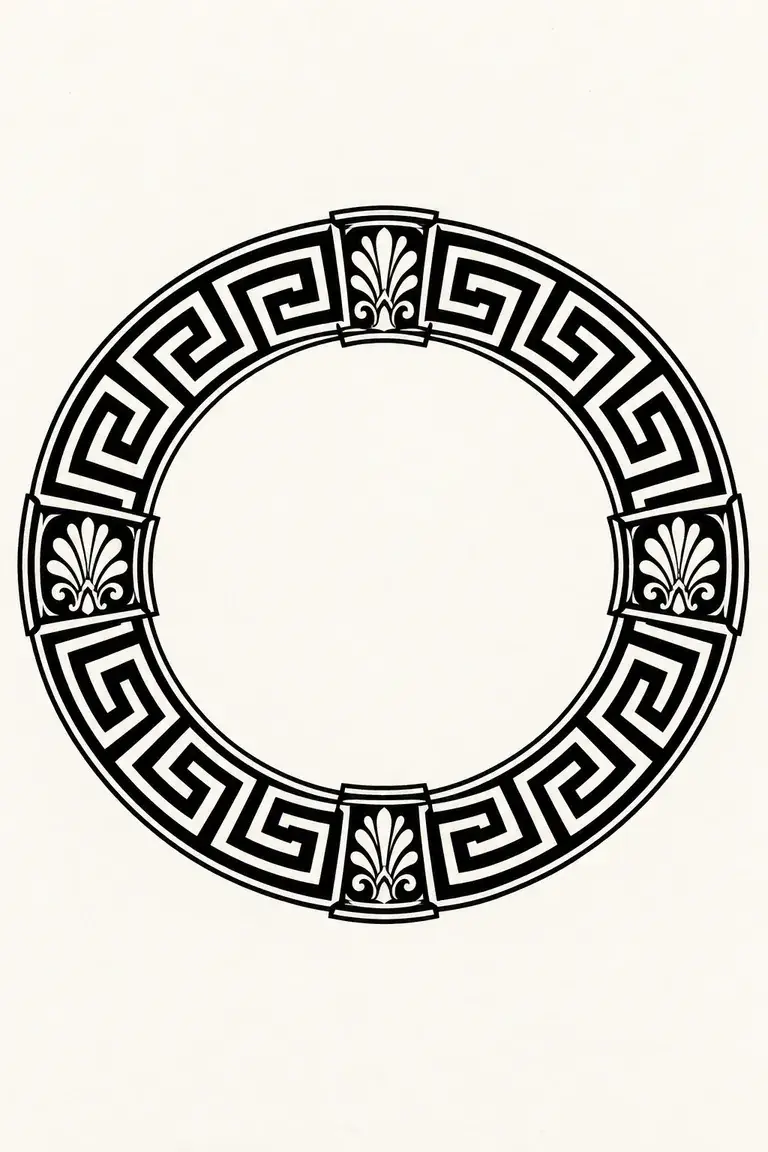
Blackwork, Upper arm
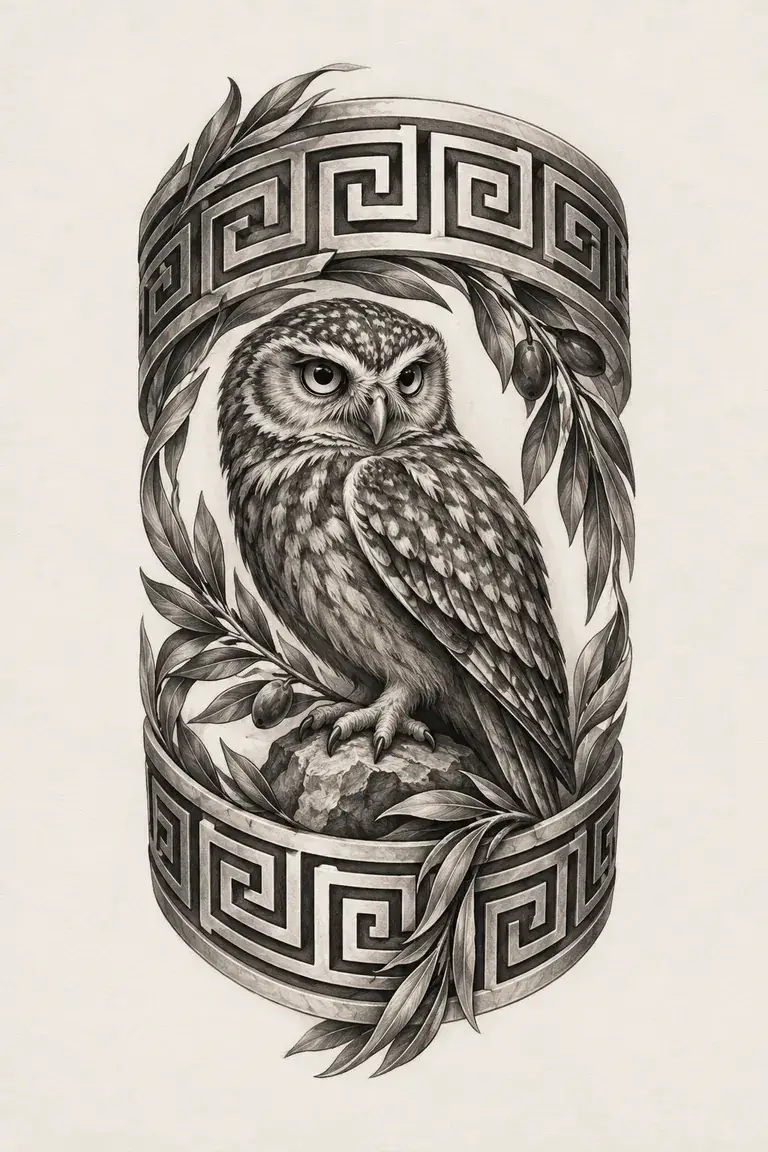
Black and grey realism, Upper arm
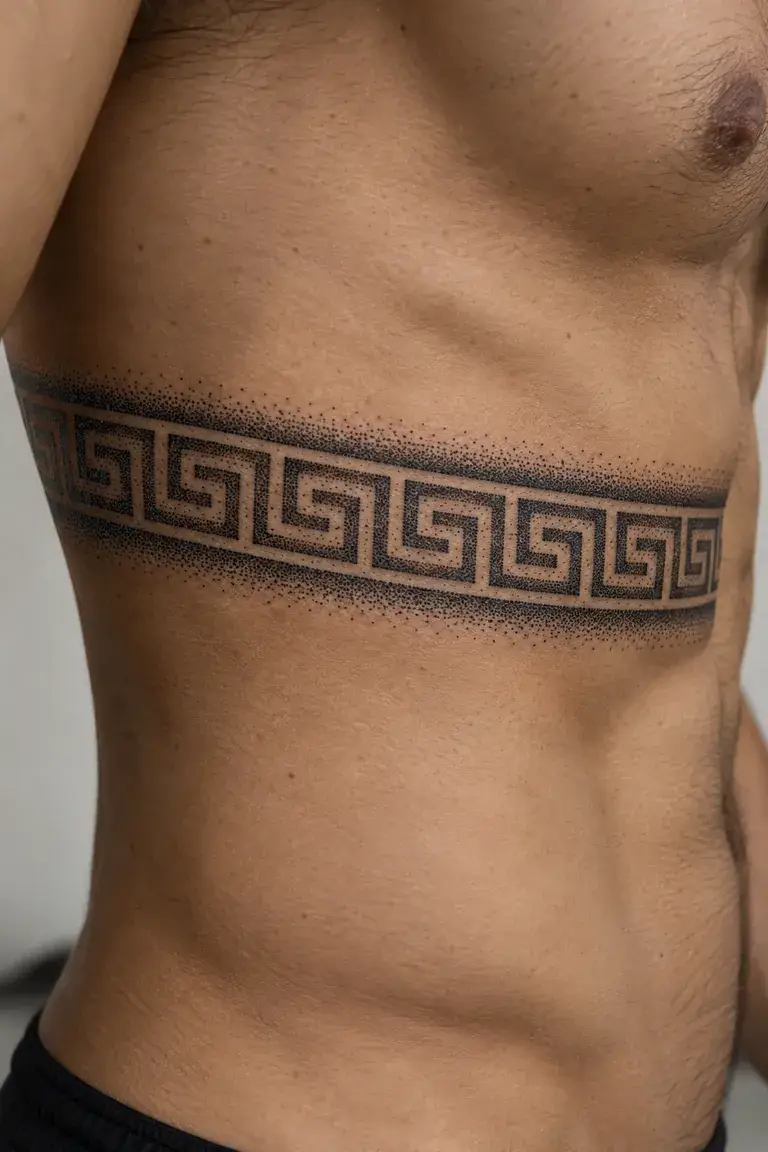
Dotwork, Ribs
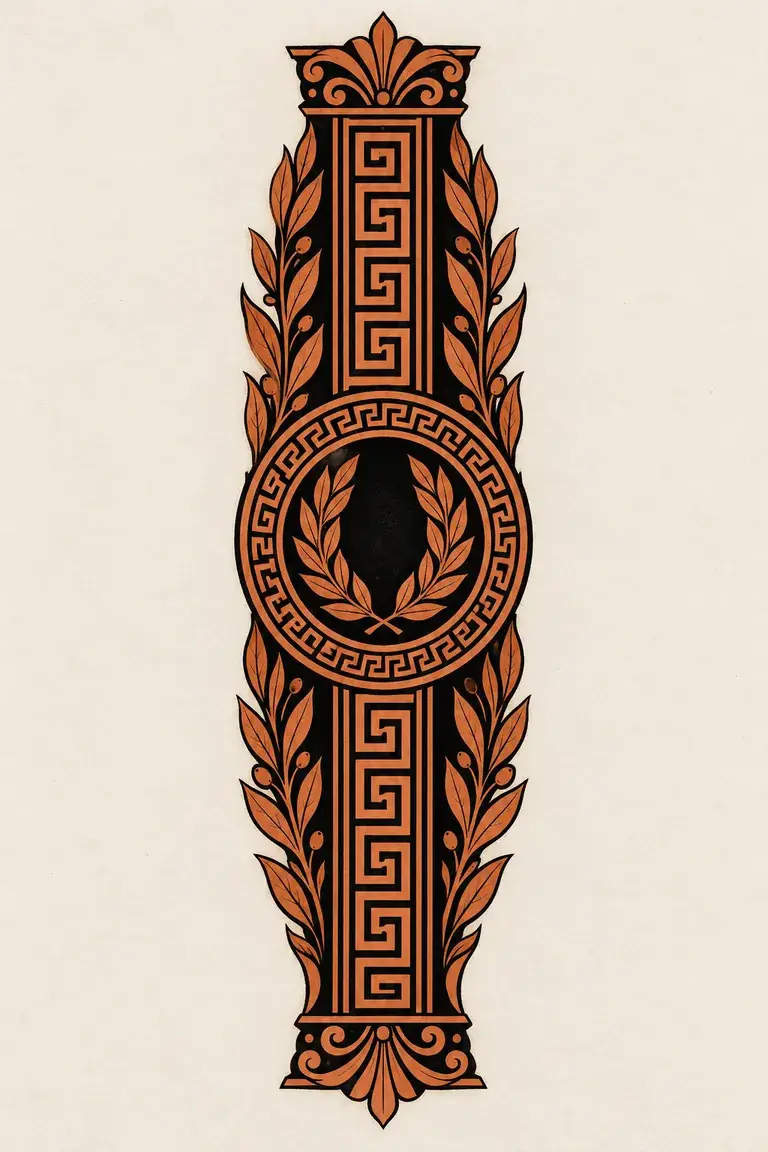
Red-figure (Greek vase), Calf
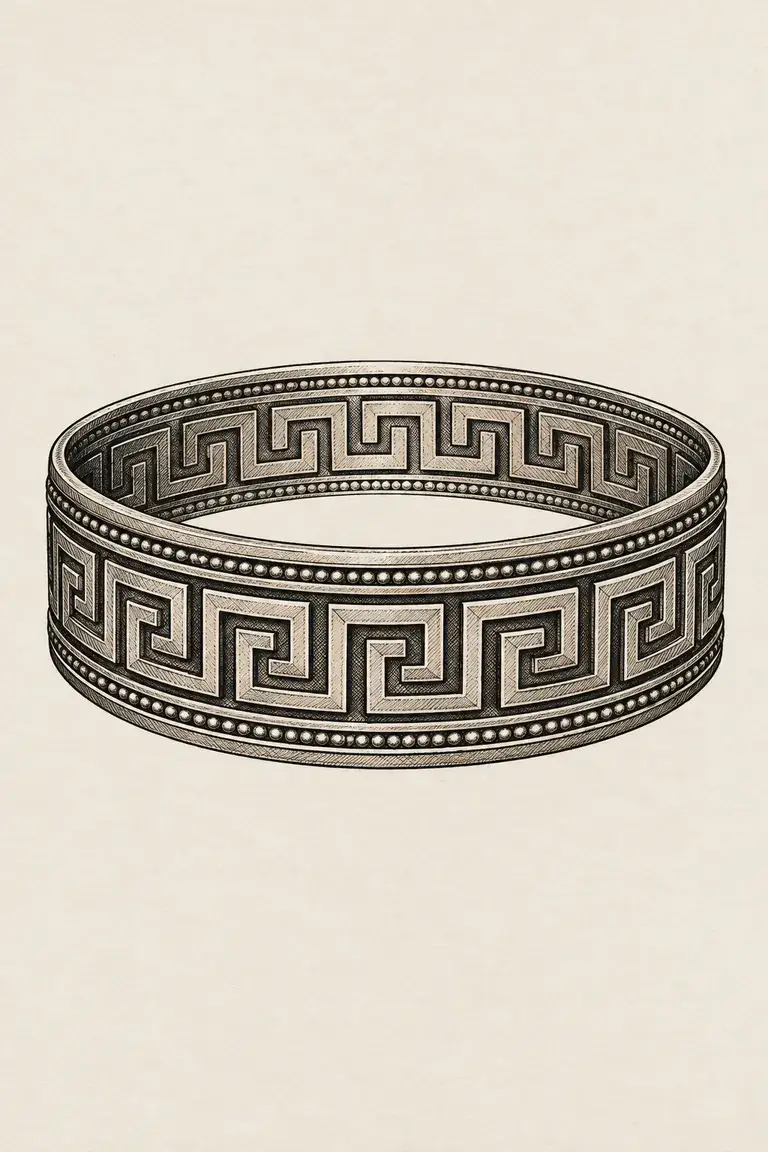
Engraving, Upper arm
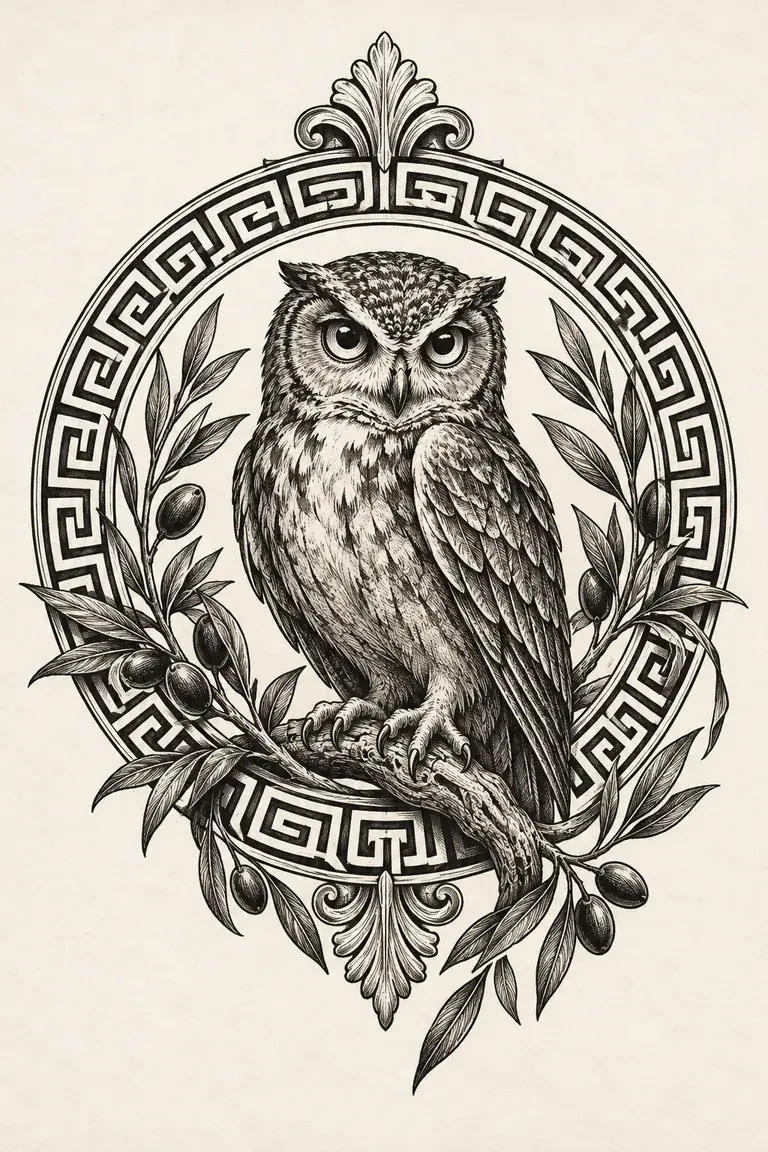
Engraving, Thigh
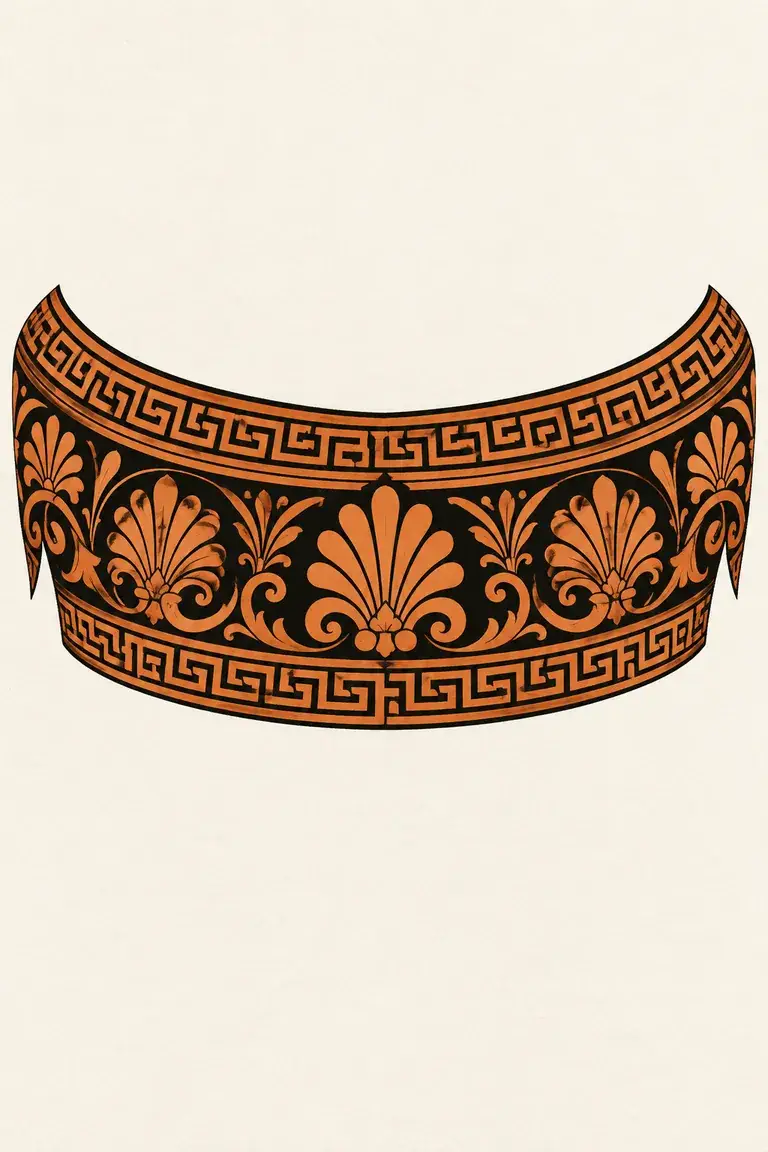
Red-figure (Greek vase), Chest
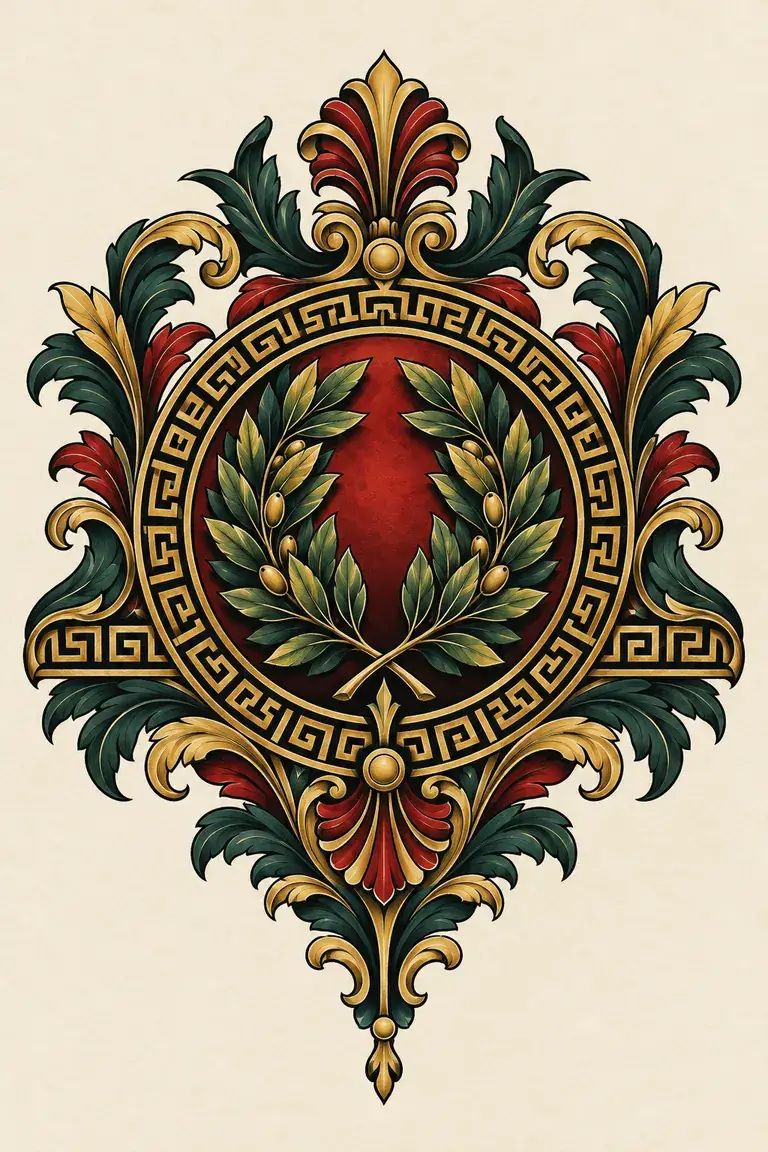
Neo-traditional, Back
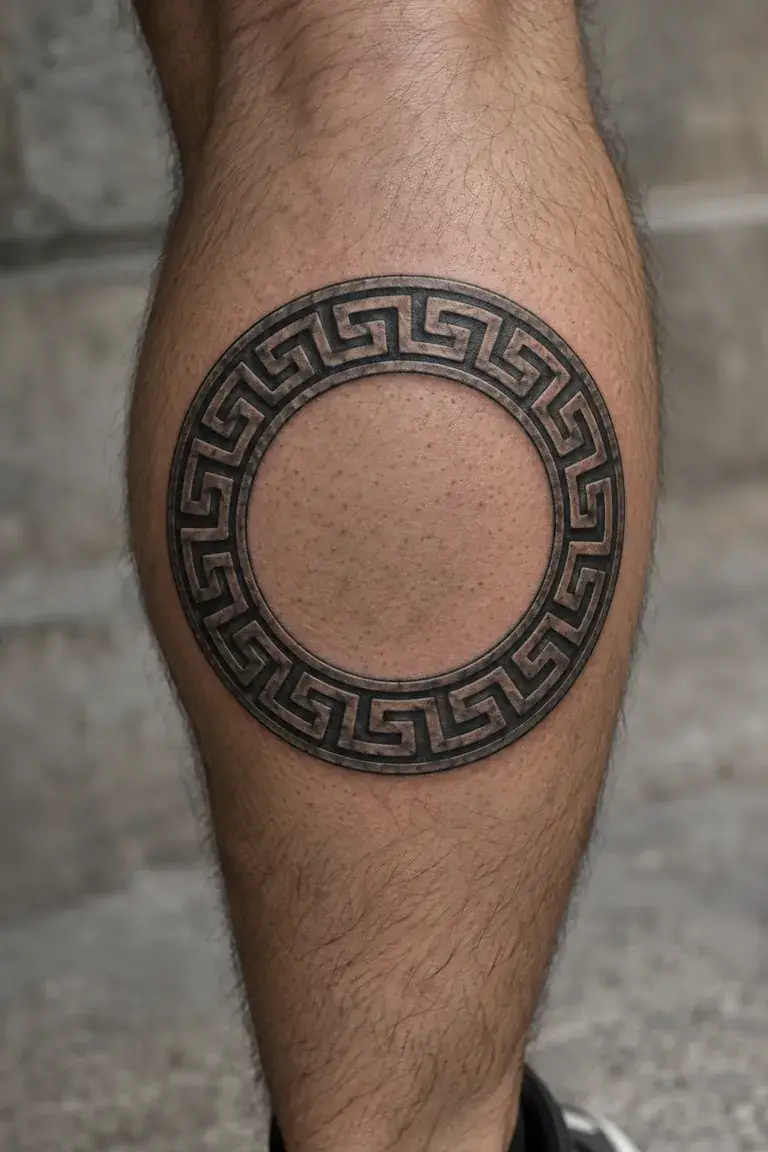
Black and grey realism, Calf
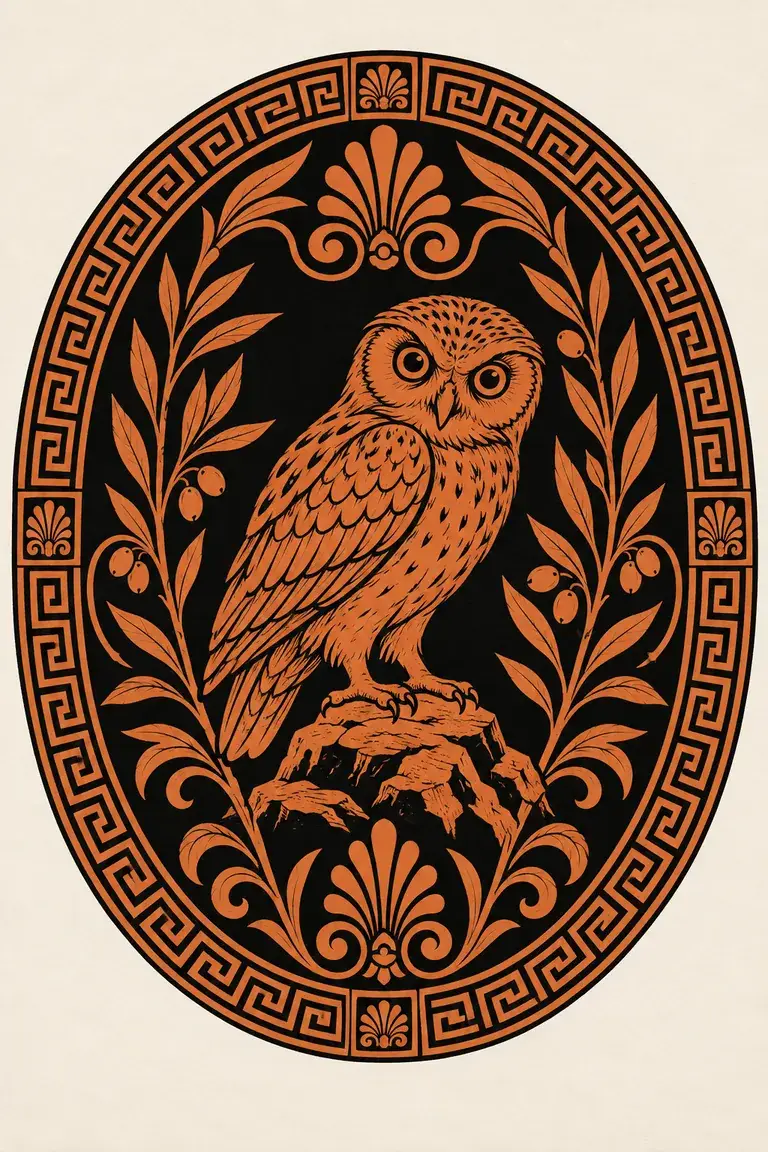
Red-figure (Greek vase), Back
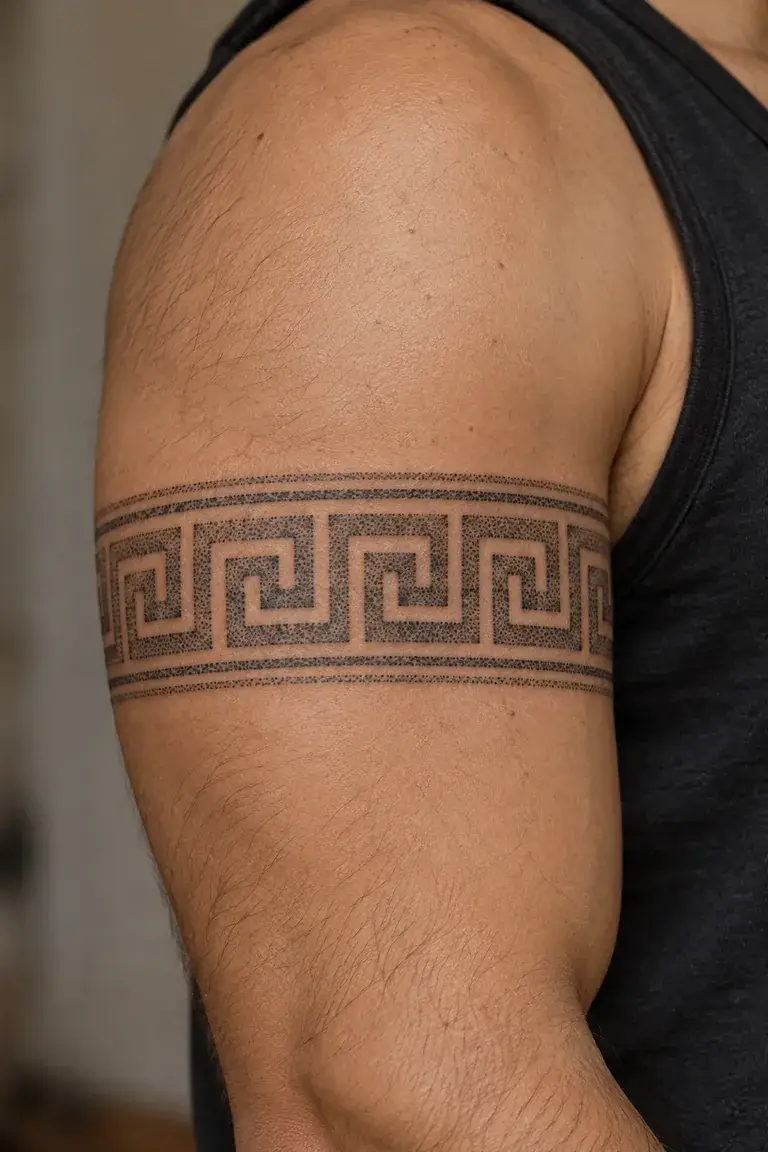
Dotwork, Upper arm
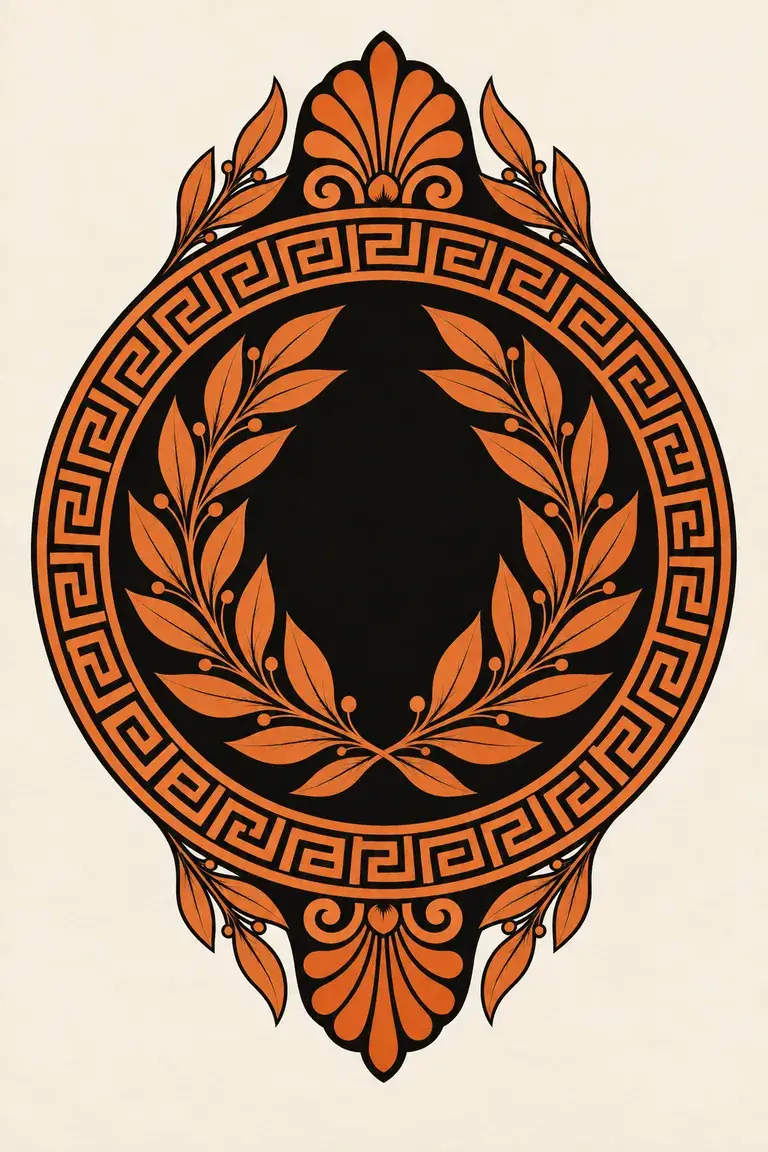
Red-figure (Greek vase), Thigh
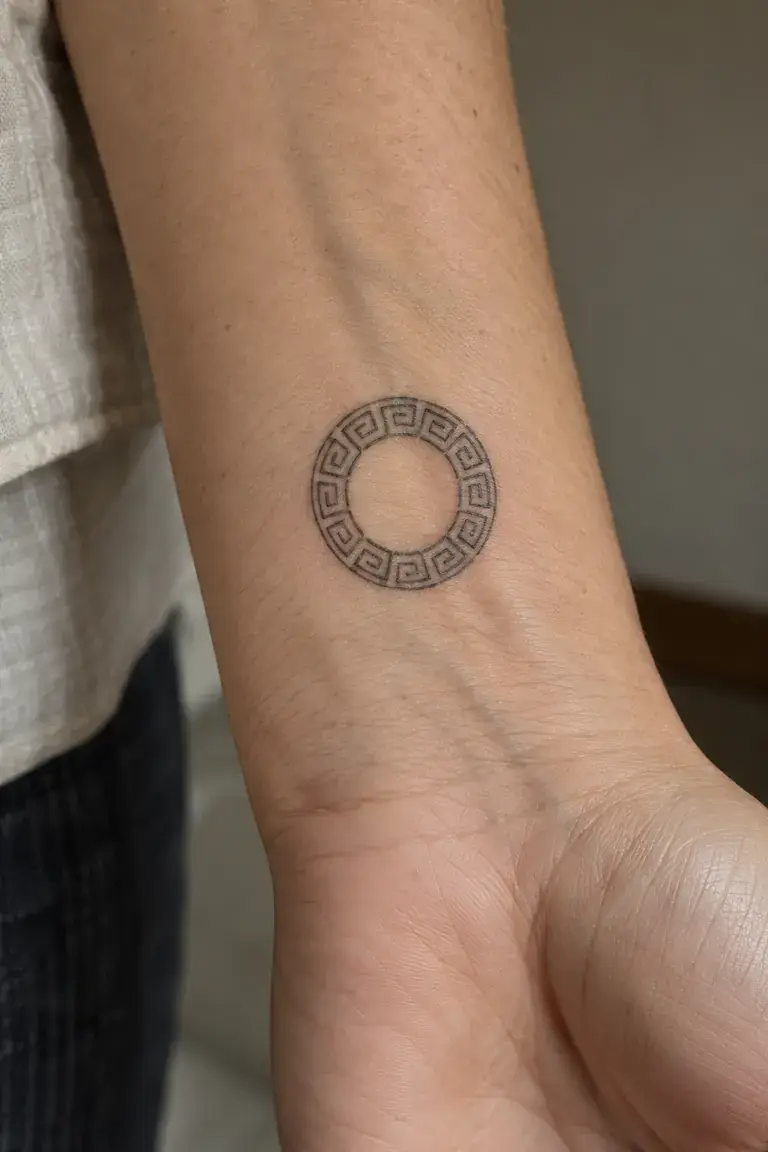
Fine-line, Wrist
Frequently asked questions
What does a Greek key tattoo mean?
Most people choose it for continuity, unity and Greek heritage. The pattern is one unbroken line that keeps turning, which many read as the flow of life or a lasting bond. Ancient Greeks left no written explanation, so these meanings are largely modern.
Why is it called a meander?
It is named after the Maeander, a famously winding river in what is now western Turkey (today's Büyük Menderes). The river's twists were so well known that its name became a word for winding.
Is the Greek key the same as the labyrinth?
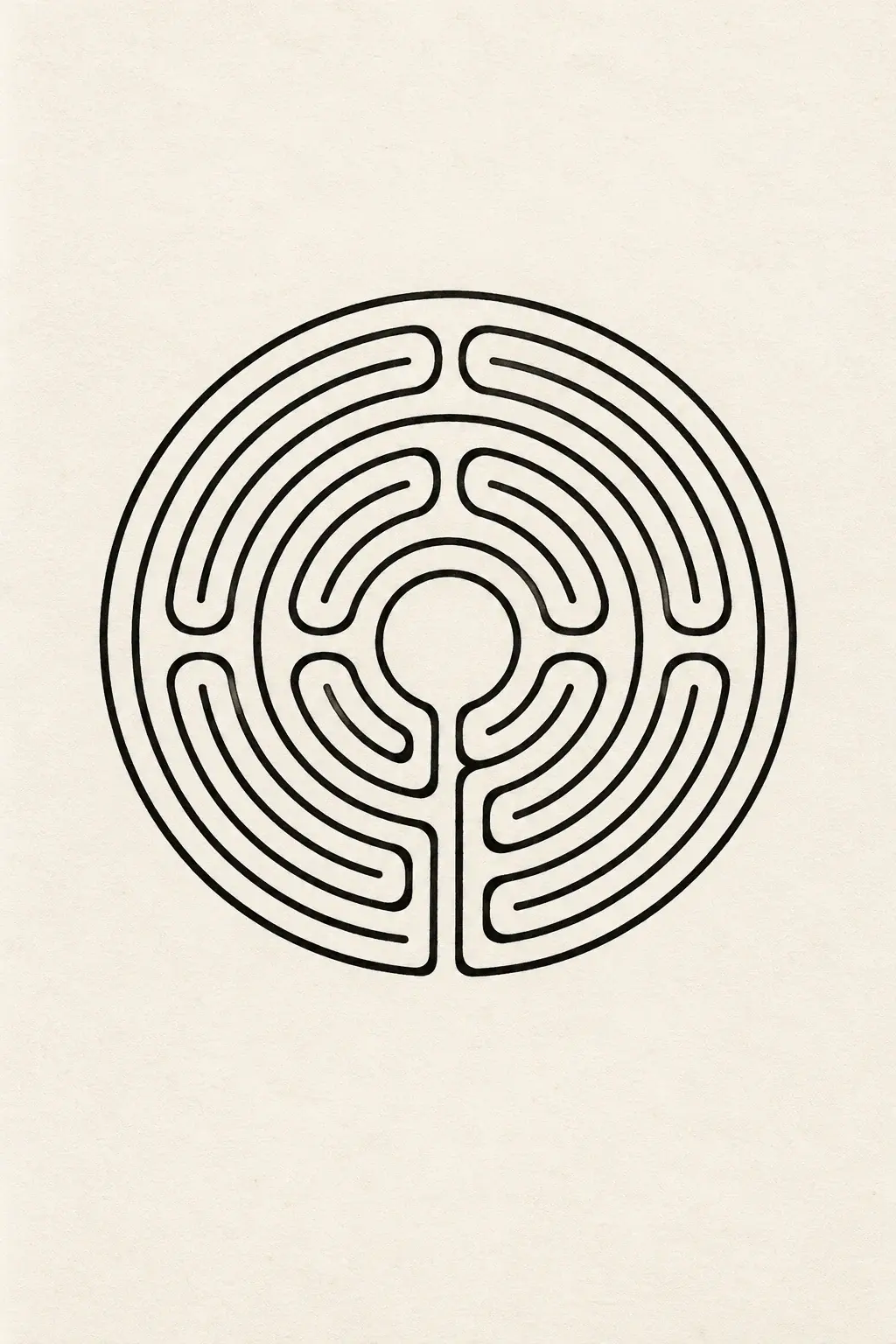
They are related but not the same. The Greek key is a repeating band pattern. A labyrinth is a single path to a center. Ancient coins from Knossos sometimes show the labyrinth as a square meander, and Ovid compares the labyrinth to the Maeander river.
How do I get a Greek key armband to line up?
Measure your arm, and choose a tattooer experienced with geometric work. A good artist adjusts the size of each repeat so the pattern meets itself cleanly, usually placing the join on the inner arm.
Is a Greek key tattoo just a fashion logo?
No. Fashion houses have used it, but the pattern is about three thousand years old and appears on Greek pottery from the Geometric period onward. It belongs to Greek art, not to any brand.