Labyrinth Tattoo Meaning, Designs and Placement Ideas
The maze Daedalus built at Knossos to hide the Minotaur, and the oldest path-to-the-center symbol in Greek art.
Quick meaning
- Life as a winding journey with a center to reach
- Facing your fears at the heart of a problem
- Finding your way with help, like Ariadne's thread
- Patience, focus and meditation
- Mystery and the search for meaning
Carries the meaning of: Mystery, Wisdom, Resilience
What a Labyrinth tattoo symbolizes
The journey
A labyrinth turns back and forth but keeps leading on. As a tattoo it often stands for a life path with twists that still makes sense when you look back on it.
The monster at the center
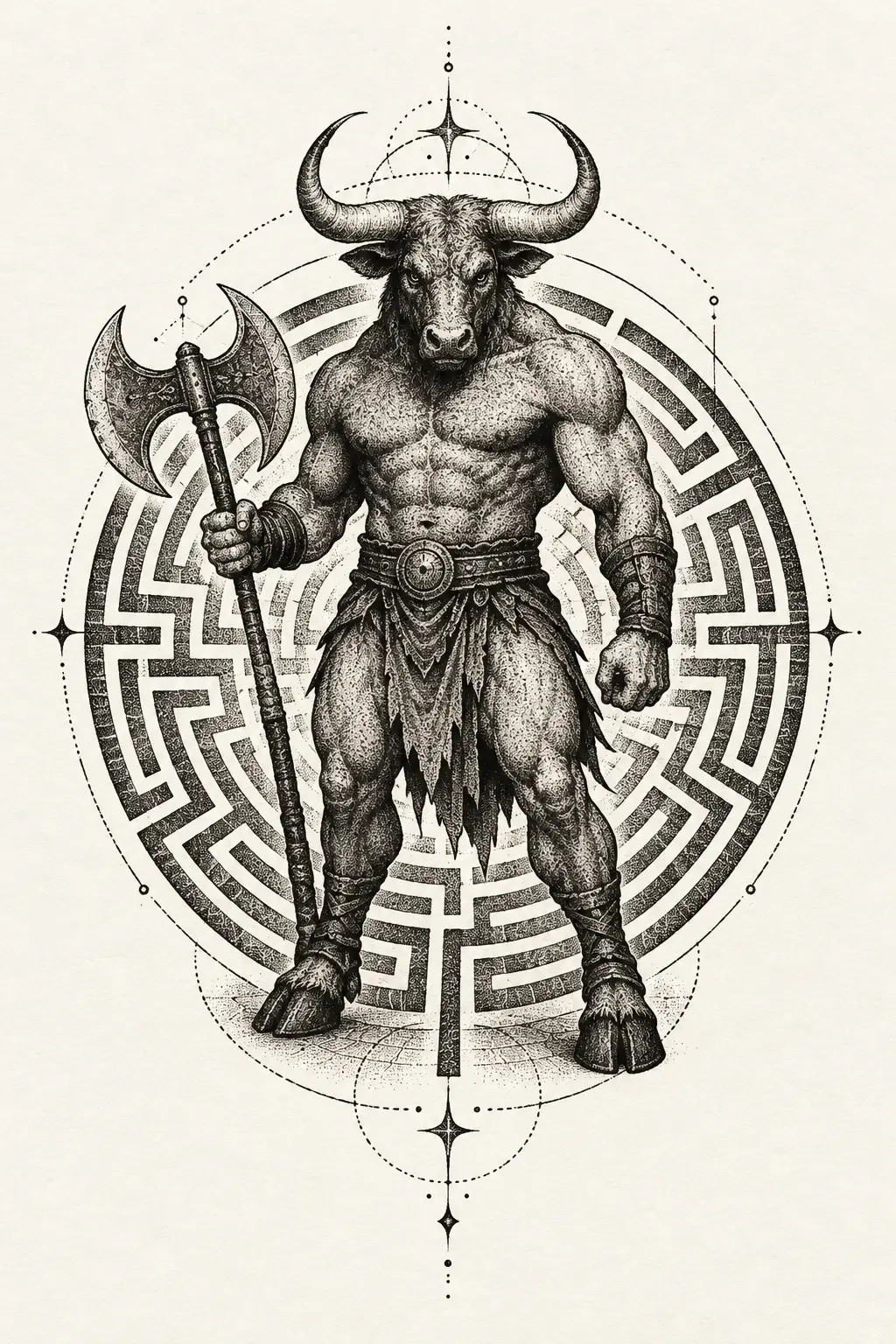
In the myth, the Minotaur waited at the heart of the labyrinth. Many people use the design to mark facing something they feared and walking out again.
Ariadne's thread
Theseus only escaped because Ariadne gave him a thread to follow. Adding a thread line to the design honors the person, belief or habit that guided you through a hard time.
Meditation
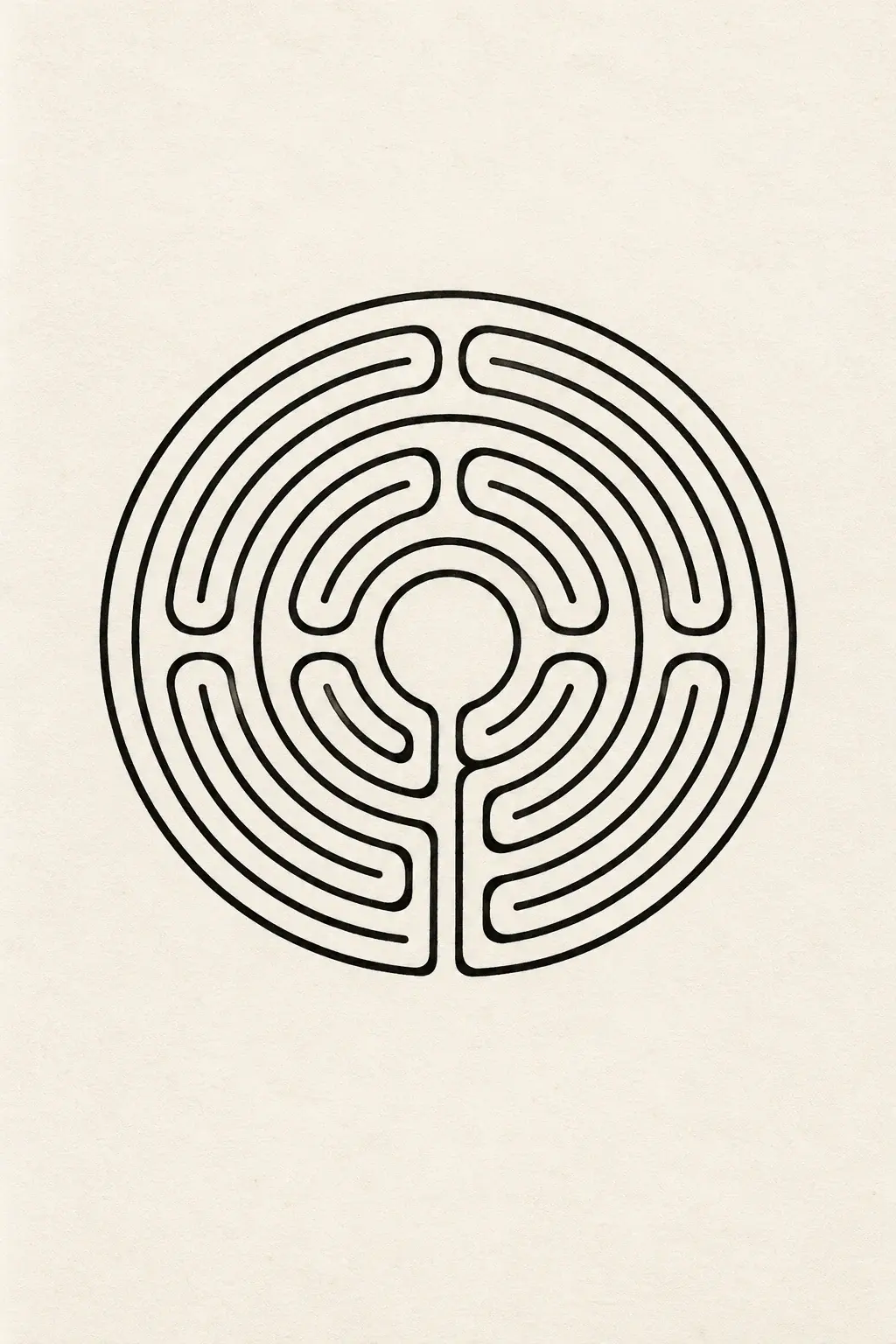
The classical labyrinth has a single path with no dead ends, and walking or tracing labyrinths is still used as a calming, meditative practice. The tattoo can stand for patience and focus.
The myth of the labyrinth
The labyrinth was built for a secret. King Minos of Crete had angered Poseidon, and his wife Pasiphae gave birth to the Minotaur, a child with a bull’s head. Minos turned to Daedalus, the most brilliant craftsman of the age, to hide the creature. Daedalus built the labyrinth at Knossos. Ovid says its winding passages were so deceptive that Daedalus himself could barely find his way back to the entrance.
Every nine years, according to Plutarch, Athens had to send seven young men and seven young women into the labyrinth, where the Minotaur killed them. The Athenian prince Theseus came with one of these groups. Ariadne, Minos’ daughter, gave him a ball of thread on Daedalus’ advice. Theseus tied it at the door, unwound it as he went, killed the Minotaur at the center and followed the thread back out.
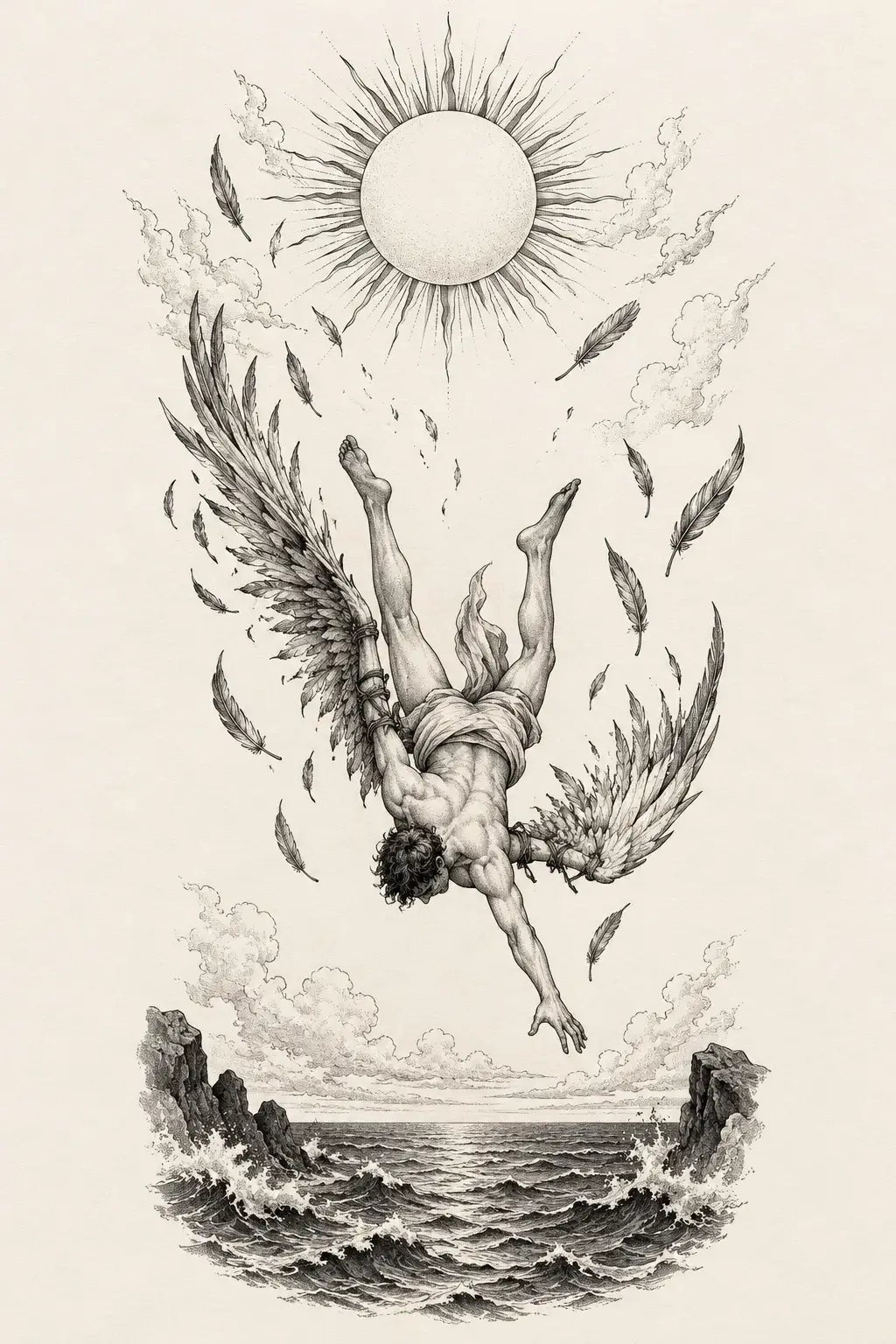
Minos blamed Daedalus. In Ovid’s telling, Daedalus and his son Icarus were trapped on Crete and escaped on wings of feathers and wax, and Icarus flew too close to the sun. Apollodorus says Minos shut them inside the labyrinth itself.
The symbol is older than many people expect. A clay tablet from Pylos, from around 1200 BCE, has a seven-circuit labyrinth scratched on the back, and coins from Knossos in the Classical and Hellenistic periods proudly showed the labyrinth as the city’s emblem. When Arthur Evans dug up the vast palace at Knossos, its maze of rooms and its many carved double axes seemed to many like the real thing behind the story.
Drawing a labyrinth that actually works
A classical labyrinth is a precise design, and a slightly wrong one is easy to spot for anyone who tries to trace it. Ask your artist to construct it from the traditional seed pattern rather than freehand, and trace the path yourself on the stencil before the needle starts.
Size and spacing are everything. The paths and the walls between them should be roughly equal in width. If the lines are too close, they will blur together over the years and the labyrinth will turn into a grey disc.
Decide if you want the true single-path labyrinth or a maze with dead ends. Both look good, but only the first matches the ancient symbol.
Labyrinth tattoo design ideas
Classical seven-circuit labyrinth
The round Cretan design with seven rings and a single path to the center. Ask your artist to draw it from the traditional 'seed pattern' (a cross, four angles and four dots) so every ring connects correctly.
Labyrinth with Ariadne's thread
The same design with a thin red or black line entering from outside and winding all the way to the center. A small detail that turns a pattern into a story.
Knossos coin labyrinth
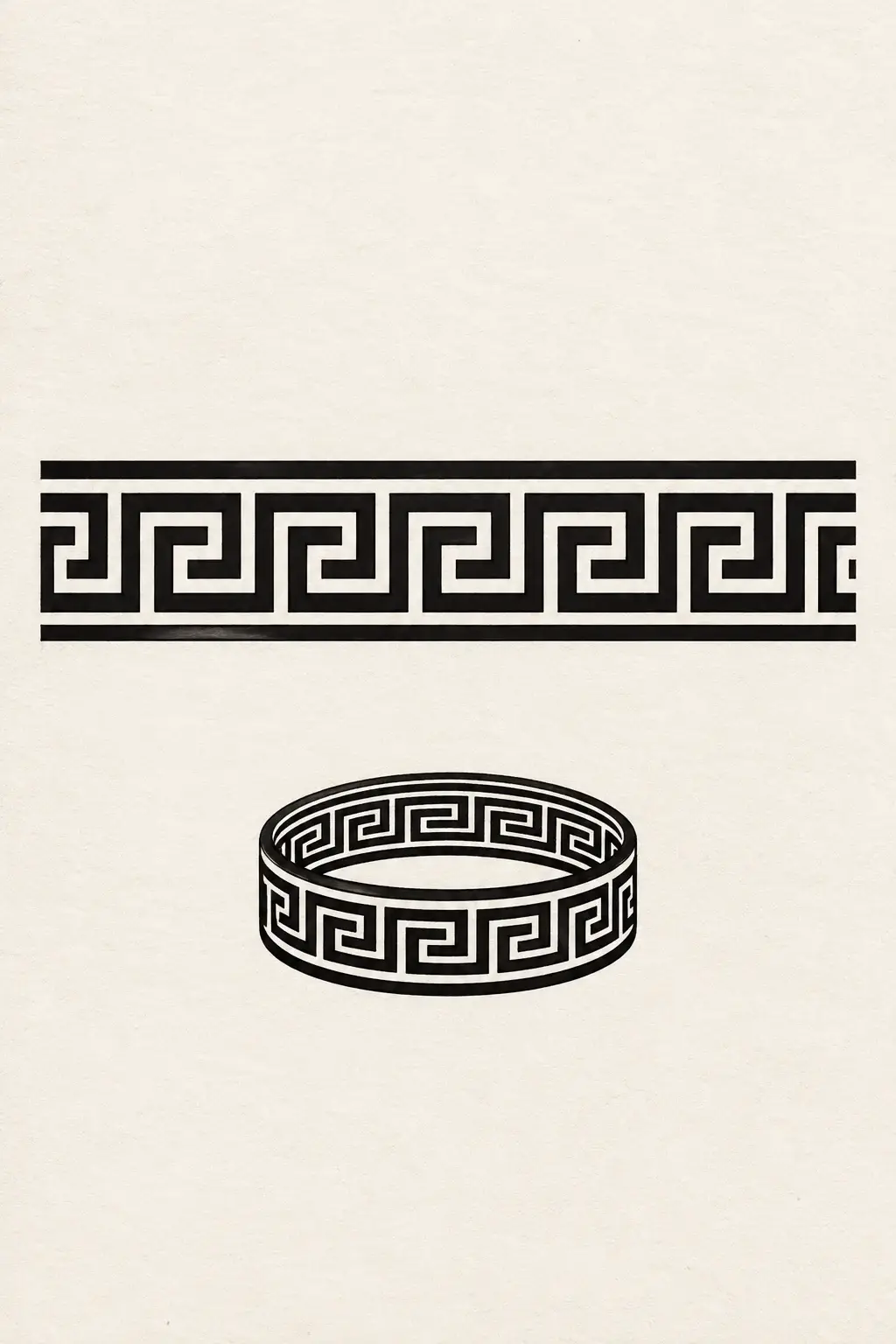
Ancient silver coins from Knossos show the labyrinth, sometimes round and sometimes square like a meander. A coin-style design with a worn edge looks authentic and unusual.
Minotaur at the center
A tiny bull's head, horns or a labrys (double axe) sitting in the middle of the labyrinth. It tells the full myth in a compact circle.
Labyrinth with Icarus wings
The labyrinth below with a pair of wings or a small falling figure above, nodding to Daedalus and Icarus escaping Crete. Good for a vertical placement.
Best placements for a Labyrinth tattoo
- Calf
- A round labyrinth sits well on the back or outer calf and has room for clean, even rings.
- Upper back or between the shoulder blades
- A centered, symmetrical spot that suits a circular design and lets it be shown or covered easily.
- Forearm
- Good for a medium labyrinth or a vertical design with Icarus wings above.
- Sternum or chest
- A labyrinth over the heart or sternum fits the idea of a path leading inward.
Styles that suit Labyrinth
- Minimalist
- Clean lines of even weight show off the geometry. The most popular choice for labyrinth tattoos.
- Blackwork
- Thick, bold paths with solid black walls stay readable at smaller sizes.
- Dotwork
- Stippled paths or a dotted thread add texture and a soft, ancient feel.
- Fine-line
- Delicate lines for a small labyrinth, best kept at a size where the gaps stay open.
21 more Labyrinth tattoo designs
Different styles and placements to show your tattoo artist.
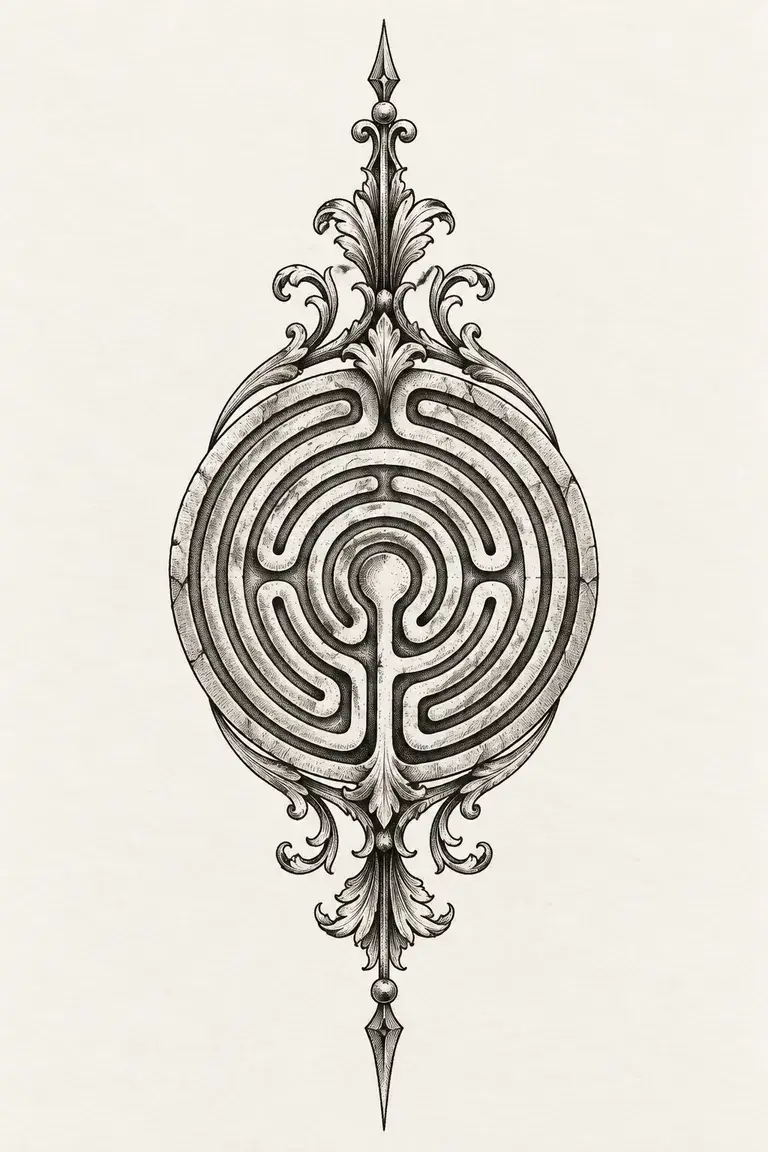
Engraving, Ribs
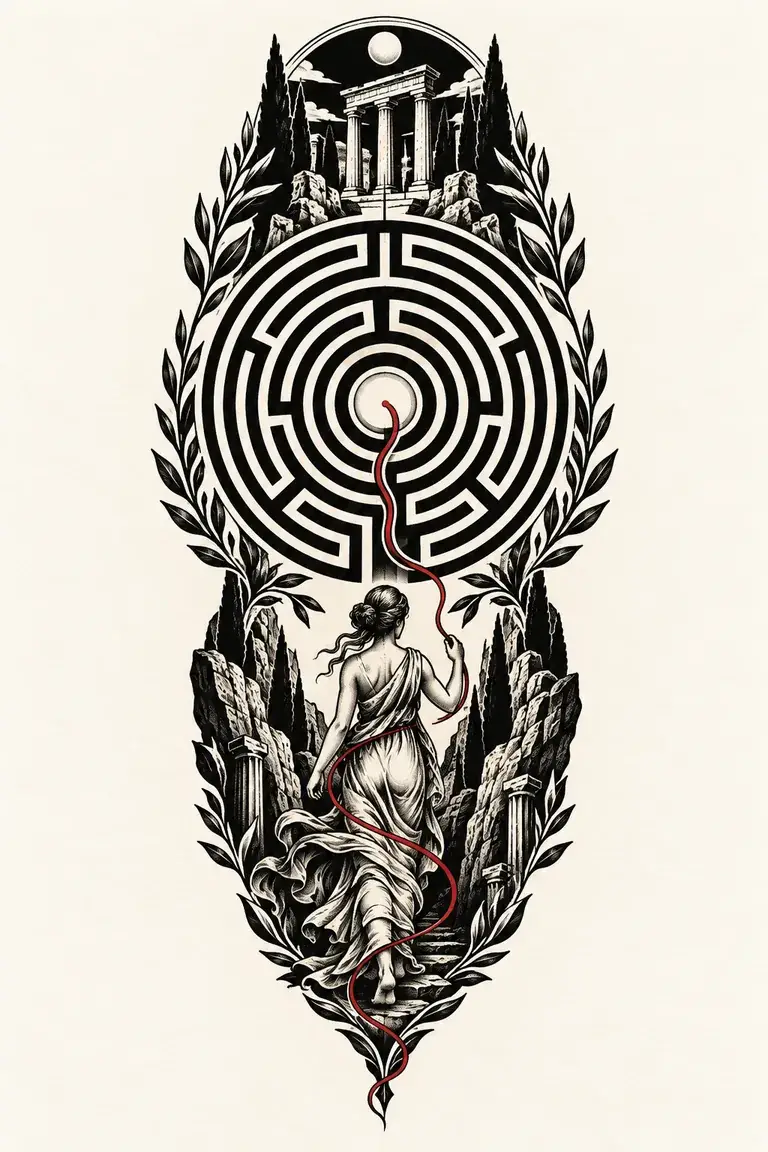
Blackwork, Calf
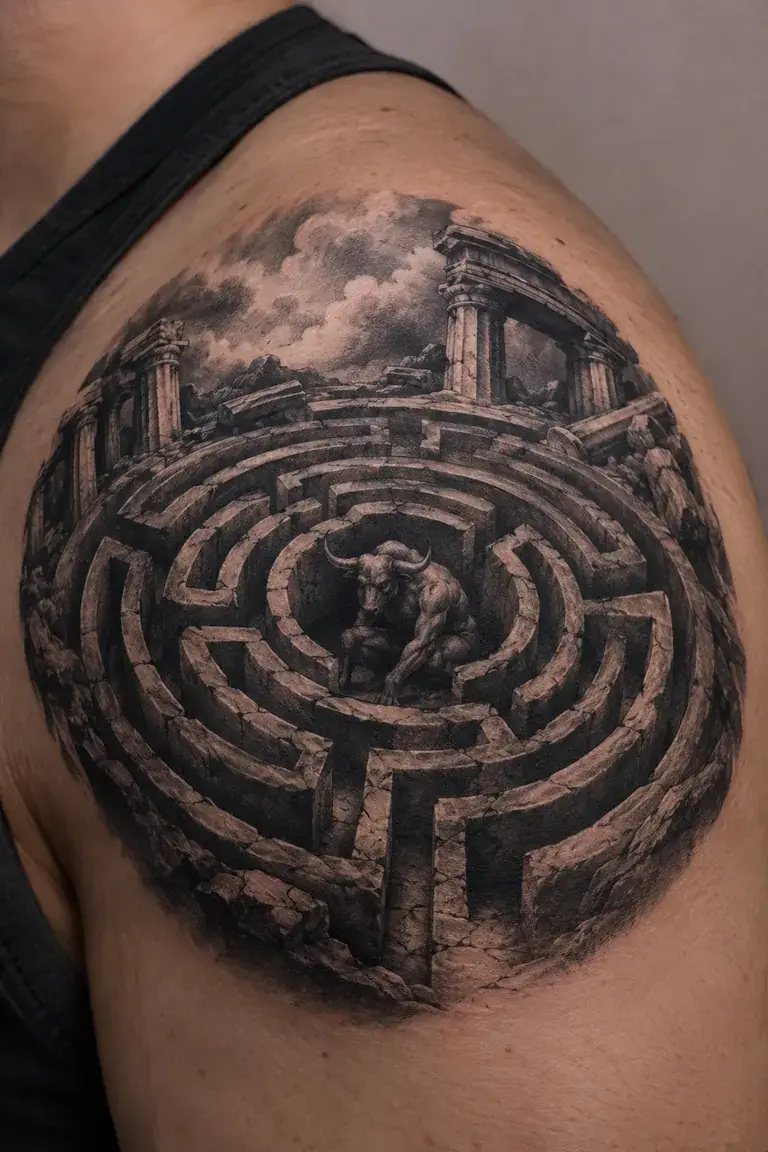
Black and grey realism, Shoulder
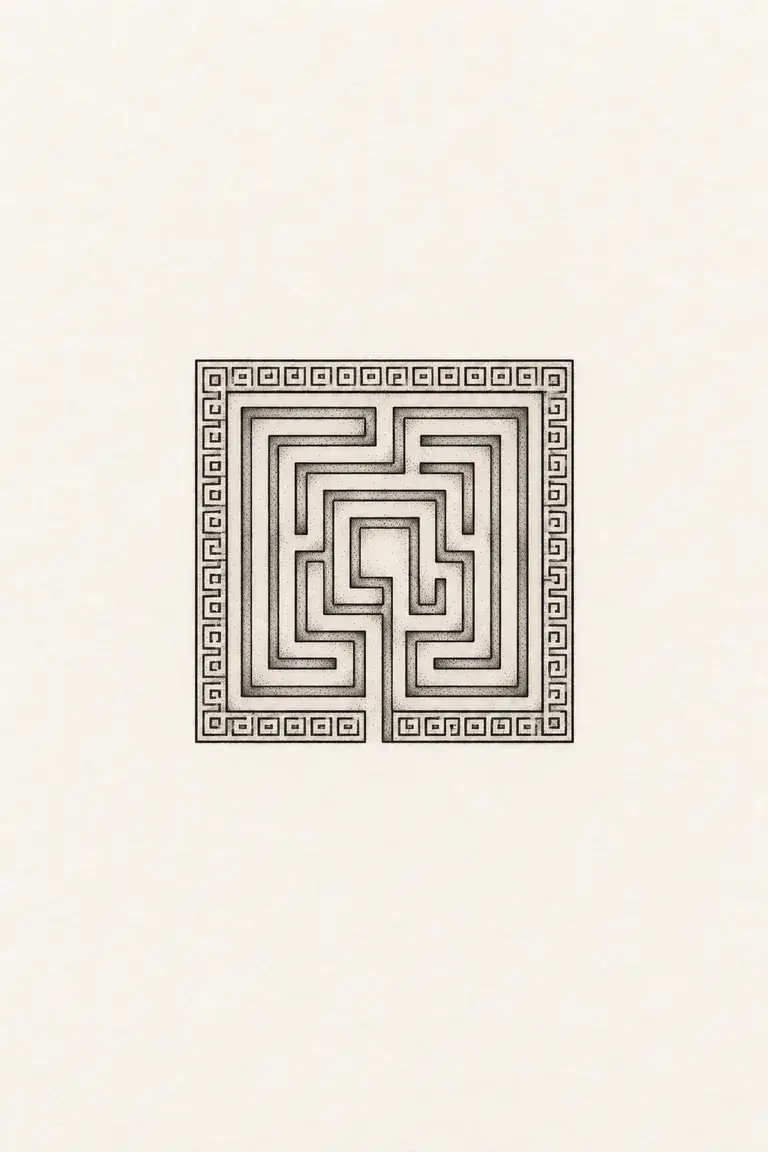
Fine-line, Ankle
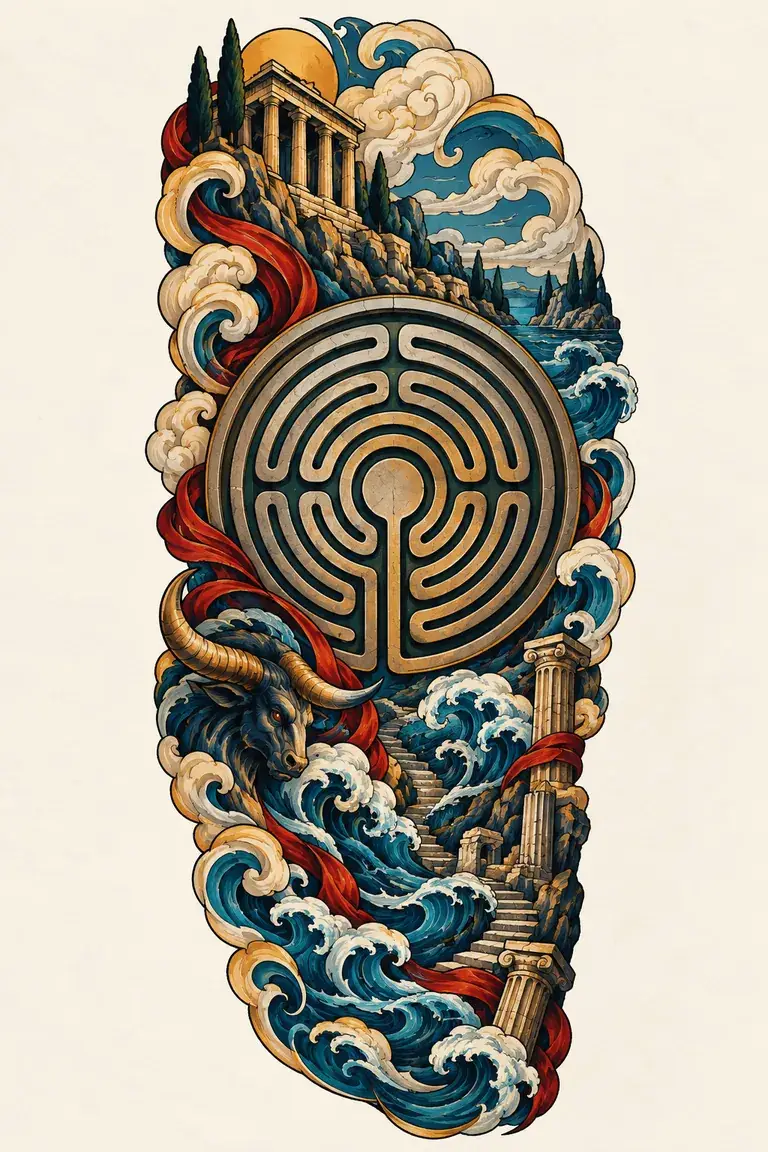
Neo-traditional, Sleeve
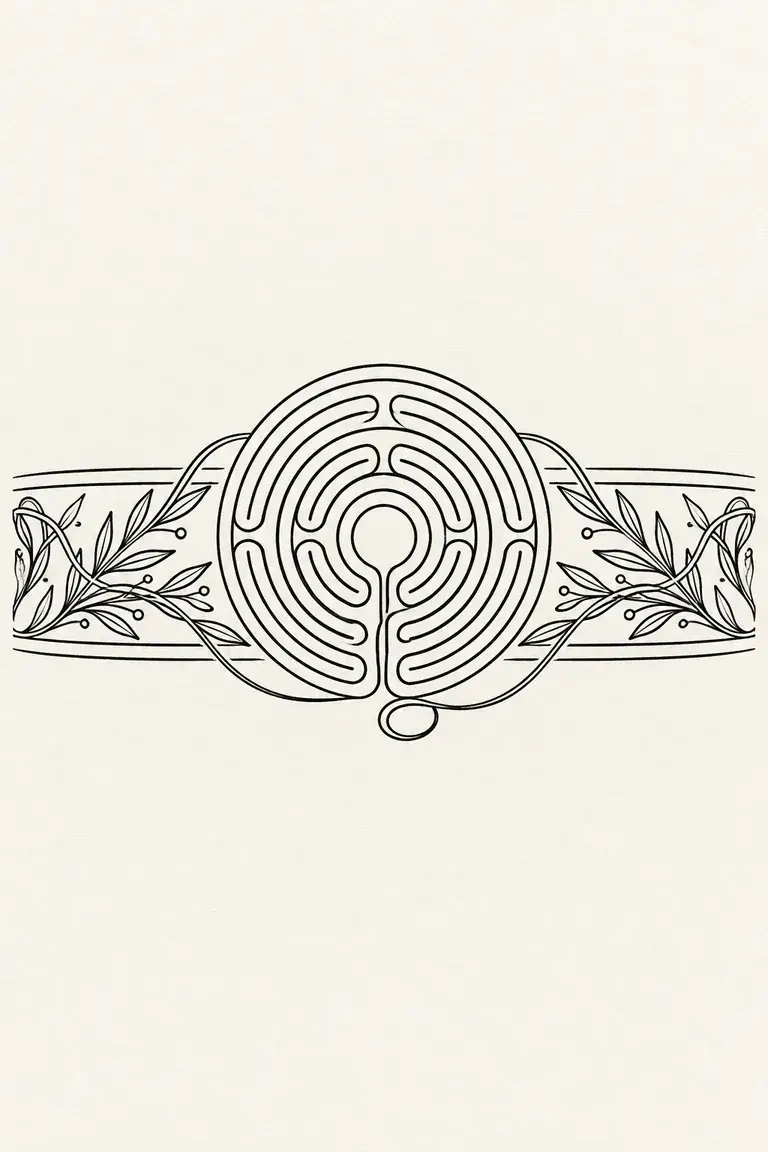
Minimalist, Upper arm
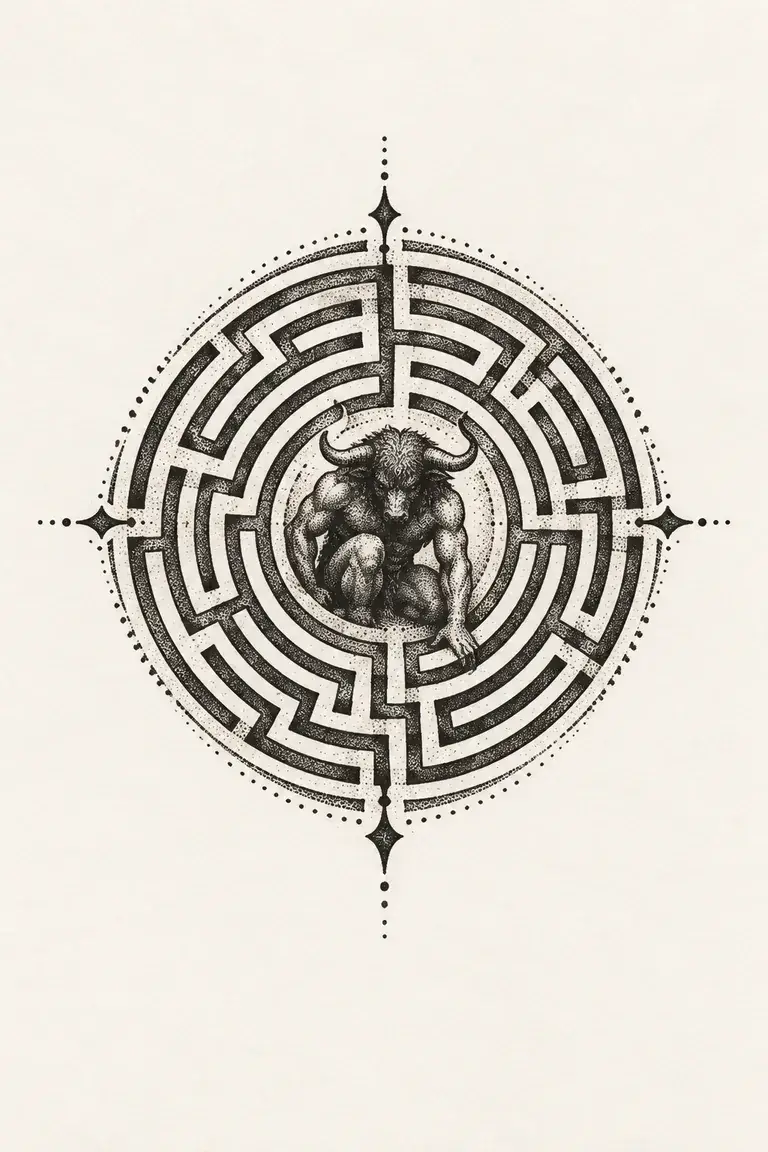
Dotwork, Ankle
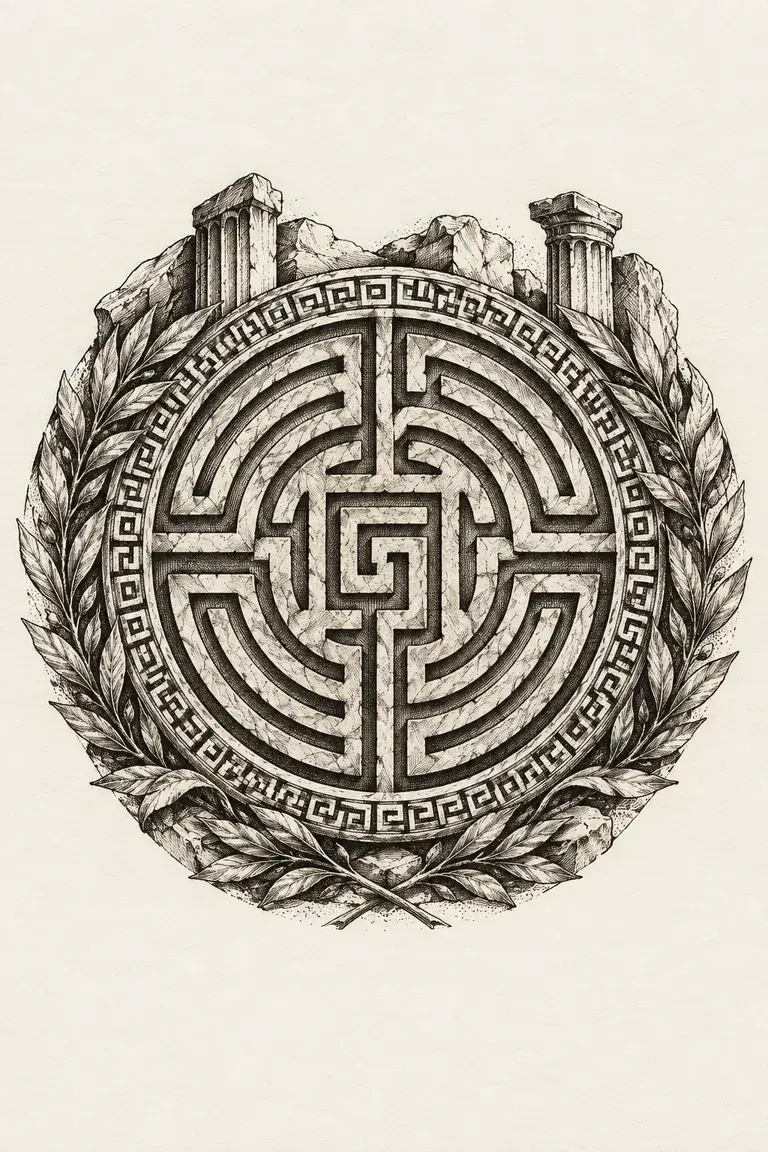
Engraving, Shoulder
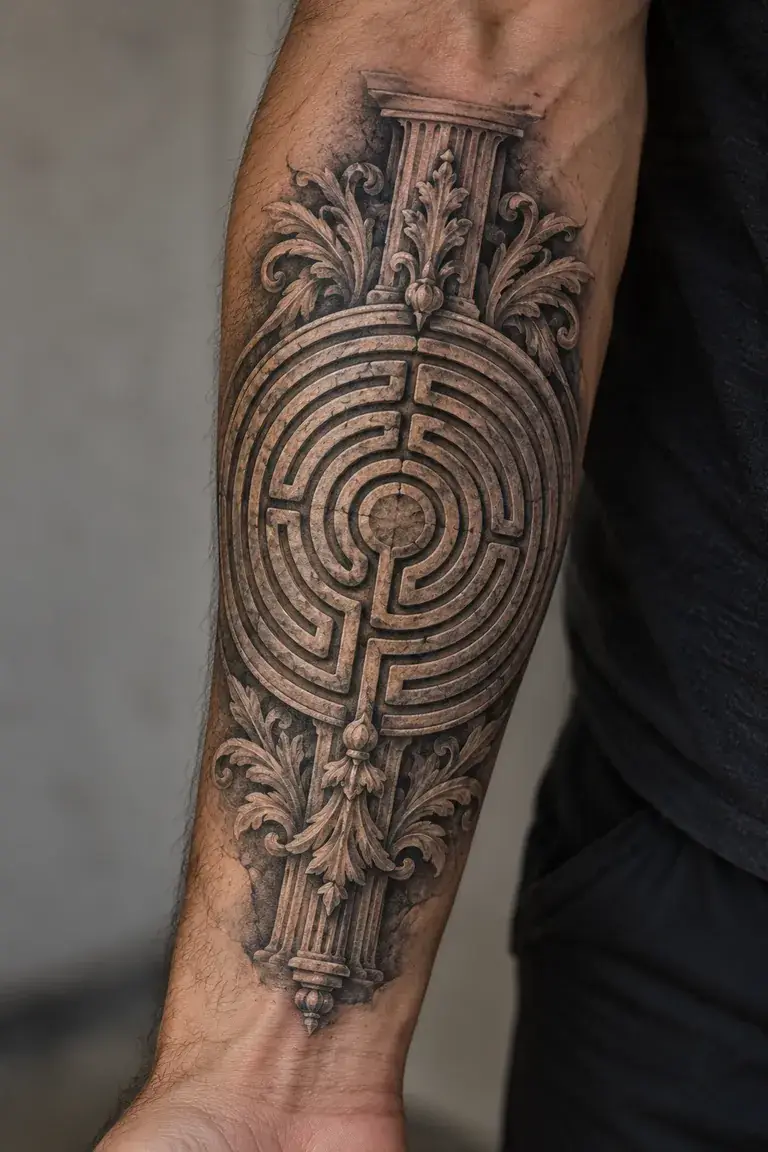
Black and grey realism, Forearm
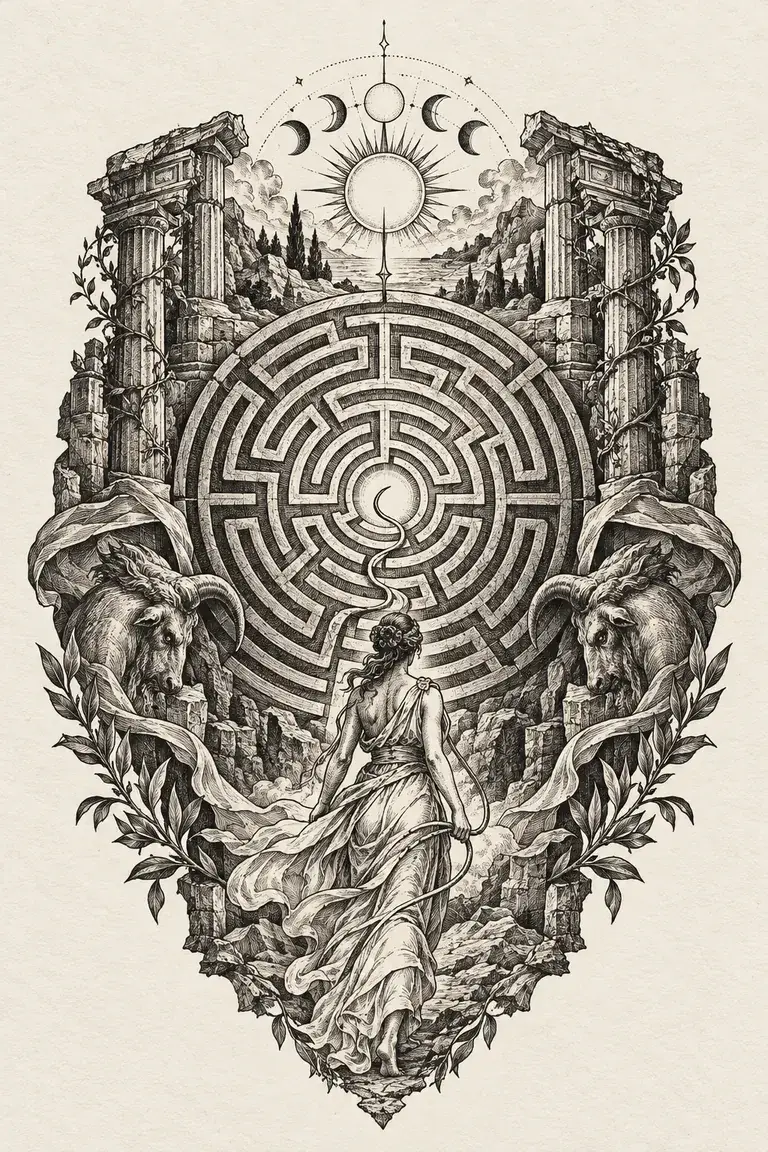
Engraving, Back
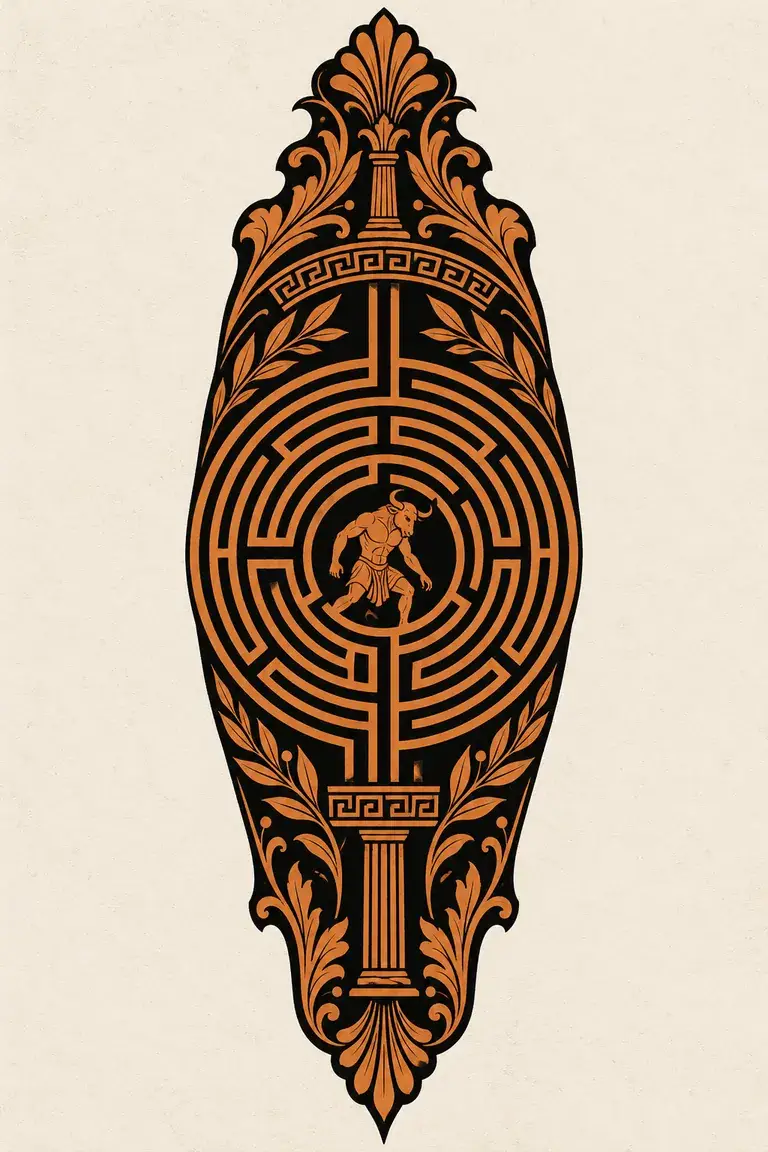
Red-figure (Greek vase), Forearm
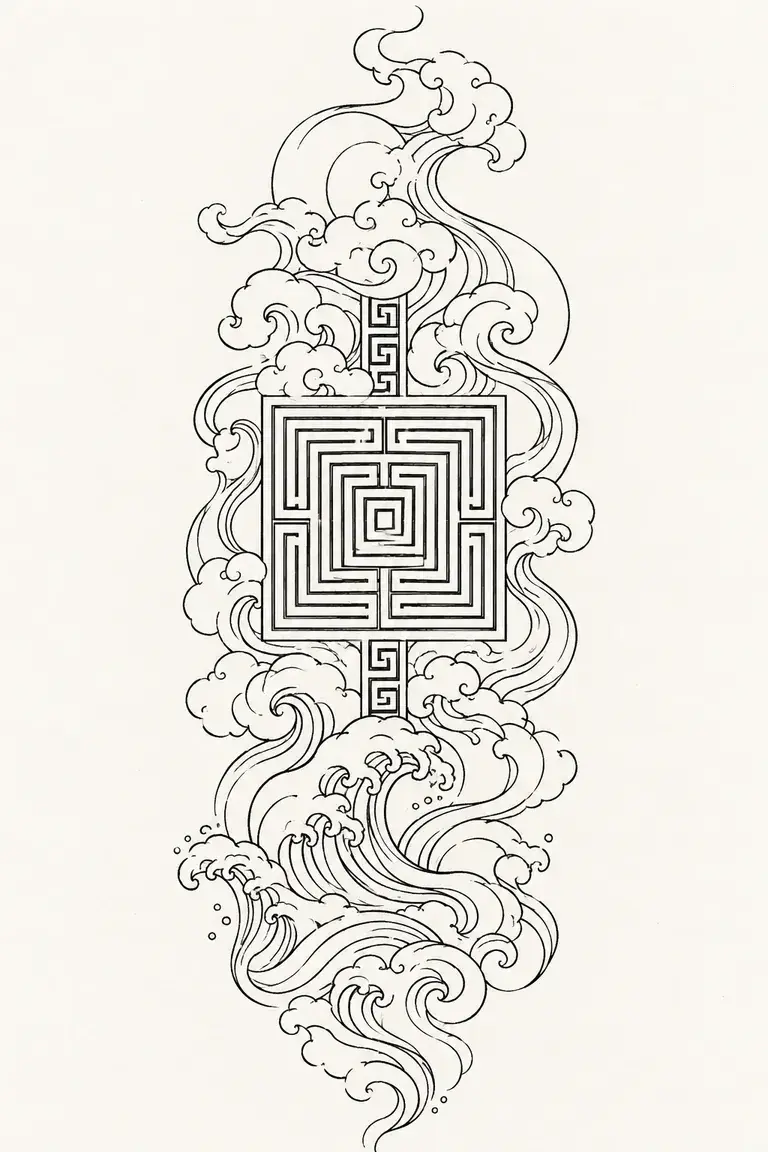
Minimalist, Sleeve
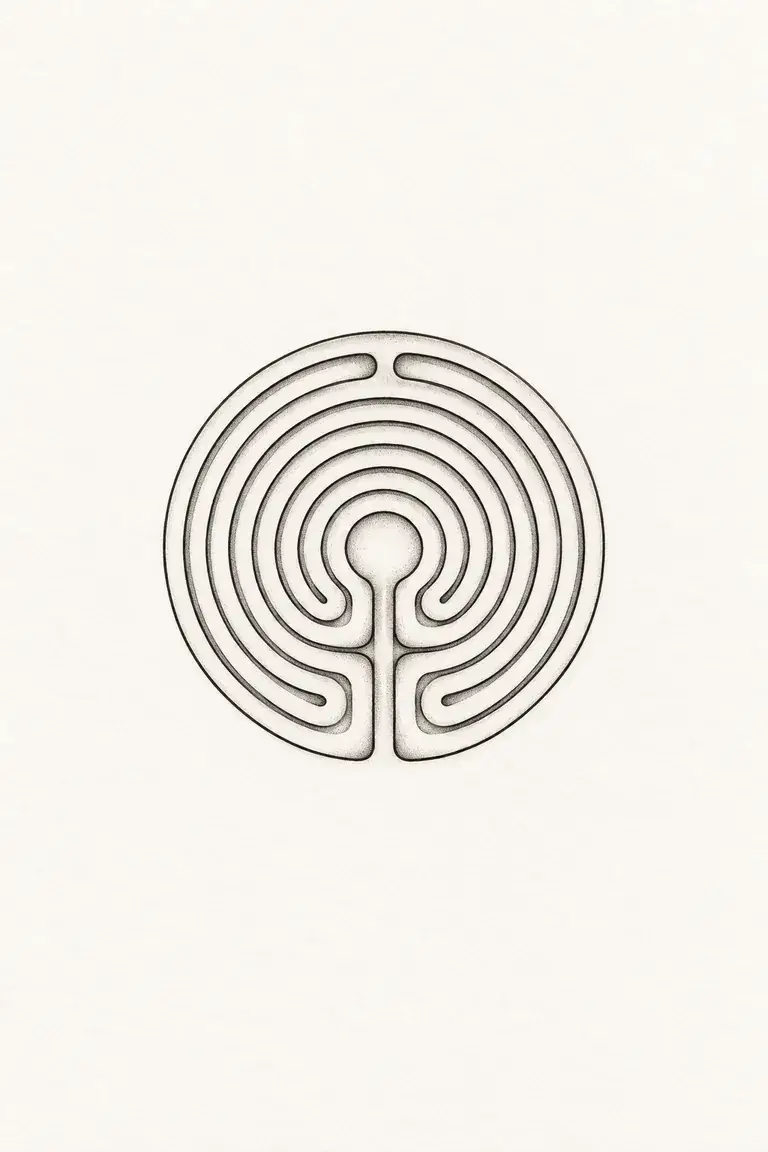
Fine-line, Wrist
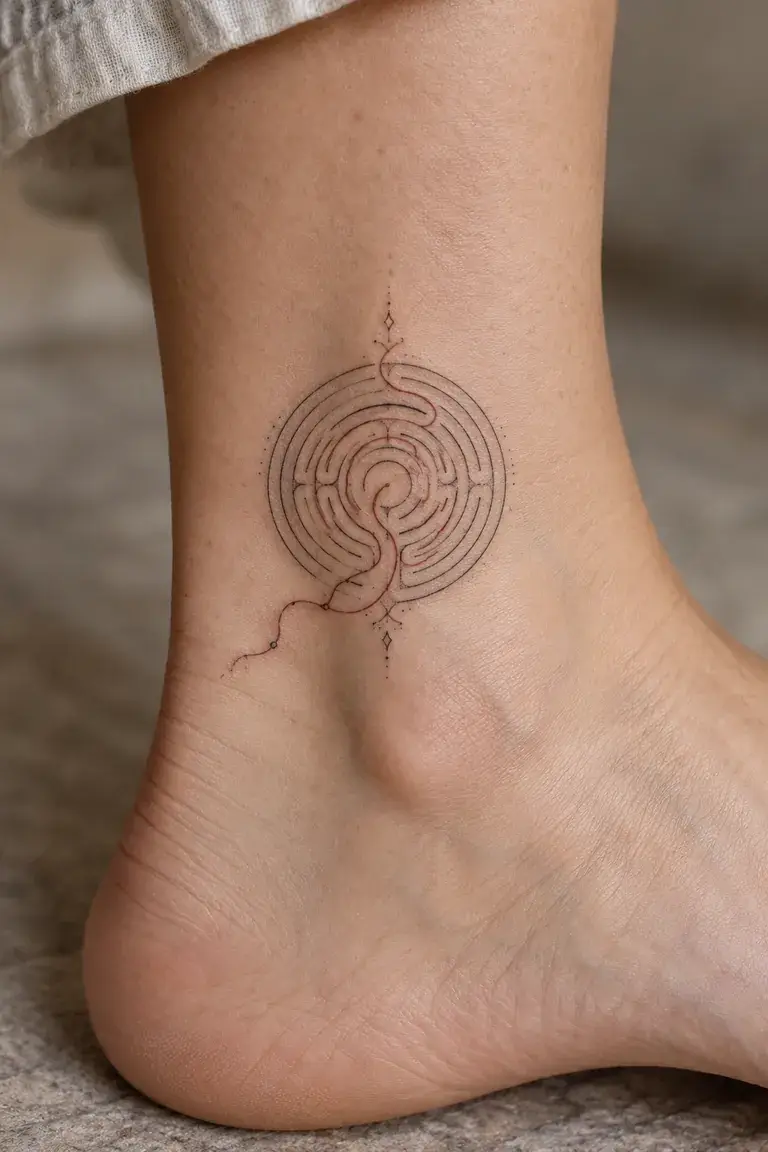
Fine-line, Ankle
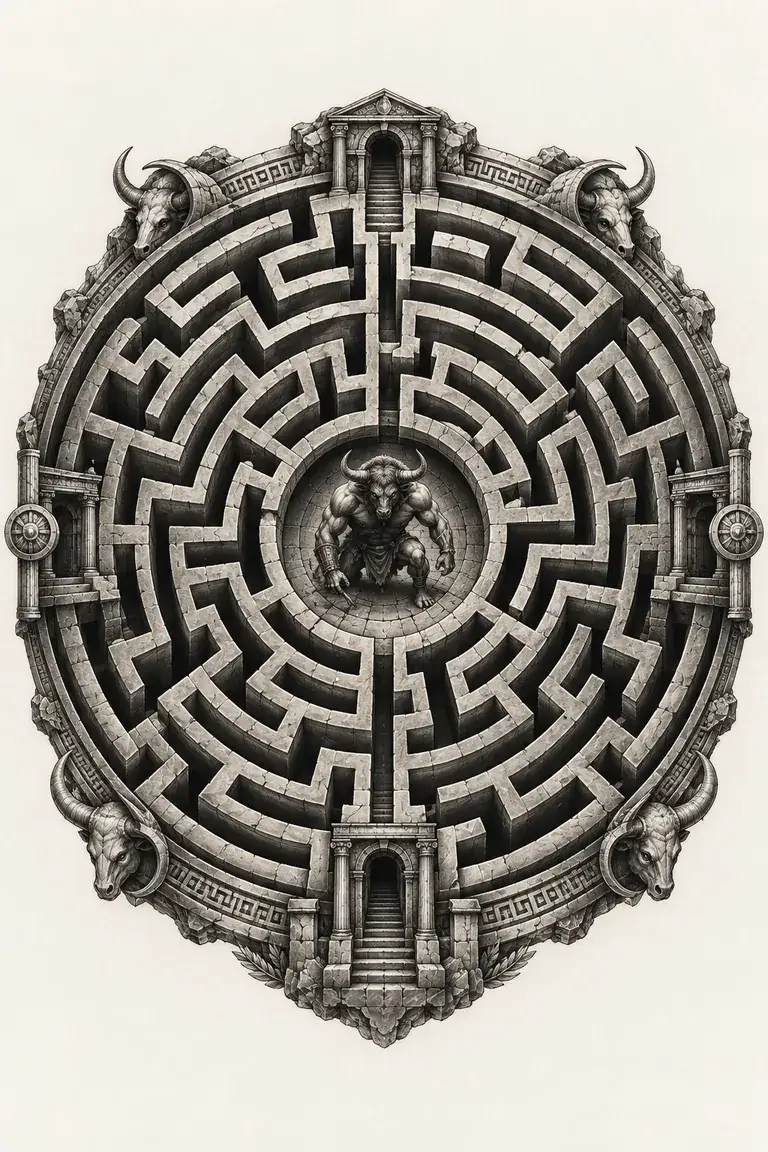
Black and grey realism, Back
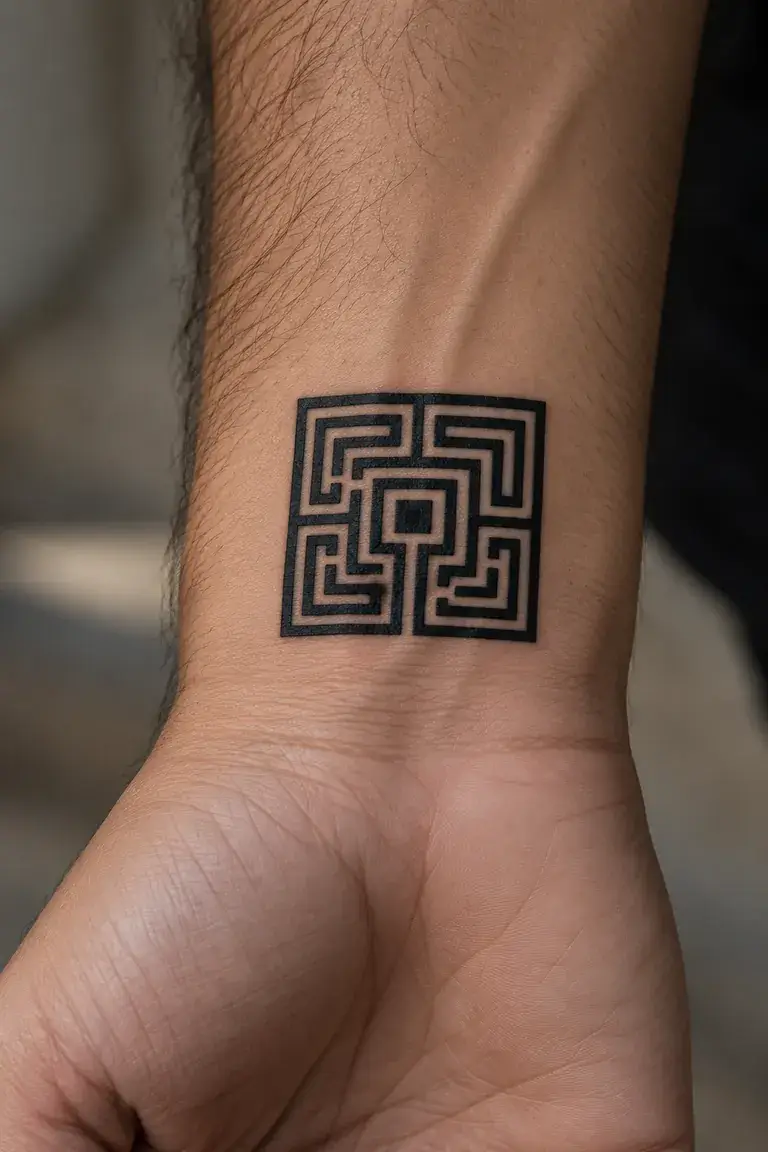
Blackwork, Wrist
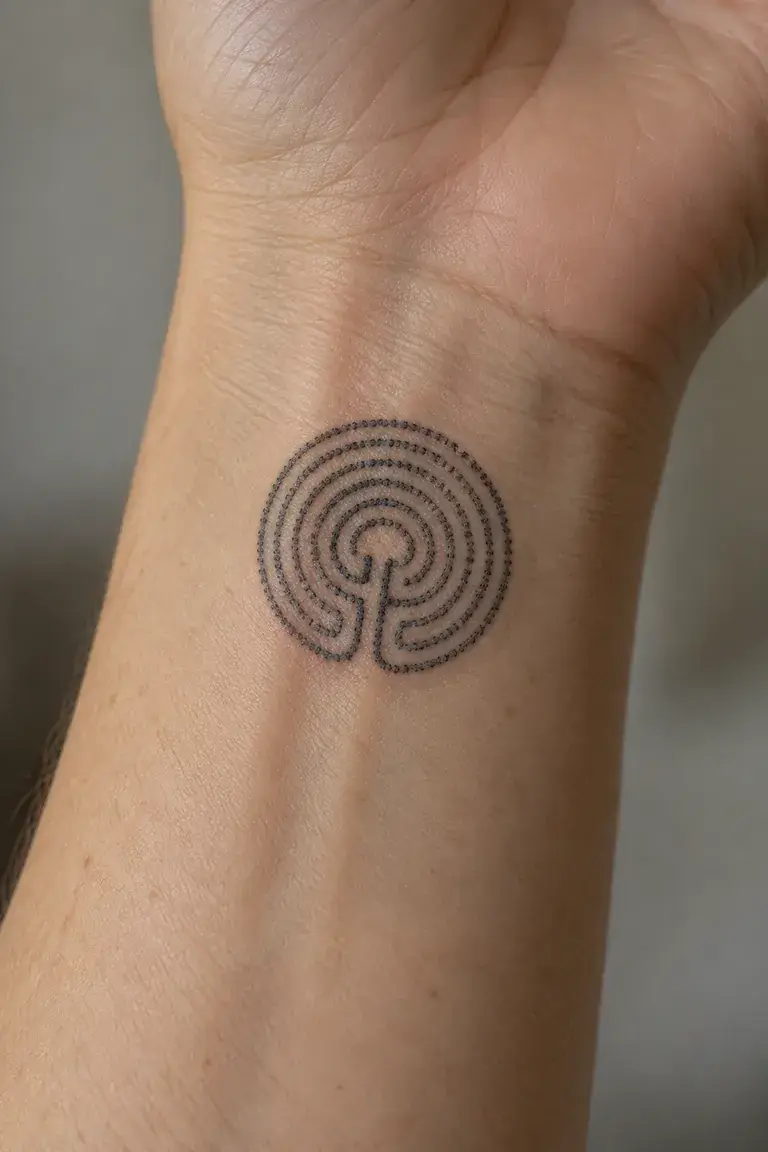
Dotwork, Wrist
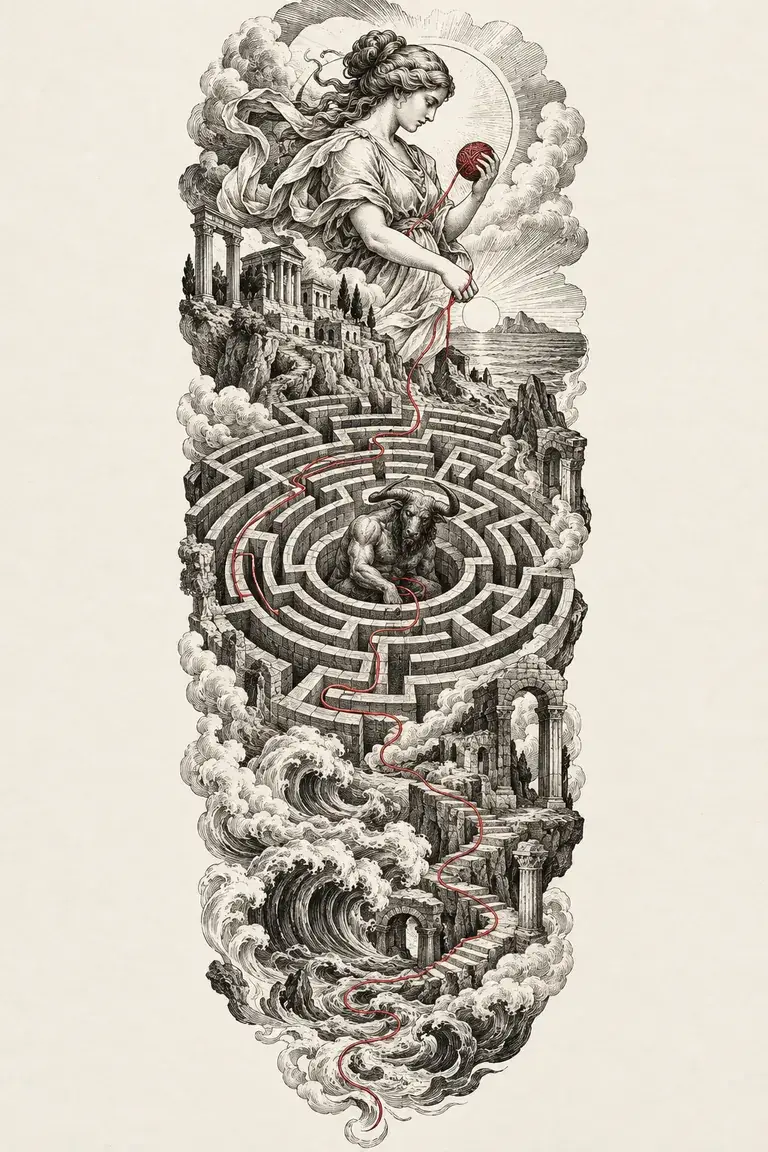
Engraving, Sleeve
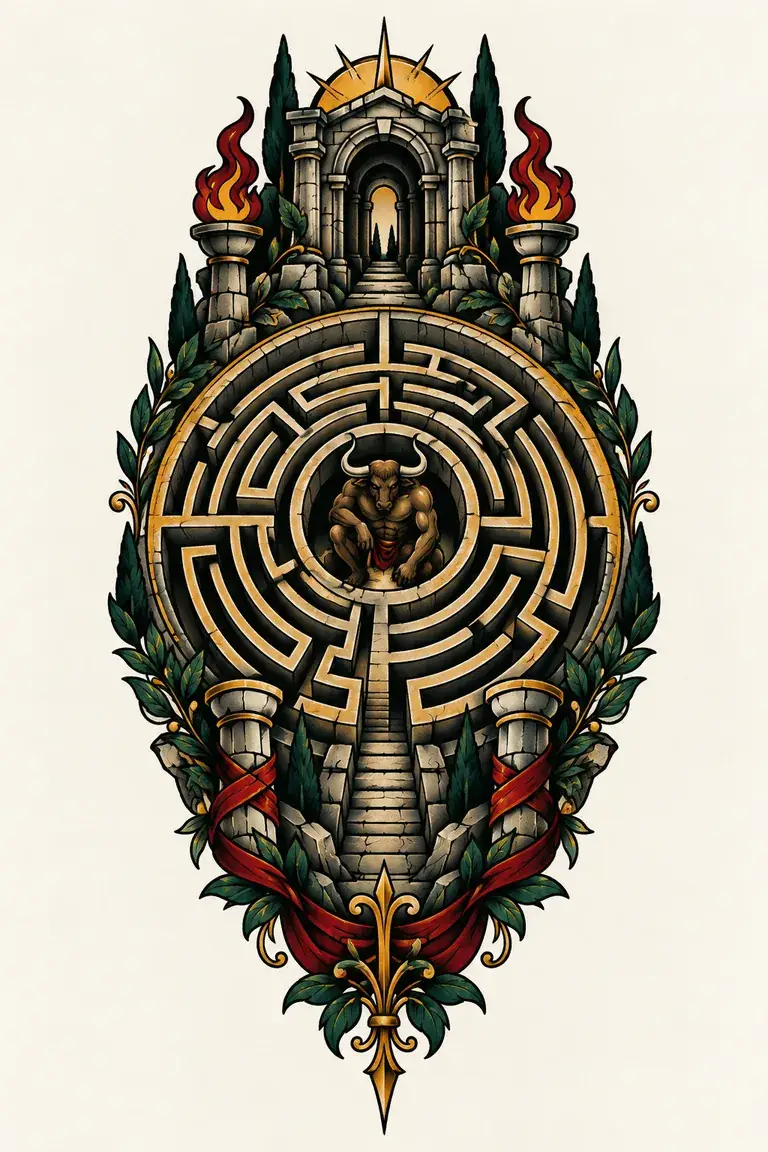
Neo-traditional, Forearm
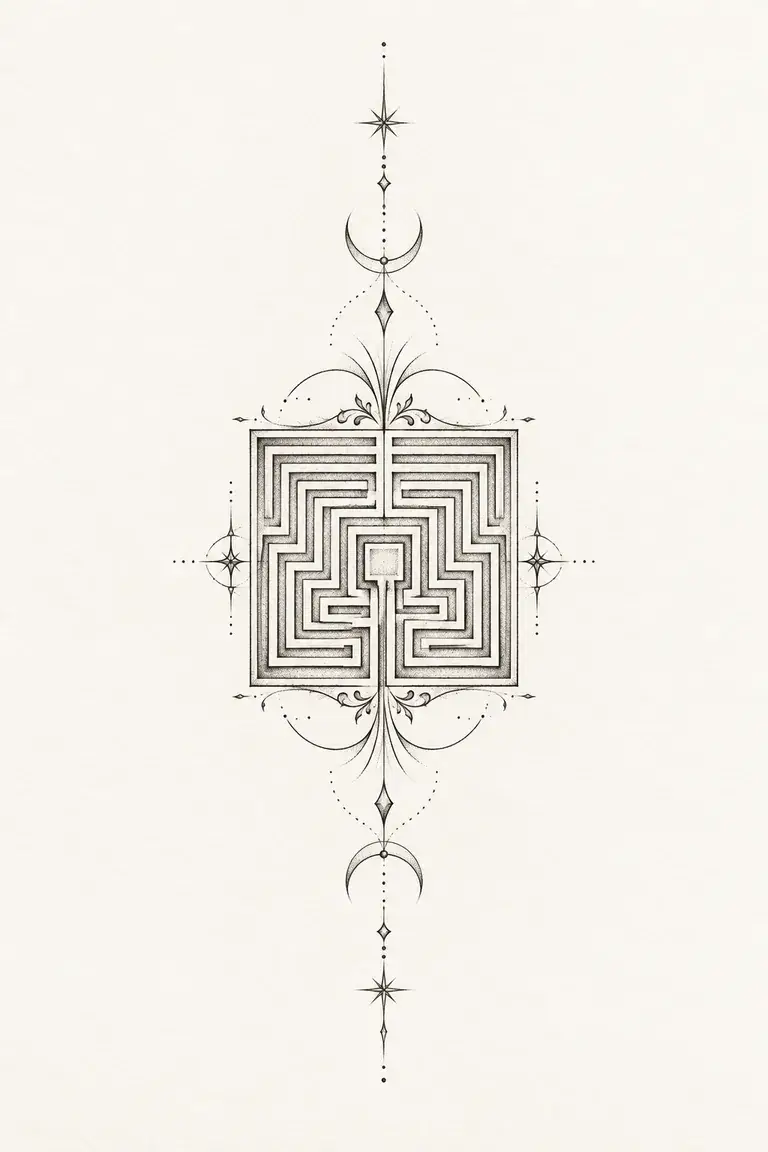
Fine-line, Ribs
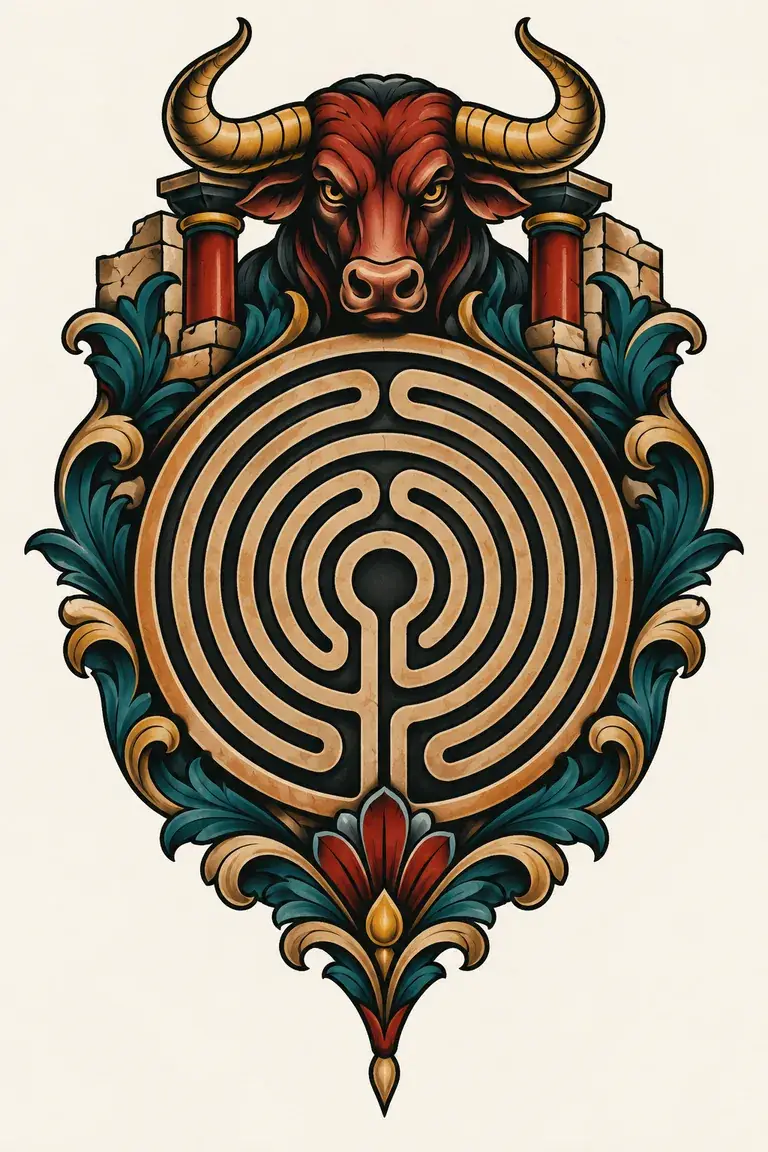
Neo-traditional, Upper arm
Frequently asked questions
What does a labyrinth tattoo mean?
Usually life's journey, facing fears and finding your way through difficulty. It comes from the Cretan labyrinth that Daedalus built to hold the Minotaur, and the path to the center is often read as a path toward yourself.
What is the difference between a labyrinth and a maze?
A classical labyrinth has one path with no choices or dead ends: it always leads to the center and back out. A maze has branches and dead ends. The myth describes the Cretan labyrinth as confusing like a maze, but the symbol on ancient coins is a single-path labyrinth.
Was the labyrinth at Knossos real?
No one has found a building matching the myth. The Bronze Age palace at Knossos, excavated by Arthur Evans from 1900, is a huge complex of corridors and rooms, and many people think it inspired the legend. A Linear B tablet from Knossos records an offering of honey to what most scholars read as 'the Mistress of the Labyrinth.'
Where does the word labyrinth come from?
It is a pre-Greek word. One popular theory links it to labrys, the double axe found all over Minoan Crete, so the labyrinth would be 'the house of the double axe.' Scholars still debate this.
How big should a labyrinth tattoo be?
For a seven-circuit labyrinth, at least about 5 cm (2 inches) across so the rings do not merge as the ink settles. Larger is better if you want fine lines or a thread detail.