Minotaur Tattoo Meaning, Designs and Placement Ideas
Half man, half bull, locked in the labyrinth for a crime that was never his.
Quick meaning
- Raw strength and physical power
- The conflict between instinct and reason
- Being trapped, and finding a way through
- The outsider who was punished for existing
- Facing the monster at the center of your own maze
Carries the meaning of: Power, Mystery, Resilience
What a Minotaur tattoo symbolizes
Brute power
The Minotaur has the body of a strong man and the head of a bull, an animal Minoan Crete held in awe. Athletes, lifters and fighters often pick him as a straightforward symbol of force and stamina.
The beast inside
Part human, part animal, the Minotaur is an easy image for the struggle between what we want and what we know we should do. Some people wear him as a reminder to keep that side of themselves in check.
The misunderstood monster
The Minotaur did not choose to be born. He was the result of Minos breaking a promise to Poseidon, and he was hidden away in shame. Writers like Jorge Luis Borges retold the story from his lonely point of view, and many people relate to that version.
Getting through the maze
Paired with the labyrinth, the Minotaur stands for a hard problem or dark period at the center of your life. Adding Ariadne's thread turns the design into a story of finding your way out.
The myth of the Minotaur
King Minos of Crete asked Poseidon for a sign that the gods supported his rule. Poseidon sent a magnificent white bull out of the sea, on the understanding that Minos would sacrifice it. Minos kept the bull for himself and sacrificed a lesser one instead.
Poseidon’s revenge fell on Minos’ wife, Pasiphae, who was made to desire the bull. The craftsman Daedalus built her a hollow wooden cow so she could approach it, and from that union she gave birth to Asterion, a boy with the head of a bull. People called him the Minotaur, the bull of Minos. Ashamed and afraid, Minos had Daedalus build the labyrinth, a structure so complicated that, as Ovid puts it, Daedalus himself could barely find the way out. The Minotaur was shut away at its center.
After Minos’ son Androgeus was killed in Attica, Minos forced the Athenians to send a tribute of seven young men and seven young women to be fed to the Minotaur. Plutarch says this happened every nine years. On the third tribute the Athenian prince Theseus volunteered to go. Minos’ daughter Ariadne fell in love with him and gave him a ball of thread, a trick she learned from Daedalus. Theseus tied it at the entrance, found the Minotaur, killed him (in most versions with his bare hands or a sword) and followed the thread back out.
The story did not end well for anyone. Theseus abandoned Ariadne on the island of Naxos, where Dionysus found and married her, and Theseus’ father Aegeus died believing his son was dead.
Choosing the right Minotaur
The Minotaur can carry very different meanings depending on posture and expression, so decide what you want before booking. A standing figure with a raised axe says power. A seated, head-bowed figure says loneliness. A Minotaur inside a labyrinth says struggle.
Proportions matter. The bull head should be noticeably large and heavy on the human body, and the horns need enough room above the head so they do not get cropped by the edge of the placement. On the arm, ask your artist to let the horns rise toward the shoulder.
If you want a historically grounded look, mention Minoan details: the labrys, horns of consecration, or the bull-leaping fresco from Knossos as a border element.
Minotaur tattoo design ideas
Minotaur in the labyrinth
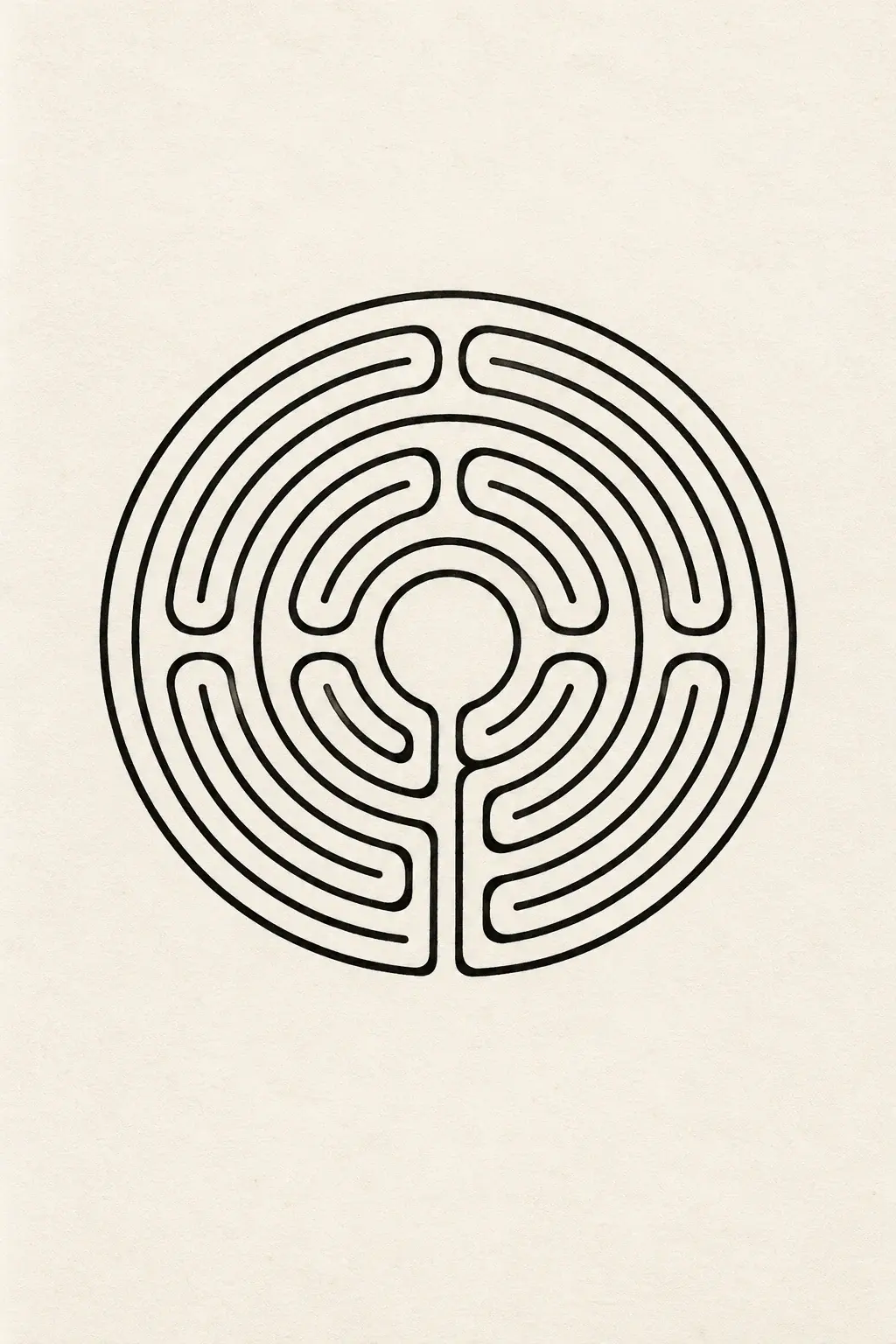
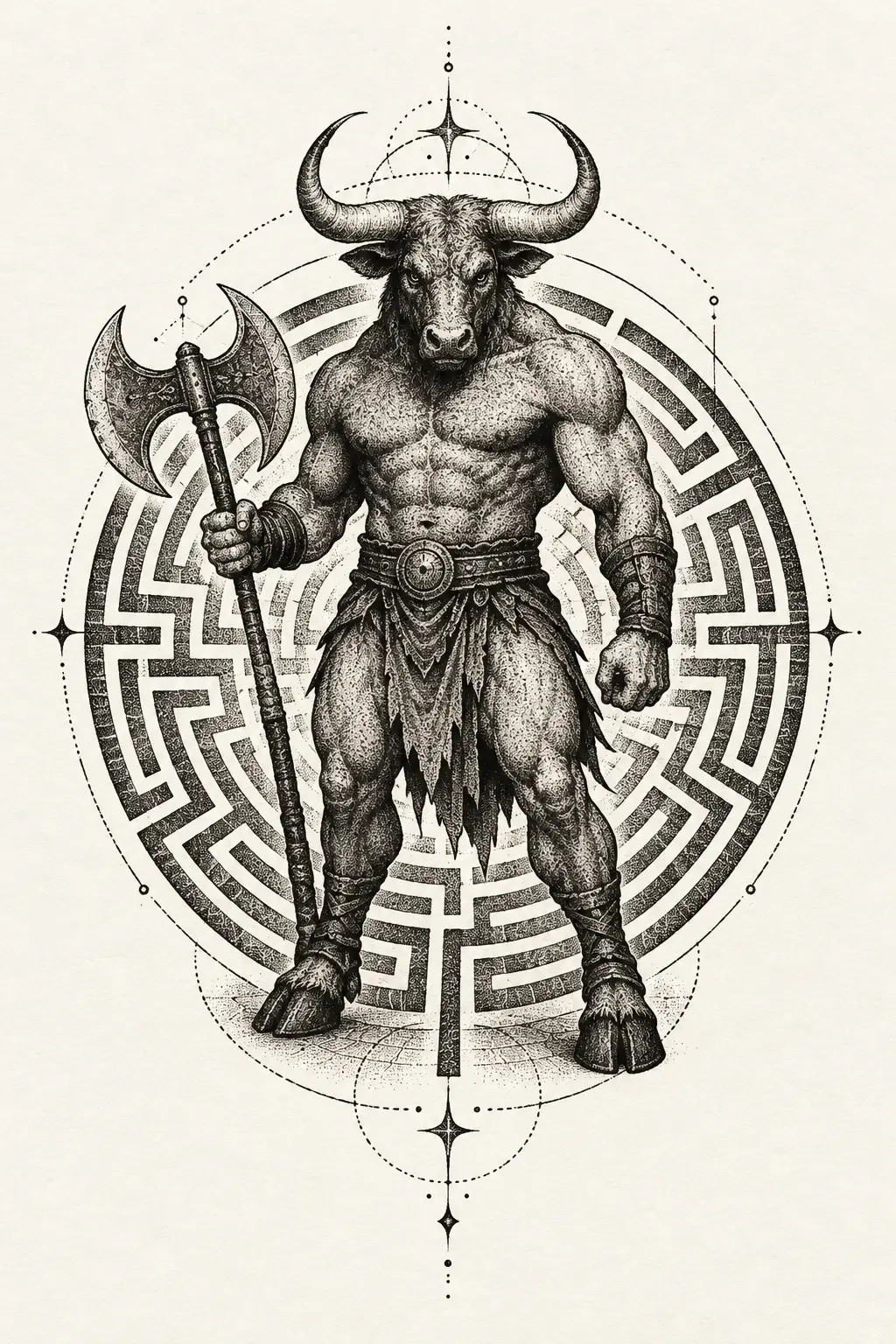
A muscular bull-headed figure standing in the center of a round seven-circuit labyrinth. Dotwork or fine geometric lines suit the maze, while the figure can be shaded more heavily so it stands out.
Minotaur with a labrys
The figure holding a double-headed axe, the labrys, which was a sacred symbol in Minoan Crete. Strong pose, wide stance, horns curving upward. Good for the upper arm or calf.
Bull head portrait
Just the head, front-facing and symmetrical, with heavy brows, flared nostrils and a ring through the nose if you like. Works well on the chest, sternum or back of the hand.
Theseus and the Minotaur
The fight scene as Greek painters showed it, with Theseus gripping a horn and thrusting a sword. In red-figure style with a meander border it looks like a slice of an ancient cup.
The sad Minotaur
A seated, slumped Minotaur with his head lowered, inspired by Picasso's drawings and Borges' story. A quieter, more emotional take for someone who identifies with the outsider.
Best placements for a Minotaur tattoo
- Upper arm
- The curve of the bicep and deltoid suits a muscular standing figure. A popular spot for gym-goers who want the tattoo to move with the muscle.
- Chest
- A symmetrical bull head across the chest or centered on the sternum looks strong. Sternum work is painful, so keep shading efficient.
- Calf
- A good vertical canvas for a full figure with a labrys, or the Minotaur inside a labyrinth circle.
- Back
- Room for the full Theseus scene or a large labyrinth with the Minotaur at its heart.
Styles that suit Minotaur
- Dotwork
- Stippled shading and geometric lines pair naturally with the labyrinth and give an ancient, carved feel.
- Blackwork
- Heavy black shapes make the bull head bold and graphic, especially for a front-facing portrait.
- Red-figure (Greek vase)
- Recreates the Theseus and Minotaur scenes painted on Athenian cups and vases. Terracotta orange on black.
- Realism (black and grey)
- Best for showing muscle, fur and the texture of horns. Needs a larger area to do it justice.
23 more Minotaur tattoo designs
Different styles and placements to show your tattoo artist.
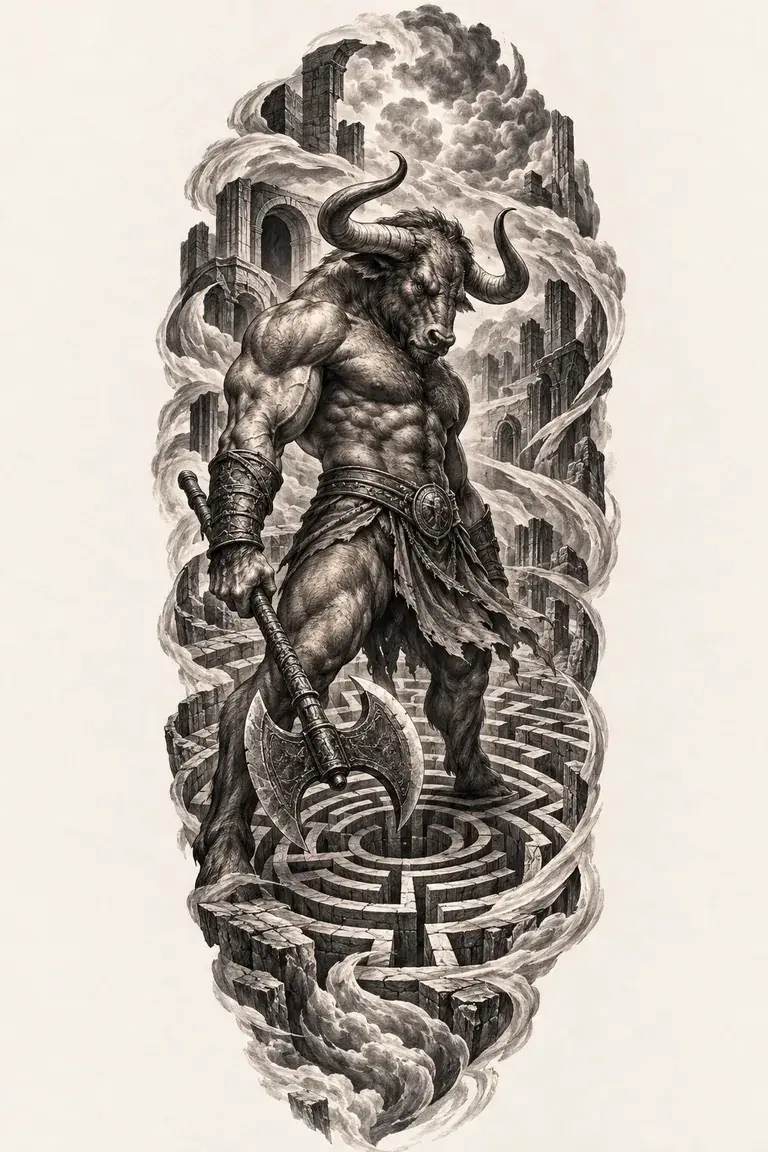
Black and grey realism, Sleeve
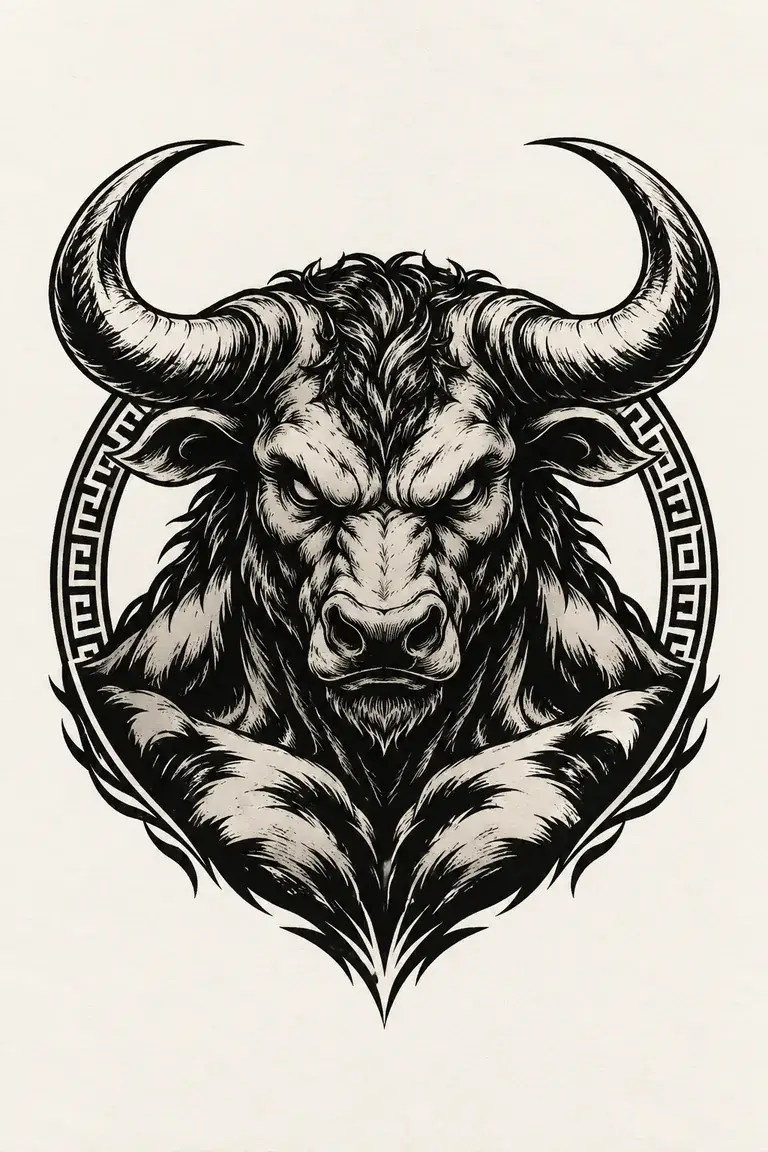
Blackwork, Shoulder
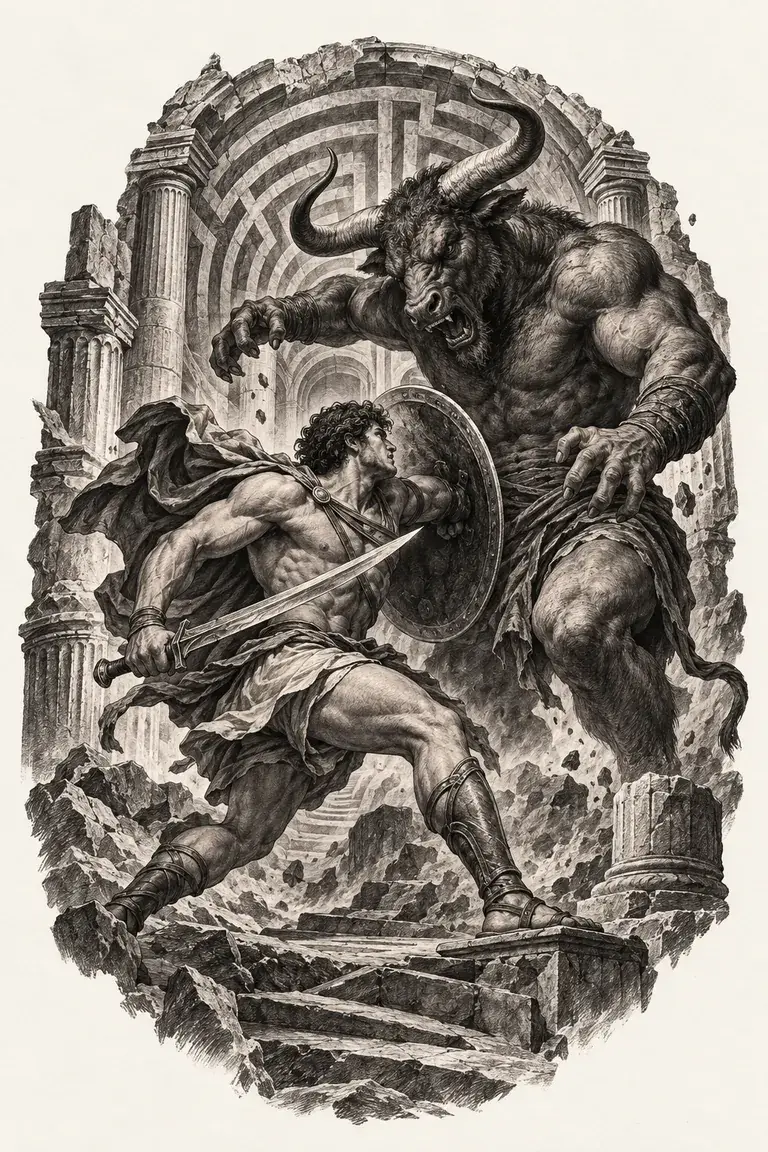
Black and grey realism, Back
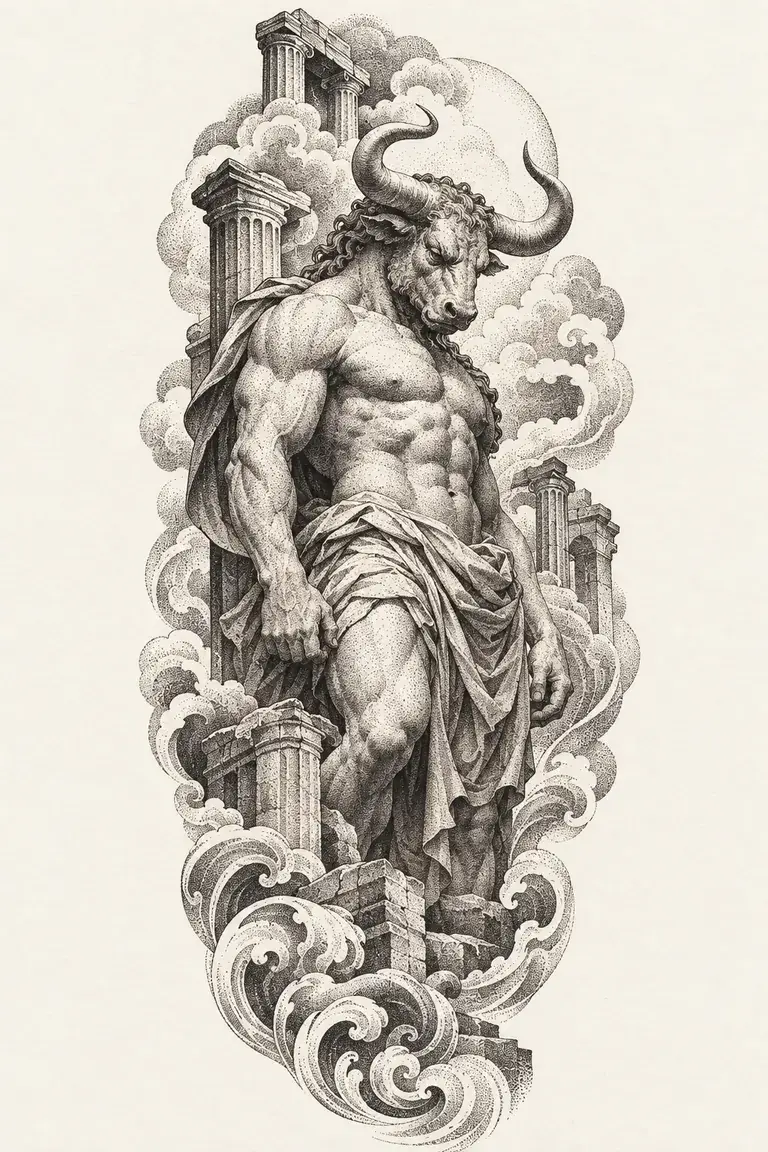
Dotwork, Sleeve
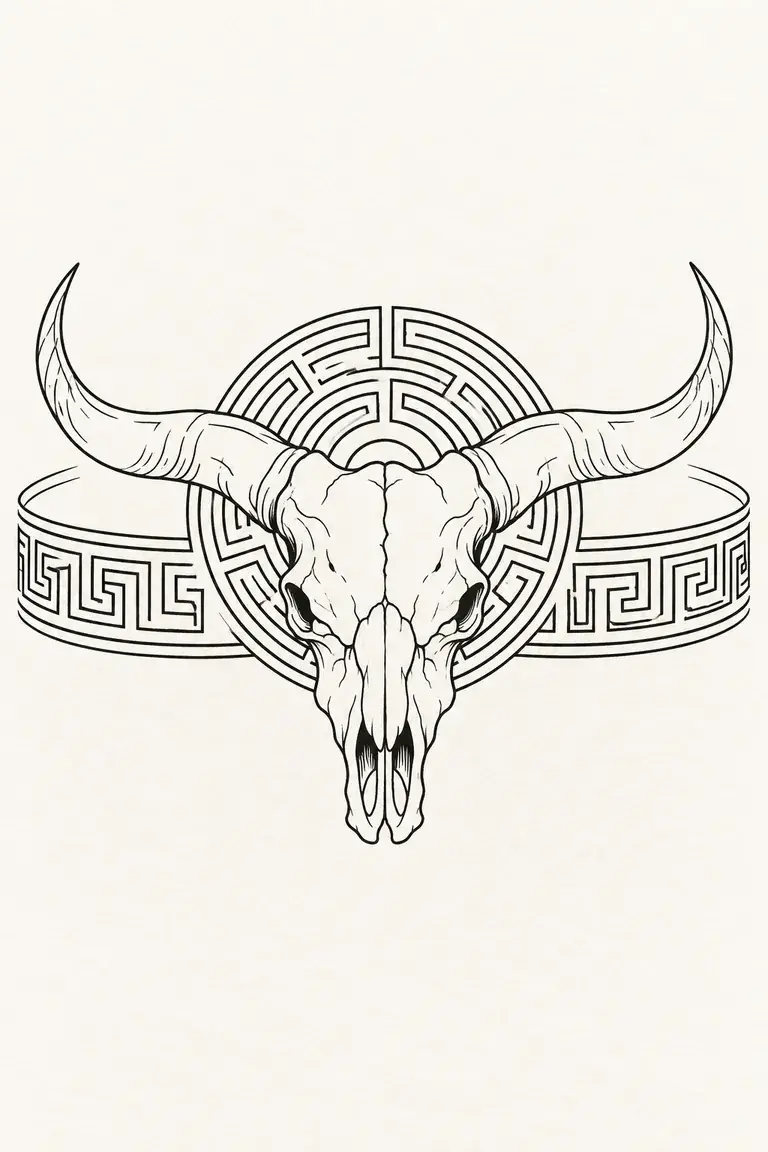
Minimalist, Upper arm
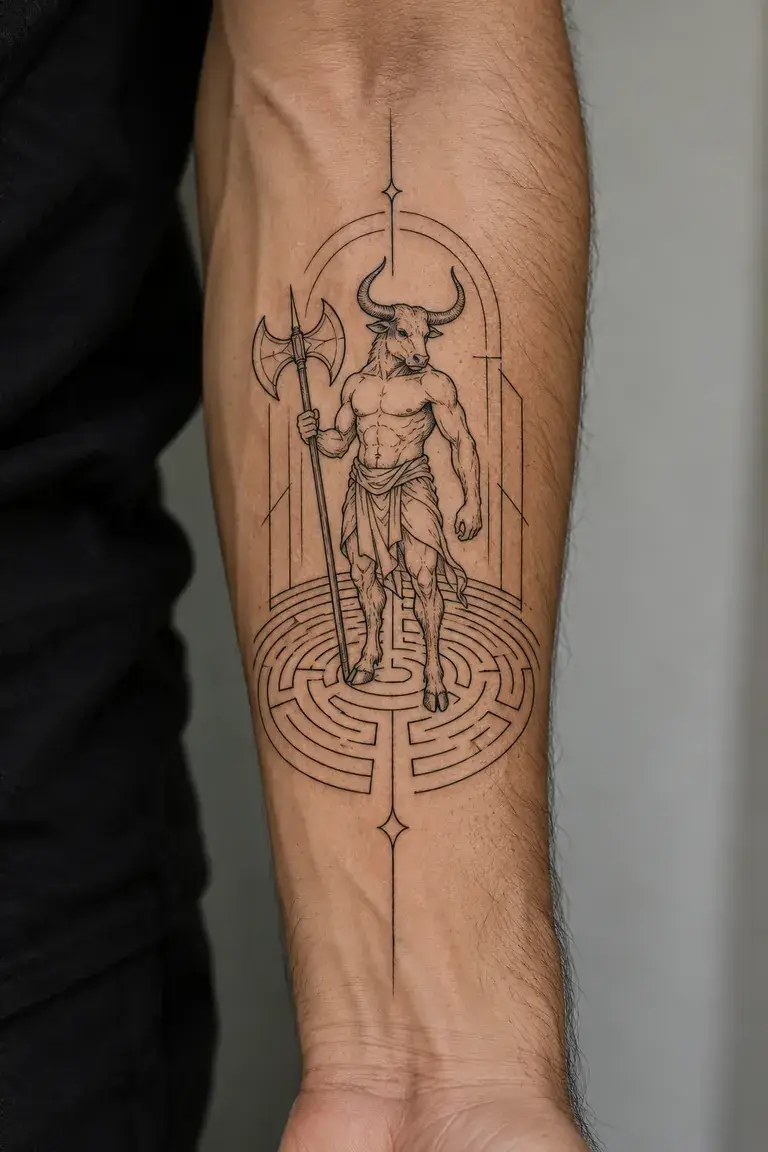
Minimalist, Forearm
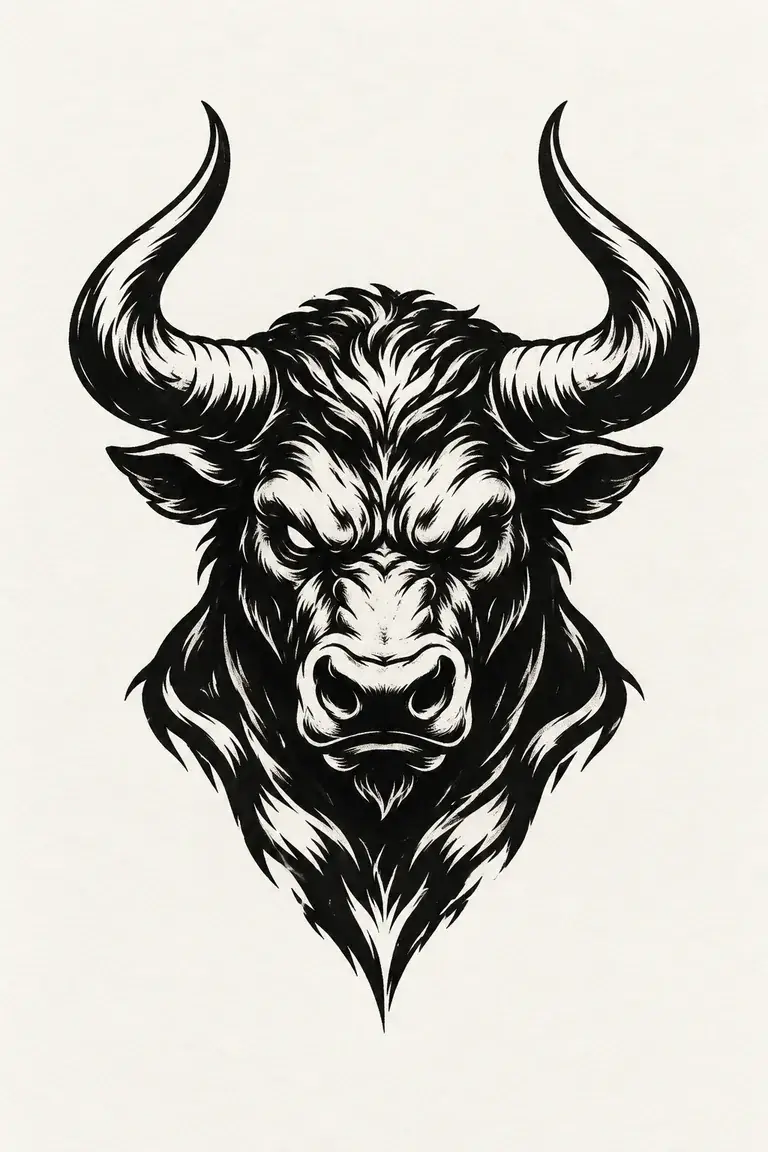
Blackwork, Ankle
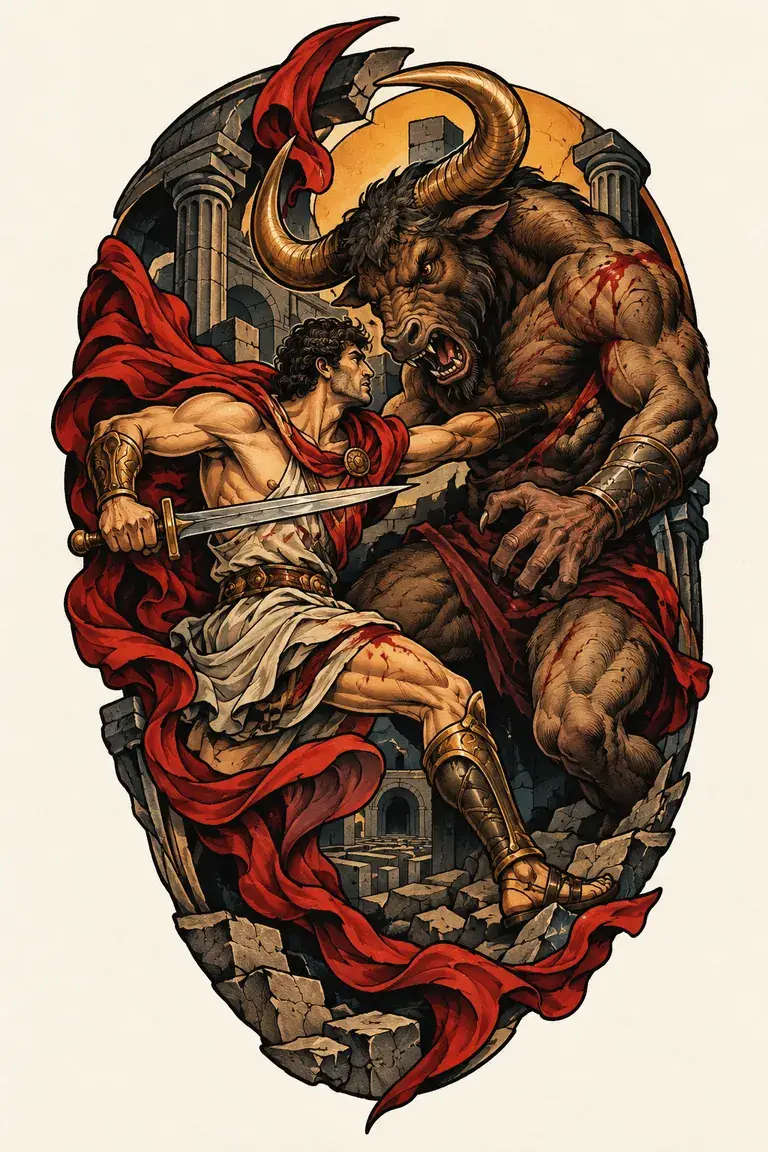
Neo-traditional, Upper arm
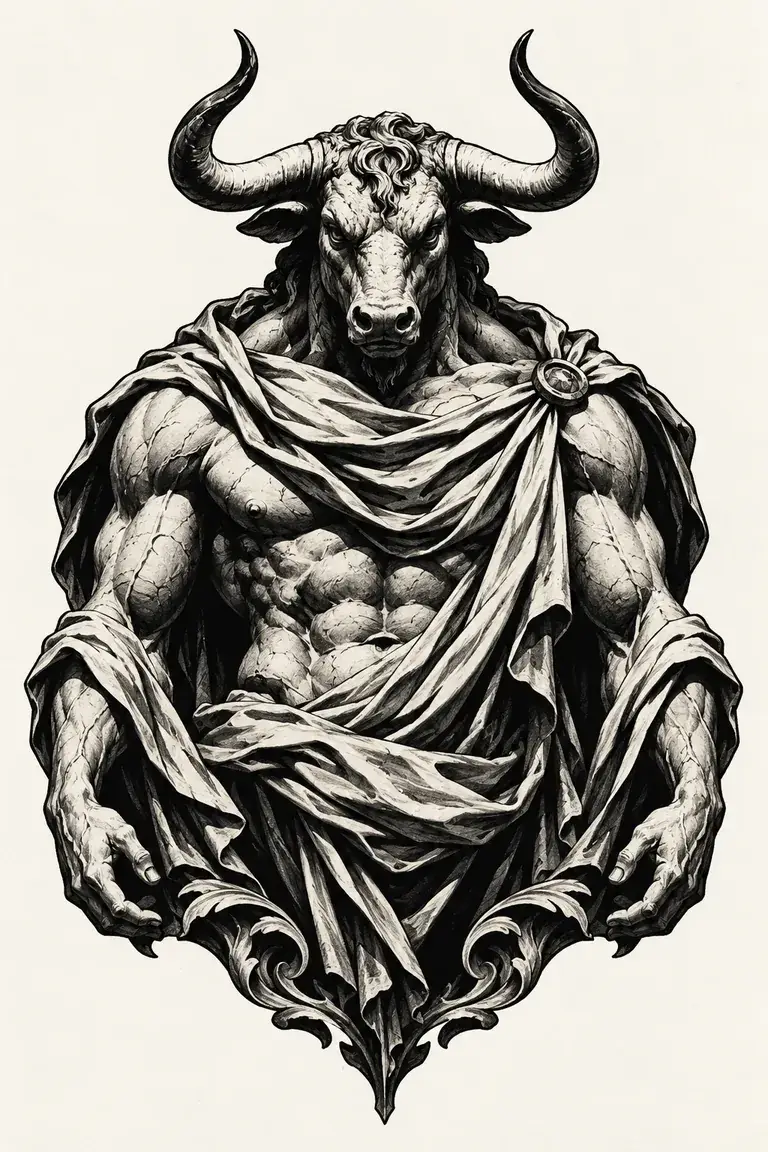
Blackwork, Chest
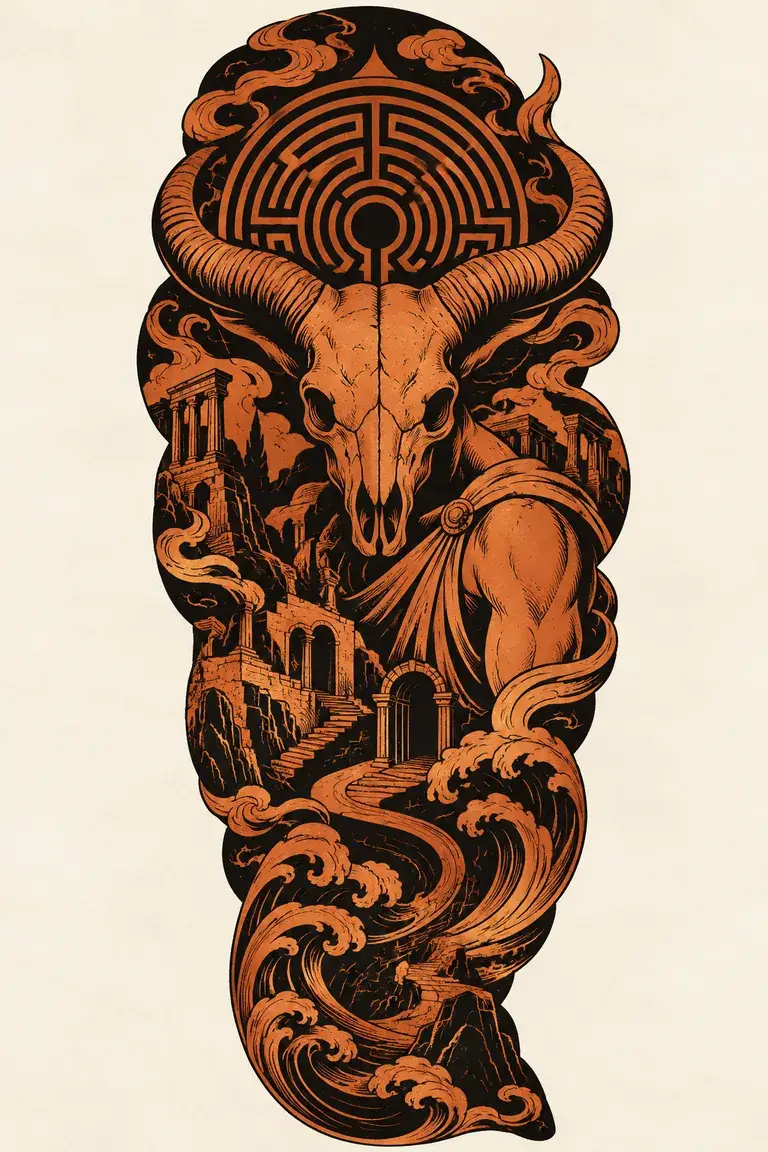
Red-figure (Greek vase), Sleeve
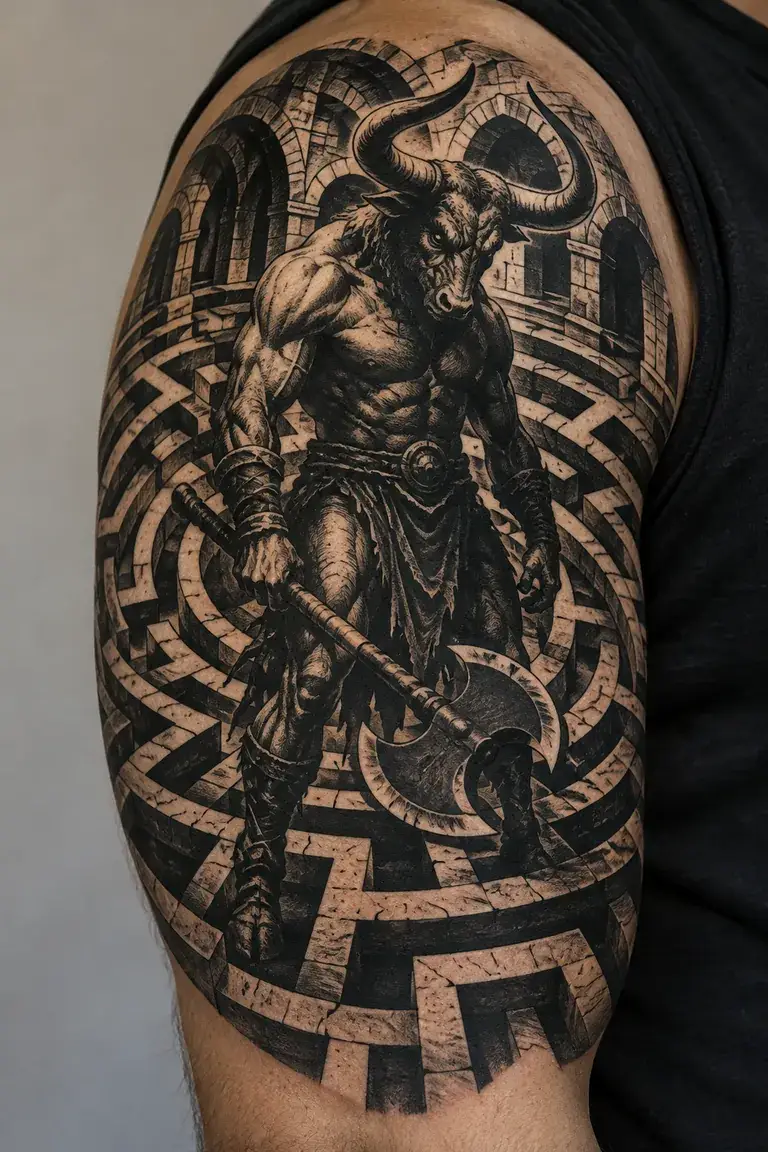
Blackwork, Upper arm
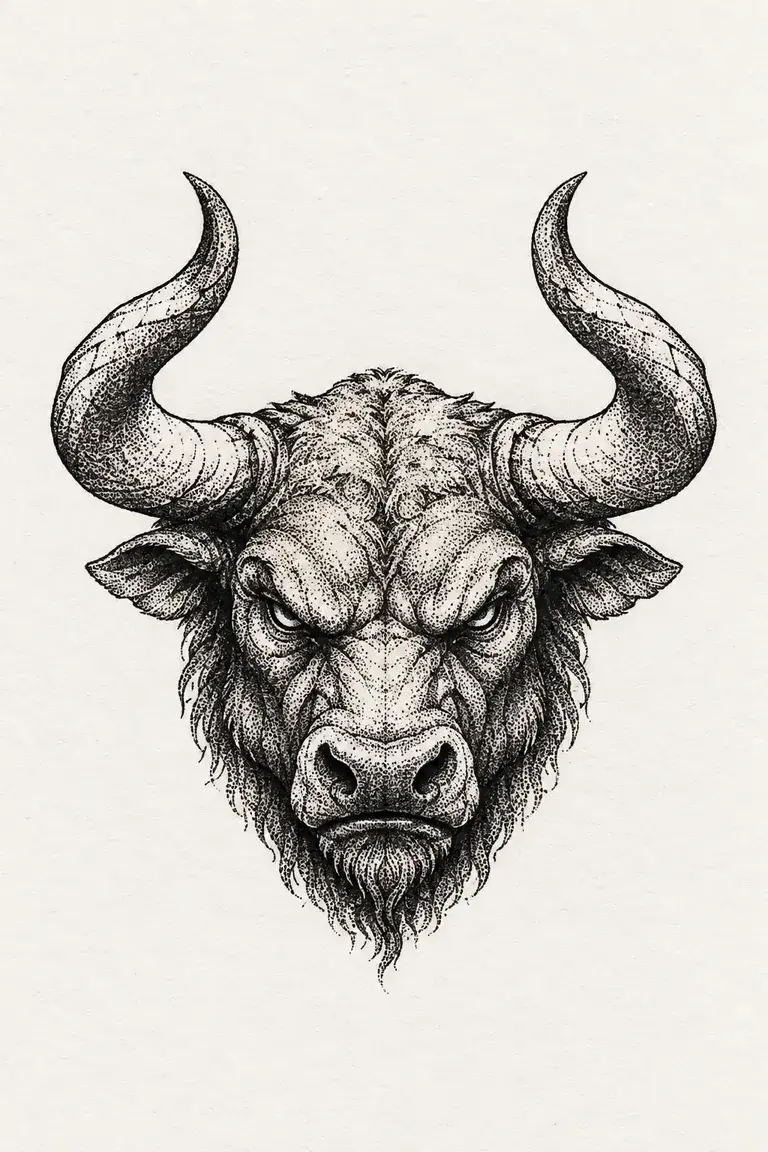
Dotwork, Ankle
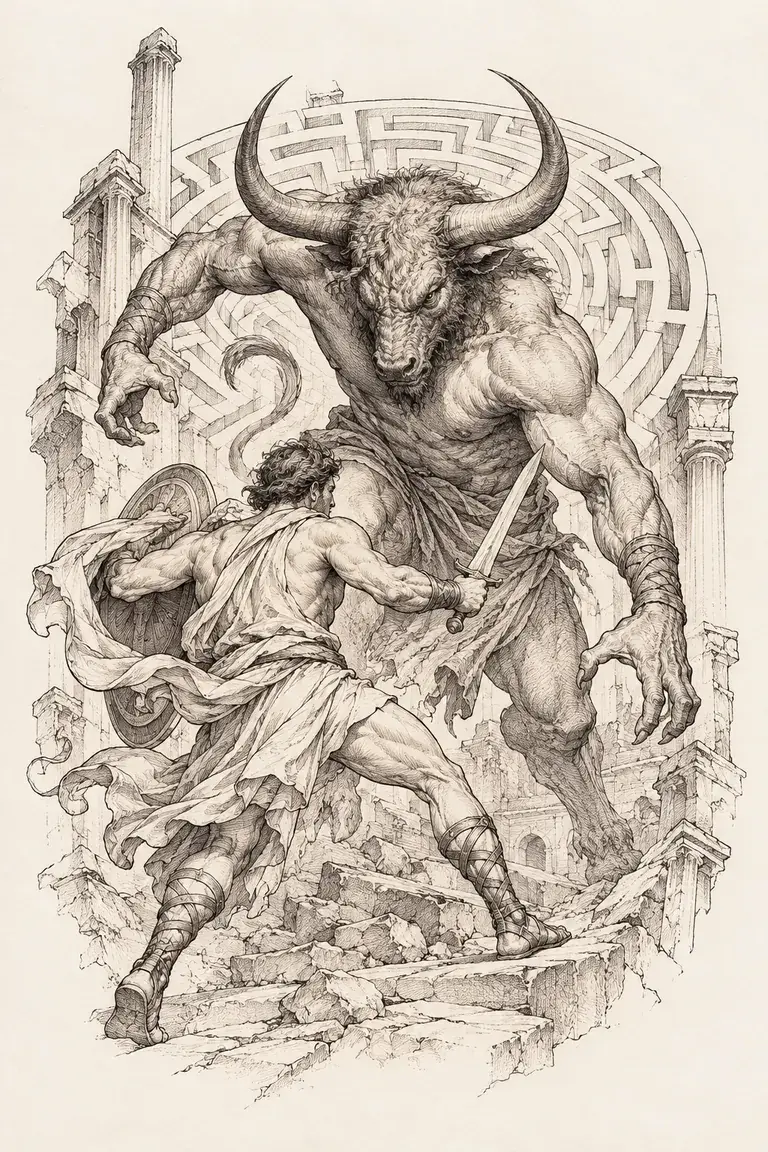
Fine-line, Back
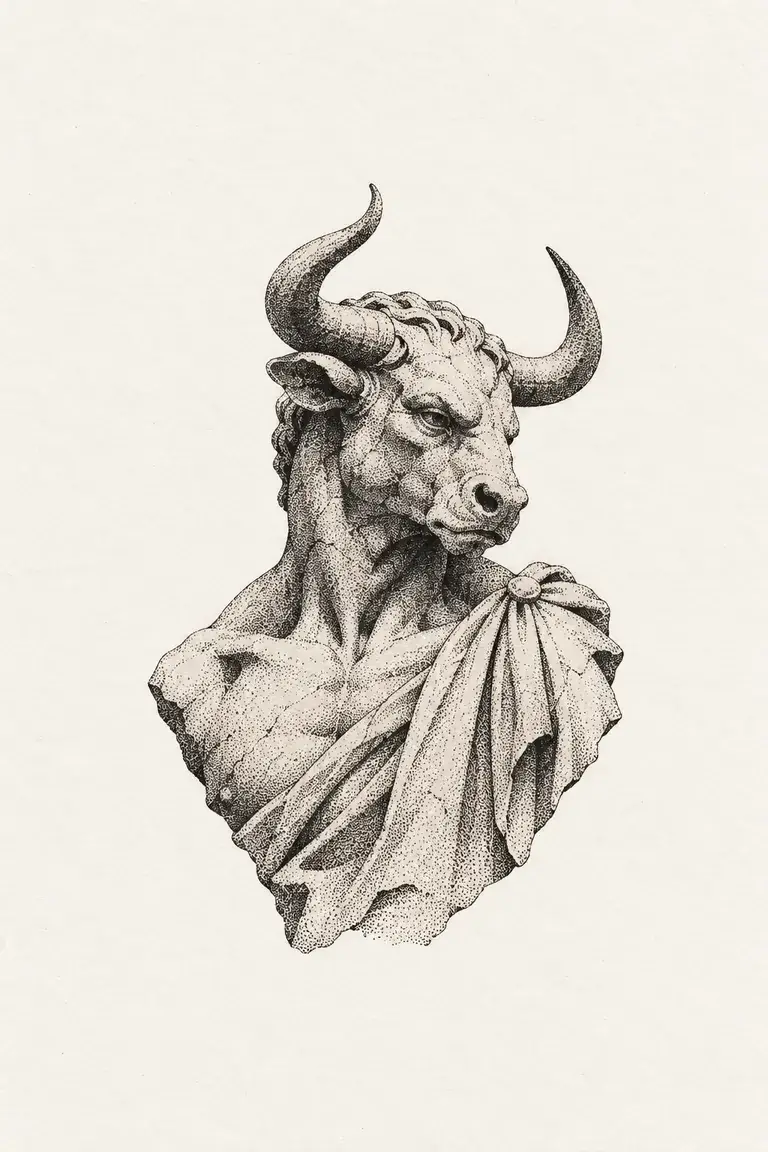
Dotwork, Neck
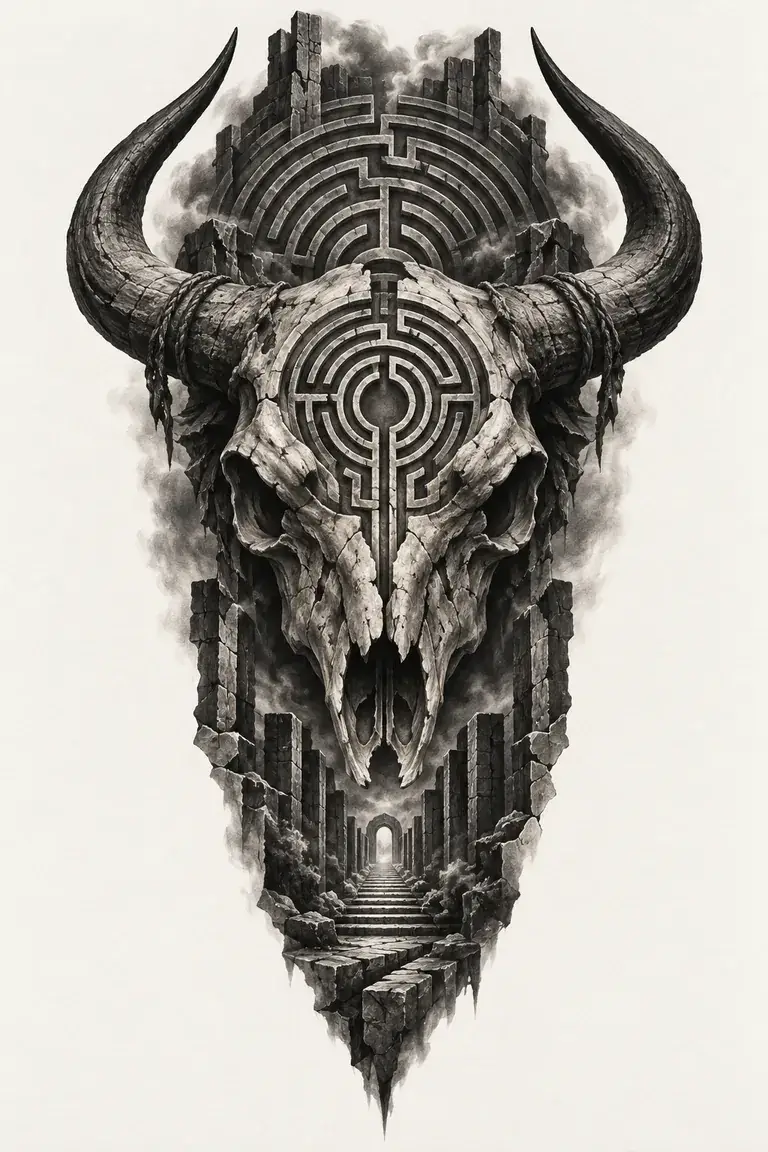
Black and grey realism, Calf
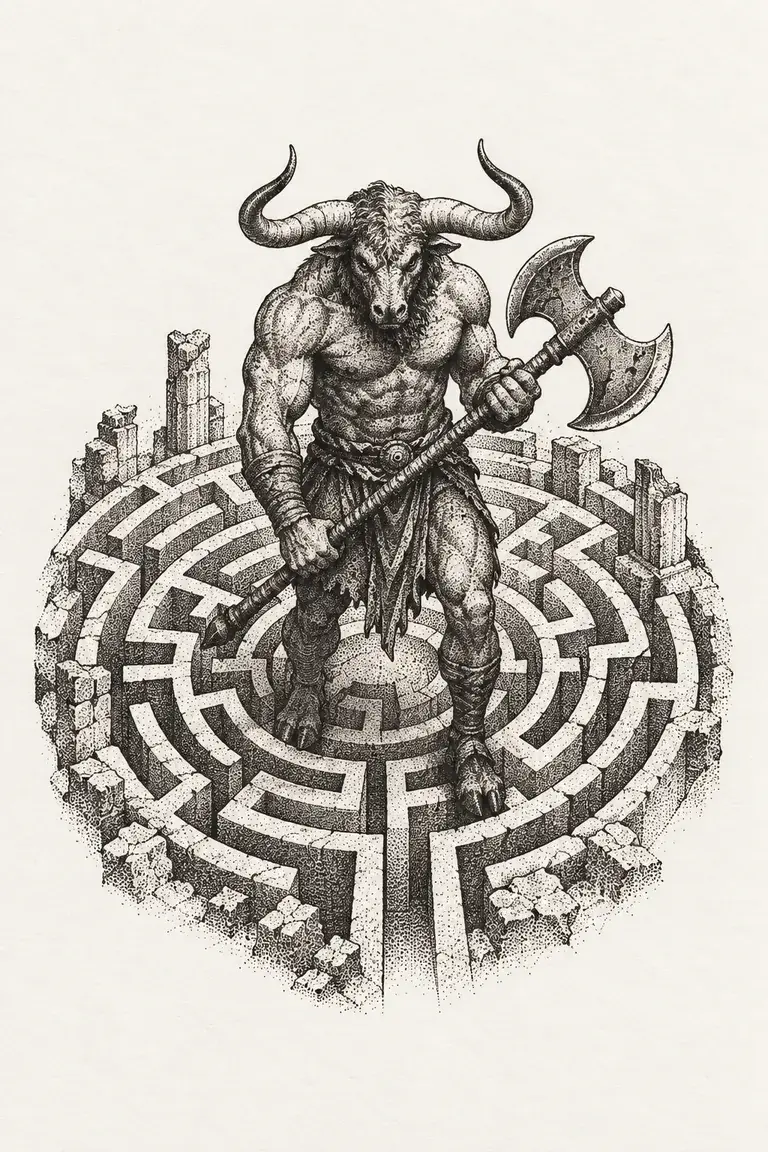
Dotwork, Neck
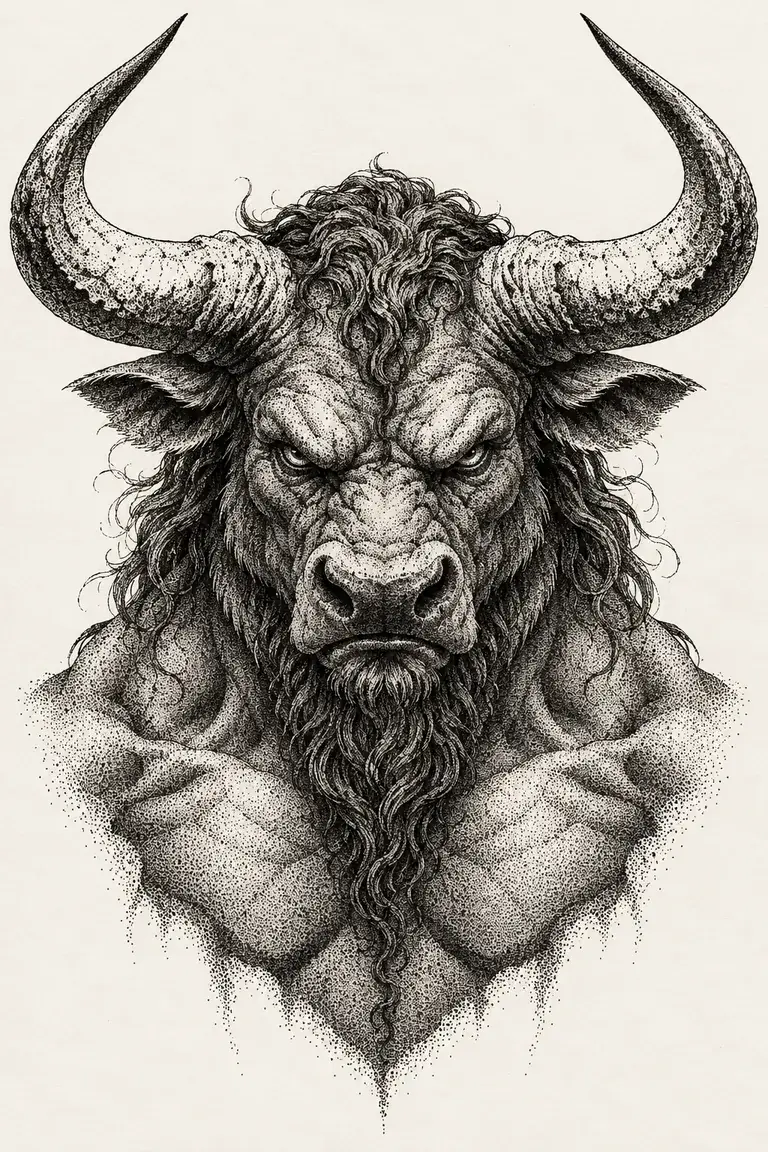
Dotwork, Back
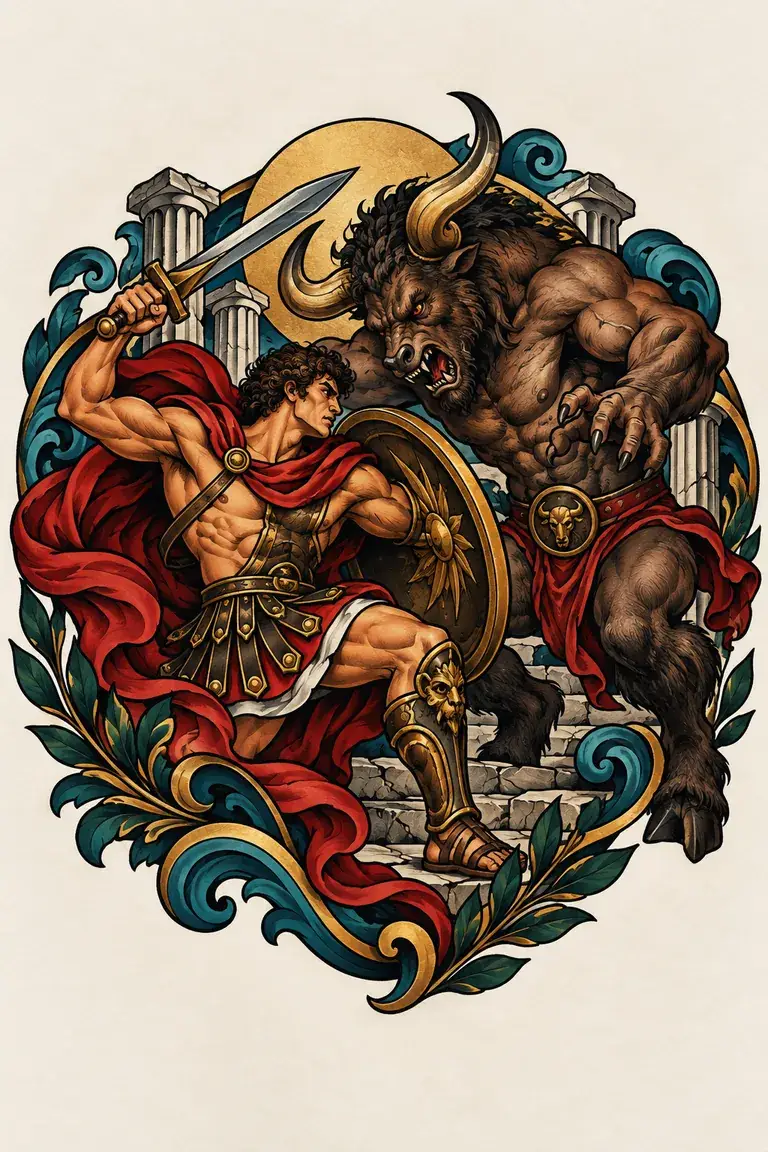
Neo-traditional, Shoulder
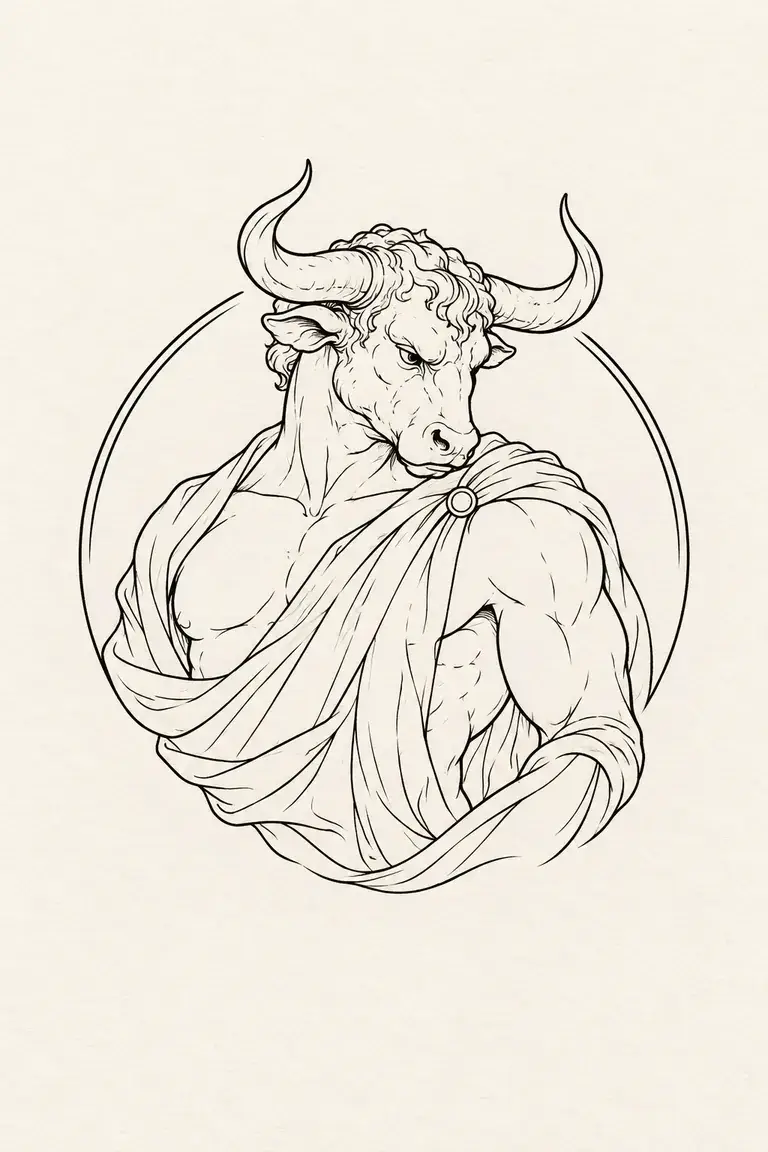
Minimalist, Shoulder
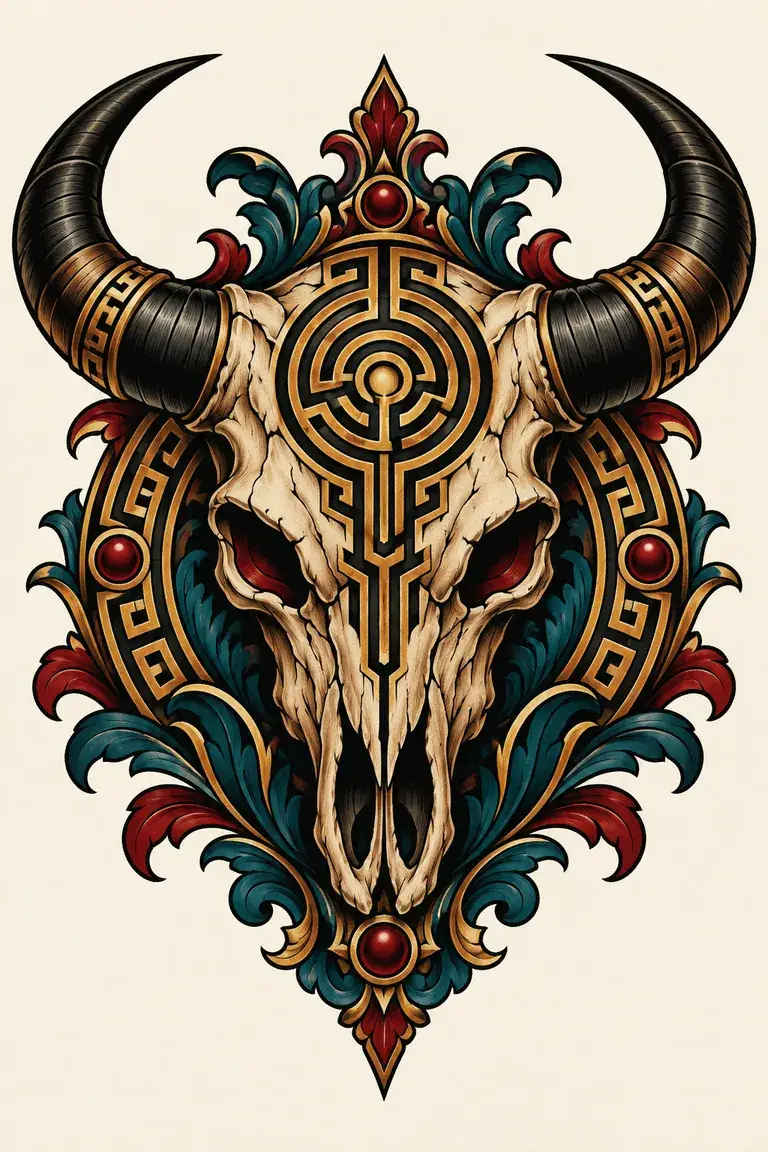
Neo-traditional, Chest
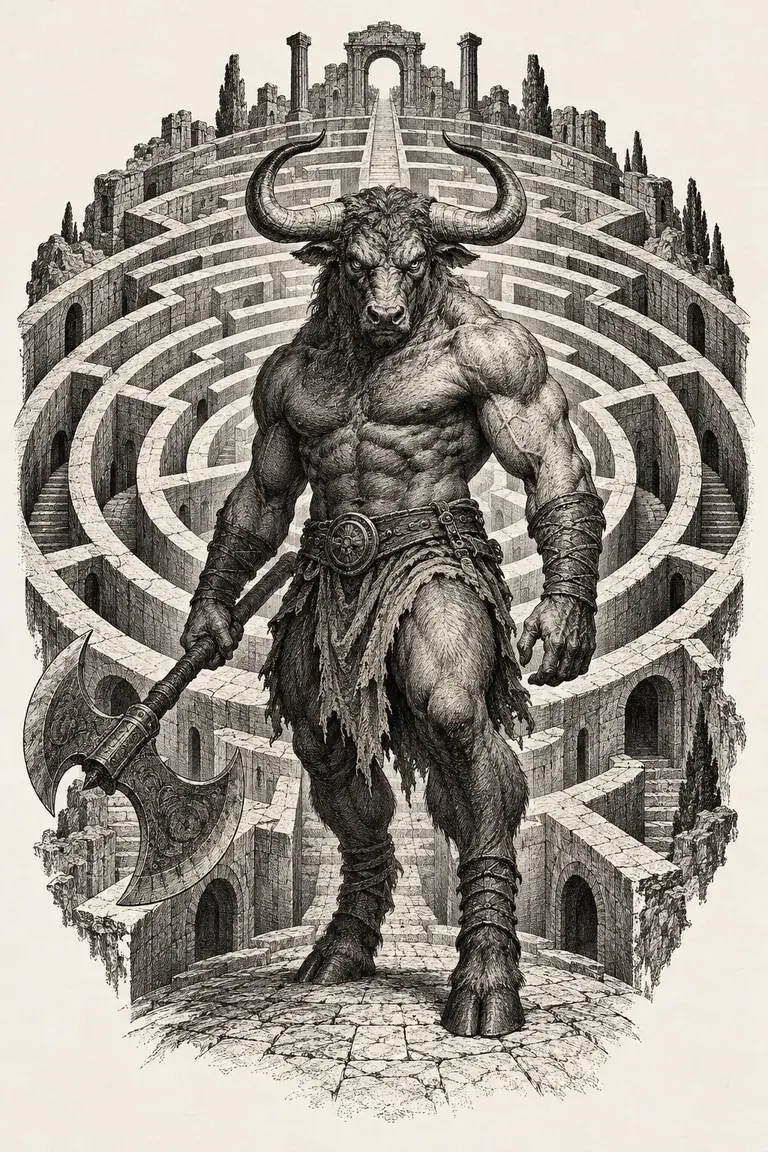
Engraving, Back
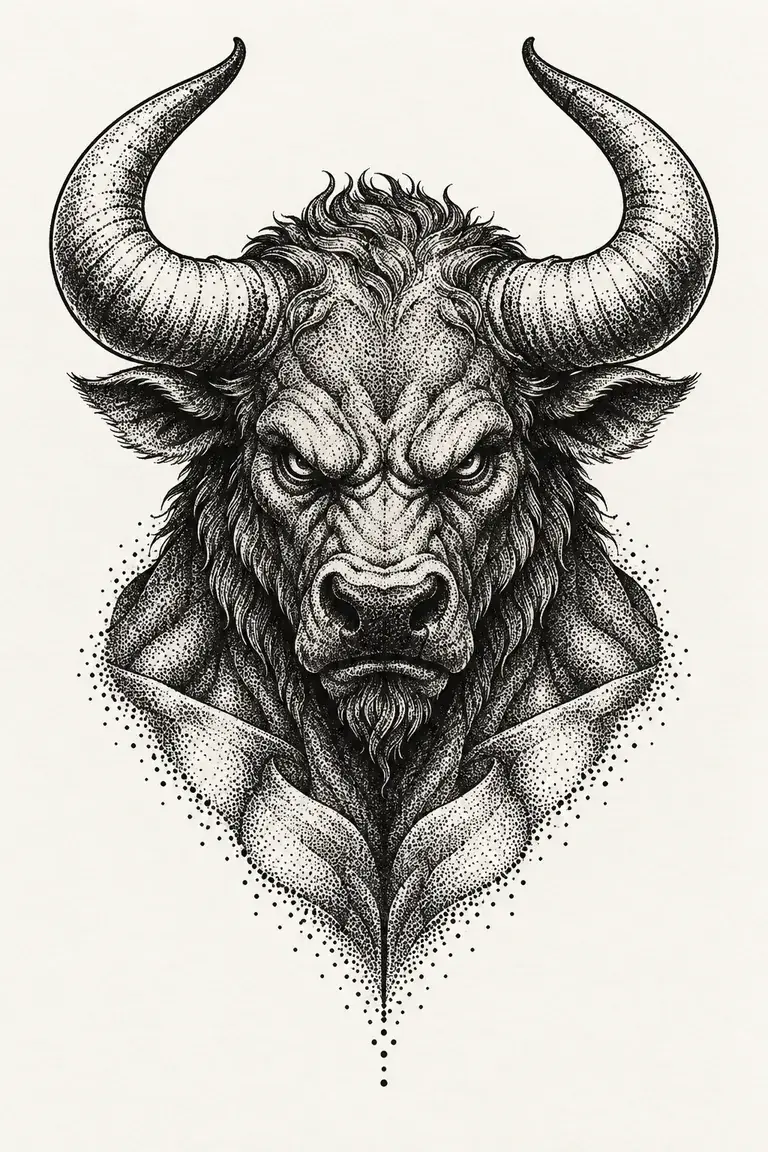
Dotwork, Calf
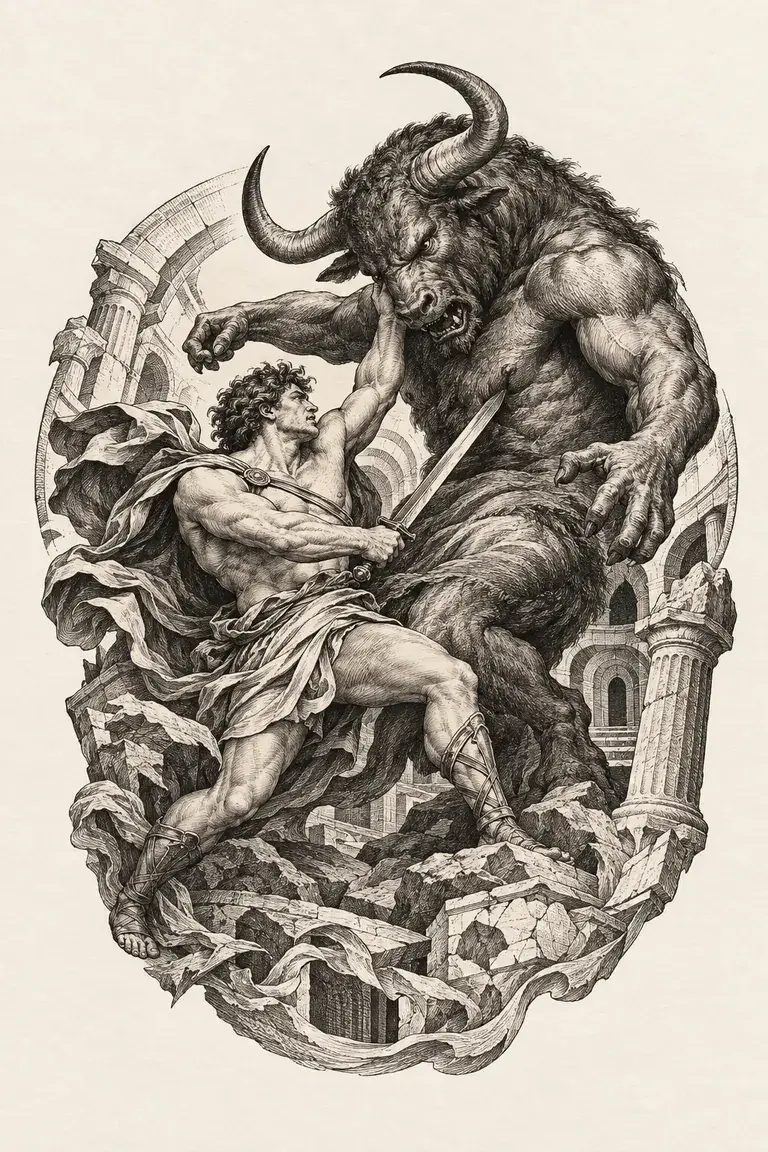
Engraving, Upper arm
Frequently asked questions
What does a Minotaur tattoo symbolize?
Strength, inner conflict and being trapped. The Minotaur is half man and half bull, so many wearers use him to represent their wilder instincts. With a labyrinth he can also mean working through a hard situation.
What was the Minotaur's real name?
Asterion, meaning 'starry one.' Both Apollodorus and Pausanias record that name. 'Minotaur' simply means 'bull of Minos.'
Is the Minotaur a villain?
In the myth he is a man-eating monster killed by the hero Theseus, but he was also an innocent victim of his family's choices. Modern writers and artists often treat him with sympathy, and many tattoos follow that reading.
What is the axe the Minotaur holds?
It is a labrys, a double-headed axe found all over the ruins of Minoan Crete. The ancient myths do not actually arm him with it, but it has become a popular design detail because it ties him to Cretan culture.
Where is the best place for a Minotaur tattoo?
The upper arm, calf and back suit a full figure. A bull head portrait works on the chest, sternum or forearm.